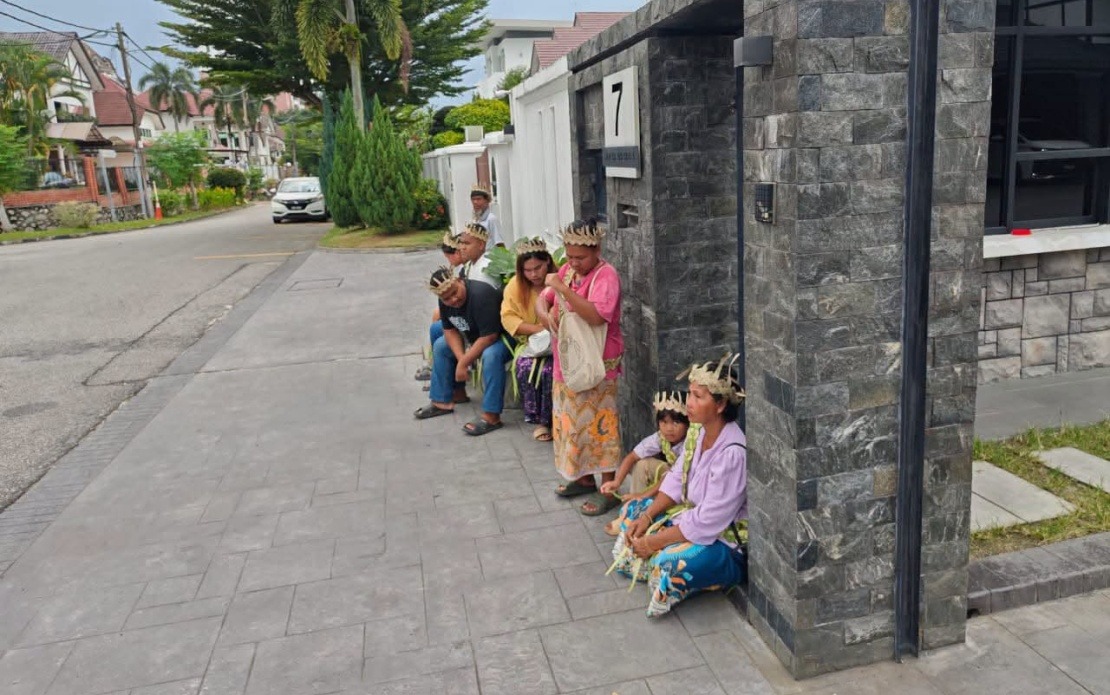
Prime Minister Datuk Seri Anwar Ibrahim has pledged to escalate the longstanding land dispute involving the Orang Asli residents of Kampung Sungai Cot in Maran, Pahang, directly with state government authorities. The commitment came after Anwar personally engaged with community representatives who visited his residence to raise concerns about their tenure and legal status on disputed land.
In his statement posted on social media, Anwar indicated that he had maintained telephone contact with the delegation following their in-person meeting, underscoring his willingness to maintain ongoing dialogue on the matter. This personal engagement signals the level of attention the federal government intends to give to the grievances presented by the indigenous community, reflecting a broader policy direction toward addressing historical land rights concerns affecting Malaysia's Orang Asli populations.
Beyond the core land dispute, the delegation also brought to Anwar's attention the detention of three residents from Kampung Sungai Cot. The Prime Minister expressed satisfaction that these individuals have since been released by police, suggesting some progress on the supplementary concerns that emerged during discussions. The detention and subsequent release of community members highlights the tensions that can surface when land disputes intersect with law enforcement activities, a pattern that has periodically troubled Orang Asli settlements across the peninsula.
Anwar's intervention illustrates the complexity of addressing indigenous land rights in Malaysia's federal system. While the Prime Minister's office can facilitate inter-agency coordination and elevate issues through cabinet channels, the Pahang state government retains substantial authority over land matters within its jurisdiction. This layered governance structure means that meaningful resolution will require collaborative engagement between federal and state authorities, something Anwar's commitment suggests he intends to pursue.
The case of Kampung Sungai Cot represents a recurring challenge in Malaysia's treatment of Orang Asli communities. Land disputes affecting indigenous settlements often stem from conflicting claims between customary tenure, formal title records, and development interests. These conflicts are frequently compounded by documentation issues, historical administrative gaps, and competing commercial interests. The Orang Asli, as the indigenous peoples of Peninsular Malaysia, maintain claims rooted in customary occupation and use, yet these claims frequently lack legal recognition under Malaysia's property registration systems, creating vulnerability to displacement or restriction of access.
The Prime Minister's explicit call for all parties to refrain from politicising or manipulating the issue carries significant implications. This language suggests that the dispute may have attracted attention from multiple political actors with differing agendas, a common occurrence in high-profile Orang Asli cases. By appealing for solutions grounded in legality and fairness rather than political positioning, Anwar has attempted to establish parameters for resolution that transcend electoral or factional considerations. Whether such an appeal can redirect stakeholder behaviour remains to be seen, particularly if local or state-level political interests view the dispute as consequential to their own positioning.
The emphasis on solutions that are both prudent and legally consistent reflects recognition that ad hoc interventions without proper legal foundation could create precedent concerns or unintended consequences. Anwar's framing suggests the federal government seeks resolutions that address the legitimate grievances of Kampung Sungai Cot residents while maintaining systemic integrity and avoiding arrangements that might invite legal challenges or replication in other Orang Asli disputes. This principled approach, if executed consistently, could establish clearer templates for handling similar cases across Malaysian jurisdictions.
For the broader Orang Asli community across Malaysia, the visible engagement of federal leadership with Kampung Sungai Cot offers both opportunity and caution. Successful intervention could demonstrate the utility of escalating community grievances to the highest levels and might encourage similar advocacy by other affected settlements. Conversely, if the matter becomes entangled in bureaucratic processes or remains unresolved despite high-level attention, it could reinforce perceptions that systemic barriers prevent meaningful redress even when federal leadership demonstrates commitment to examining such cases.
The timing and mechanism of Anwar's response—direct phone contact with community representatives and public commitment via social media—represents a mode of political engagement that differs from traditional bureaucratic channels. This accessibility, while potentially offering communities direct voice to decision-makers, also introduces variables around consistency, follow-through, and integration with formal institutional processes. The challenge for the Prime Minister's office will be channeling this initial engagement into sustained institutional action involving relevant state and federal agencies, land authorities, and legal advisors.
Looking ahead, the resolution of the Kampung Sungai Cot dispute will likely require coordination across multiple stakeholders: the Pahang state government, the federal Department of Orang Asli Affairs, land survey and registry authorities, and potentially the judiciary if legal disputes require adjudication. The Orang Asli community itself must be meaningfully involved in designing solutions, rather than having arrangements imposed upon them. Success will be measured not merely by reaching an agreement, but by crafting outcomes that provide genuine security of tenure, protect community interests, and establish precedents applicable to other Orang Asli settlements facing similar pressures.

