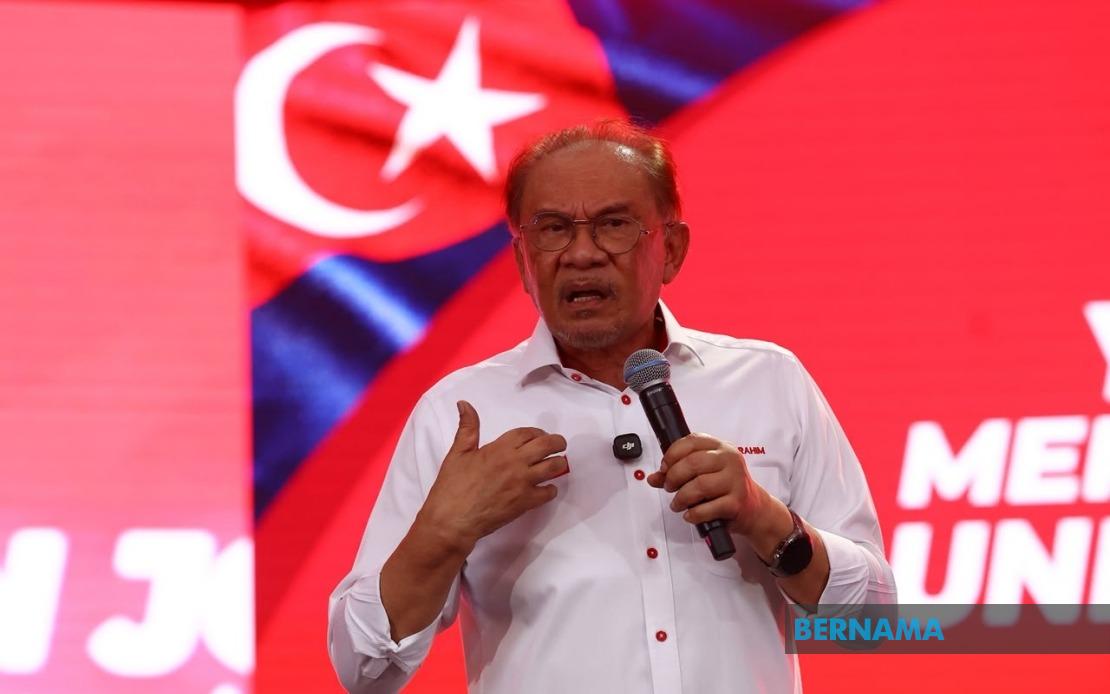
Prime Minister Datuk Seri Anwar Ibrahim moved swiftly to quash online rumours about his vehicle fleet on Tuesday, stating categorically that he has not acquired a new BMW for private purposes. Speaking at a campaign rally in Senggarang during Johor's state election drive, Anwar addressed allegations circulating across social media platforms, emphasising that the vehicle in question is neither new nor personally owned. The timing of his comments comes amid heightened political scrutiny as Pakatan Harapan ramps up its electoral campaign ahead of Saturday's state assembly polling across all 56 seats in Johor.
The Prime Minister used the opportunity to underscore his commitment to public accountability and personal integrity. He stressed that spreading false narratives about his purchasing habits contradicts the coalition's core messaging around fiscal responsibility and combating corruption. Anwar posed a direct rhetorical challenge to those spreading the claims, asking why individuals would fabricate stories about a leader who consistently emphasises helping marginalised communities. This defensive posture reflects the sensitivity surrounding perceptions of leadership privilege and personal enrichment at a moment when Pakatan Harapan is seeking voter endorsement.
Clarifying his actual vehicle arrangements, Anwar confirmed that the Mercedes-Benz he currently operates was graciously bestowed upon him by His Majesty Sultan Ibrahim, King of Malaysia. Crucially, he registered the vehicle under the Prime Minister's Department rather than claiming personal ownership, a distinction he emphasised to highlight his adherence to proper governance protocols. This registration arrangement ensures the vehicle remains a government asset rather than converting it into personal property, a practice Anwar pointed out as divergent from other officials who might otherwise blur such boundaries.
The Prime Minister seized the moment to reinforce his anti-corruption messaging, contrasting his administrative approach with what he characterised as malfeasance by unnamed predecessors. By referencing officials who "siphon off and steal the people's money," Anwar positioned his own conduct as exemplary, positioning the vehicle registration methodology as evidence of principled stewardship of public resources. This rhetorical framing aligns with his broader political narrative of systemic reform and ethical governance renewal.
The Prime Minister's Department and the Ceremonial and International Conference Secretariat Division issued a formal clarification on Monday, preceding Anwar's public remarks. The statement positioned the BMW in question as an existing government asset already under the management and oversight of the ceremonial division, explicitly denying that it represented a newly procured official vehicle. This clarification established that the automobile falls within established government logistics operations designated for official duties, not recent expenditure.
The vehicle's designation as a logistics asset managed by the ceremonial secretariat underscores the distinction between personal acquisition and government resource allocation. In Malaysian governance frameworks, such ceremonial divisions typically oversee the management and deployment of vehicles used for state functions, diplomatic missions, and official travel. The explicit confirmation that this BMW falls under such existing arrangements rather than constituting fresh procurement suggests the vehicle likely predates Anwar's tenure as Prime Minister.
Social media speculation about leadership vehicles often reflects broader public anxieties regarding accountability and fiscal management, particularly in Southeast Asian contexts where perceptions of official privilege frequently generate political friction. The rapid emergence and circulation of claims regarding the BMW demonstrates how digital platforms amplify narrative competition during electoral cycles. Anwar's decision to address the matter directly at a campaign event illustrates the necessity for contemporary political leaders to manage online discourse alongside traditional campaign activities.
The Johor state election context amplifies the significance of this public clarification. As Pakatan Harapan contests all 56 state assembly seats, maintaining public confidence in leadership integrity becomes strategically consequential. Voter perception of ethical governance, particularly surrounding resource allocation and personal conduct by senior officials, directly influences electoral outcomes in Malaysian constituencies. The coalition's willingness to deploy the Prime Minister himself to address such claims indicates the seriousness with which campaign strategists view the narrative's potential impact.
Notable figures present at the Senggarang campaign event included Pakatan Harapan communications director Datuk Fahmi Fadzil, who simultaneously serves as Communications Minister, alongside coalition candidates for three contested seats: Onn Abu Bakar in Senggarang, Mohd Khuzzan Abu Bakar in Semerah, and Felicia Poh Rui Ling in Penggaram. The presence of senior communications infrastructure alongside frontline electoral candidates demonstrates the coordination between messaging operations and ground-level campaign deployment.
For Malaysian and Southeast Asian observers, the incident highlights evolving dynamics around digital accountability and leadership transparency. As political communication increasingly occurs across social media channels beyond traditional media gatekeeping, sitting officials must engage directly with online narratives, sometimes on short notice. Anwar's measured response—neither ignoring allegations nor engaging in extensive defensive argumentation—reflects contemporary political pragmatism. The distinction between personal assets and government resources, while administratively clear, requires public articulation during periods of electoral competition when such subtleties risk misinterpretation or deliberate distortion.
The broader governance question underlying the dispute concerns vehicle procurement and asset management within the executive branch. Malaysia's public sector accountability frameworks theoretically prevent the conversion of government assets into personal property, yet public perception often lags behind administrative reality. Anwar's explicit emphasis on registering the Mercedes under departmental rather than personal ownership demonstrates an attempt to operationalise anti-corruption principles in visible, understandable terms. Whether such measures sufficiently address public scepticism remains a question electoral outcomes will partially illuminate.

