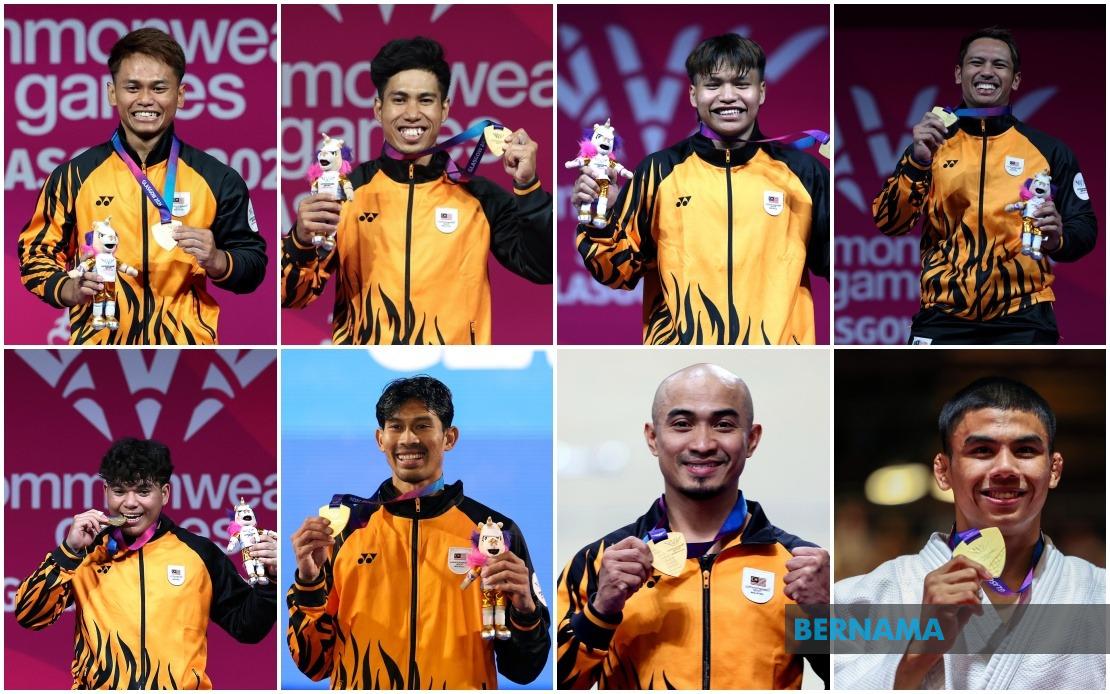
Prime Minister Datuk Seri Anwar Ibrahim has commended the Malaysian contingent for demonstrating exceptional determination and competitive spirit throughout their campaign at the 2026 Glasgow Commonwealth Games in Scotland. In a statement released through Facebook, the Premier extended formal recognition to all athletes who represented the nation on the international stage, acknowledging their contribution to Malaysia's sporting achievements.
The message of appreciation extended beyond the athletes themselves, encompassing the extensive support network that enabled the contingent's participation. Anwar specifically recognised the vital contributions made by coaching staff, administrative officials, and support personnel who worked behind the scenes to prepare and sustain the team throughout the Games. This recognition underscores the collective nature of international sporting competition, where success depends not merely on athletic prowess but on coordinated institutional effort.
The Prime Minister also acknowledged the role of prayer and community support in bolstering the contingent's morale and performance. By expressing gratitude to all Malaysians who had prayed for the team's success, Anwar tapped into a cultural dimension of national representation, reflecting how sporting achievement carries spiritual and emotional significance beyond medal counts. This framing aligns Malaysia's international athletic participation with broader themes of national unity and collective purpose.
Malaysia concluded its Glasgow campaign in 10th position overall, accumulating a total of 16 medals across various sporting disciplines. This finishing position represents a significant international presence at the Commonwealth Games, placing the nation among the event's stronger-performing contingents. The medal haul demonstrates Malaysia's competitive capacity across multiple sports, validating the investment in athlete development and sports infrastructure that has been pursued over recent years.
The 2026 Glasgow Commonwealth Games represented an important opportunity for Malaysia to showcase its sporting talent on a prestigious international platform. The Commonwealth Games, while smaller in scale than the Olympic Games, holds particular significance for member nations of the Commonwealth, providing a competition framework where Asian and developing nations can achieve recognition alongside traditional sporting powerhouses. Malaysia's 10th-place finish positions the nation as a mid-tier sporting performer within this context, suggesting both established strengths and areas for continued development.
The recognition extended by the Prime Minister carries political dimensions as well. By publicly celebrating athletic achievement, national leaders reinforce the connection between sporting success and national pride, using international competition as a vehicle for demonstrating national capability and cohesion. For Malaysia, this messaging is particularly relevant given the nation's ongoing efforts to establish itself as a regional hub for sporting excellence and development.
The composition of Malaysia's medal haul across 16 medals reflects diversified sporting strength rather than dominance in isolated disciplines. This distribution suggests that Malaysian investment in sports development has created breadth of competitive capacity, enabling the nation to participate effectively across multiple sporting domains rather than concentrating resources in narrow specialisations. For future Commonwealth Games participation, this foundation provides both continuity and opportunity for targeted enhancement.
The athletes' performance at Glasgow also carries implications for Malaysia's approach to international sporting competition more broadly. As the nation continues to develop its sports sector, successful performances at major multi-sport events validate existing strategies and inform future planning. The contingent's spirited showing, as characterised by the Prime Minister's remarks, suggests that competitive drive and determination remain features of Malaysian athletic culture despite resource constraints that may exist relative to wealthier sporting nations.
Looking forward, Malaysia's 10th-place finish at Glasgow establishes a performance benchmark for subsequent Commonwealth Games cycles. The Malaysian sporting authorities will likely analyse the 2026 results to identify which disciplines delivered strong returns on investment and which areas require enhanced support. The Prime Minister's public recognition of the contingent's effort signals government commitment to sustaining support for international sporting participation, an important message for athletes and administrators planning medium-term development programmes.
The broader regional context also merits consideration. Within Southeast Asia, Malaysia's Commonwealth Games performance contributes to regional sporting prestige and influences the competitive dynamics among neighbouring nations pursuing similar international athletic objectives. As regional countries compete for sporting recognition and investment, Malaysia's demonstrated capacity to field competitive teams on the global stage has implications for regional sporting hierarchies and national sporting aspirations throughout Southeast Asia.
Anwar's commendation also reflects the institutional importance attributed to national sporting success within Malaysian governance. By allocating prime ministerial attention and public acknowledgment to athletic achievement, the government signals that sporting performance constitutes a legitimate dimension of national evaluation and national pride. This institutional framing encourages continued public and private investment in sports development and athlete support systems that generate competitive international performance.

