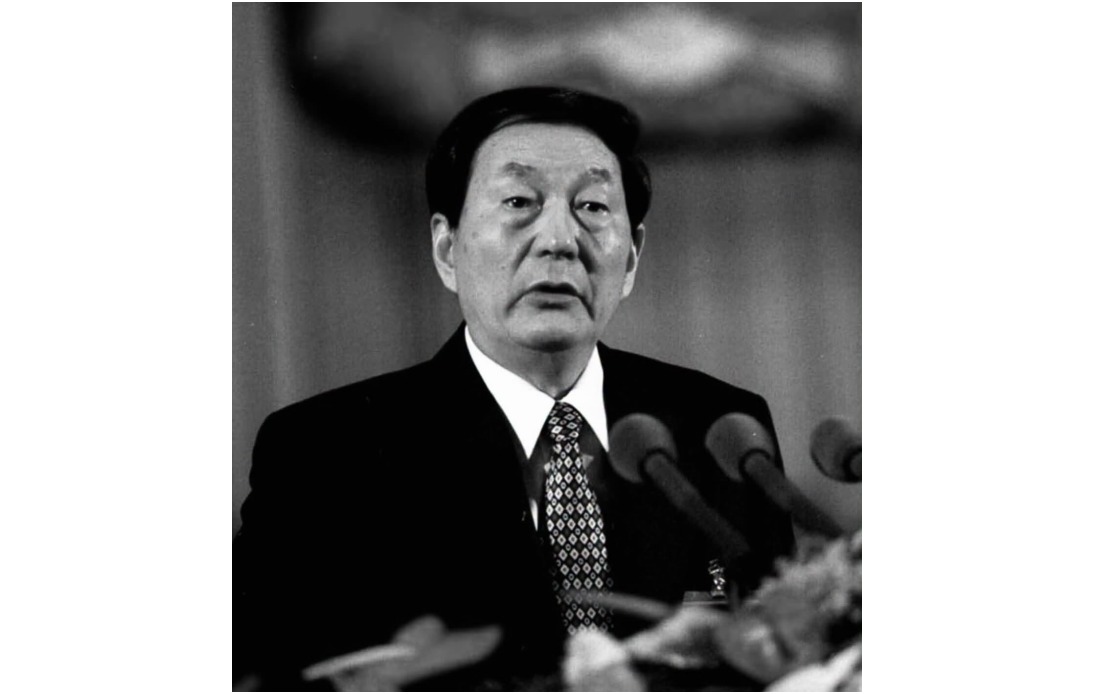
Prime Minister Datuk Seri Anwar Ibrahim has offered his condolences following the death of Zhu Rongji, the former Premier of the People's Republic of China, who passed away at the age of 97. Through a Facebook statement released in Kuala Lumpur on August 12, Anwar acknowledged the passing of one of modern China's most influential economic architects and reflected on a personal friendship spanning decades. The tribute underscores the deep connections Malaysia has maintained with Chinese leadership during critical periods of bilateral development.
Zhu's tenure as China's Premier from 1998 to 2003 coincided with one of the most transformative periods in the nation's modern economic history. His administration spearheaded sweeping market-oriented reforms that fundamentally reshaped China's economic structure. Beyond domestic restructuring, Zhu navigated China's entry into the World Trade Organisation—a milestone that accelerated the country's integration into the global economy and set the stage for its emergence as a manufacturing powerhouse. These achievements established the institutional and policy foundations upon which contemporary China's economic influence rests.
Anwar's personal connection to Zhu dates to the 1990s, a decade when Malaysia was itself pursuing closer economic integration with China. During this formative period, the two worked in tandem to expand bilateral economic and financial cooperation. The framework they established—encompassing trade partnerships, investment channels, and financial mechanisms—has demonstrated remarkable durability, continuing to shape Malaysia-China relations well into the current era. This institutional continuity testifies to the thoughtful groundwork laid by both leaders during their period of direct collaboration.
Beyond formal diplomacy and economic mechanics, Anwar's tribute emphasises the personal dimension of his relationship with Zhu. The Prime Minister recalled cultural visits to sites of historical and philosophical significance, including Qufu, the birthplace of Confucius, and Tai Shan, one of China's most sacred mountains. These journeys suggest a relationship characterised by intellectual engagement and mutual respect for each nation's civilisational heritage. Anwar also recounted a memorable visit to Zhu's personal library, where the former Premier curated a selection of classical Chinese texts specifically for his Malaysian counterpart—a gesture revealing both Zhu's erudition and his desire to share China's intellectual traditions with Malaysian leadership.
Anwar characterised Zhu as embodying qualities that transcended conventional political management. In the Prime Minister's assessment, Zhu combined formidable statesmanship with profound personal integrity, driven by an unwavering commitment to national advancement. This portrayal aligns with historical assessments of Zhu as a technocrat willing to pursue economically rigorous but politically difficult reforms. His willingness to restructure inefficient state-owned enterprises and embrace market mechanisms—decisions that provoked significant resistance—demonstrated both intellectual conviction and political courage during a period when command-economy orthodoxies retained considerable influence within Chinese leadership circles.
The significance of Anwar's public tribute extends beyond personal reminiscence. As Prime Minister of a Southeast Asian nation with substantial economic interests in China, Anwar's acknowledgment of Zhu's contributions serves to affirm Malaysia's appreciation for the policy choices that enabled China's economic rise. Malaysia, alongside other ASEAN members, has benefited substantially from China's integration into global trade networks, expanded foreign direct investment, and the emergence of China as a major market for regional exports. Zhu's reforms facilitated precisely these developments, making his legacy materially relevant to Malaysian economic interests.
The timing and tenor of Anwar's condolence also reflect diplomatic awareness of China's role in contemporary regional affairs. As tensions in the Indo-Pacific intensify and competition between major powers reshapes geopolitical alignments, Malaysia maintains strategic relationships with multiple powers whilst preserving robust economic ties with China. By honouring Zhu's memory and achievements, Anwar signals Malaysia's appreciation for the stability and prosperity that China's economic integration has provided, even as Malaysia pursues diversified partnerships.
Zhu's passing marks the end of an era in Chinese leadership characterised by technocratic problem-solving and pragmatic economic management. The former Premier represented a generation of Chinese officials who prioritised institutional reform and market mechanisms as vehicles for national development. His influence on contemporary Chinese policy-making, whilst less direct than during his tenure, remains embedded in the economic structures and institutional frameworks he helped establish. Successors have largely maintained the market-oriented trajectory he set, even as political control has centralised in other domains.
For Malaysian policymakers and observers of China, Zhu's legacy carries lessons regarding the relationship between economic openness and national development. His conviction that China could harness market forces whilst maintaining state direction anticipated subsequent decades of hybrid economic models across Asia. Malaysia itself has grappled with similar questions about balancing market mechanisms with state guidance, making Zhu's experience relevant to contemporary domestic policy debates. The success of his approach—however imperfectly implemented or subsequently modified—demonstrated that developing economies could adopt sophisticated market-oriented reforms without surrendering state capacity.
Anwar's tribute ultimately reflects the multifaceted nature of Malaysia-China relations, extending beyond formal agreements and trade statistics to encompass intellectual exchange, personal relationships among leaders, and shared historical experiences. The bonds forged between Anwar and Zhu during the 1990s created diplomatic capital that has endured through subsequent changes in both governments' leadership. Such personal relationships, cultivated through cultural engagement and mutual respect, contribute to the resilience of bilateral ties during periods of geopolitical tension or policy divergence. Zhu Rongji's passing thus represents not merely a loss for China, but a reflection on the human dimensions of Malaysia-China cooperation that have proven essential to regional stability and prosperity.

