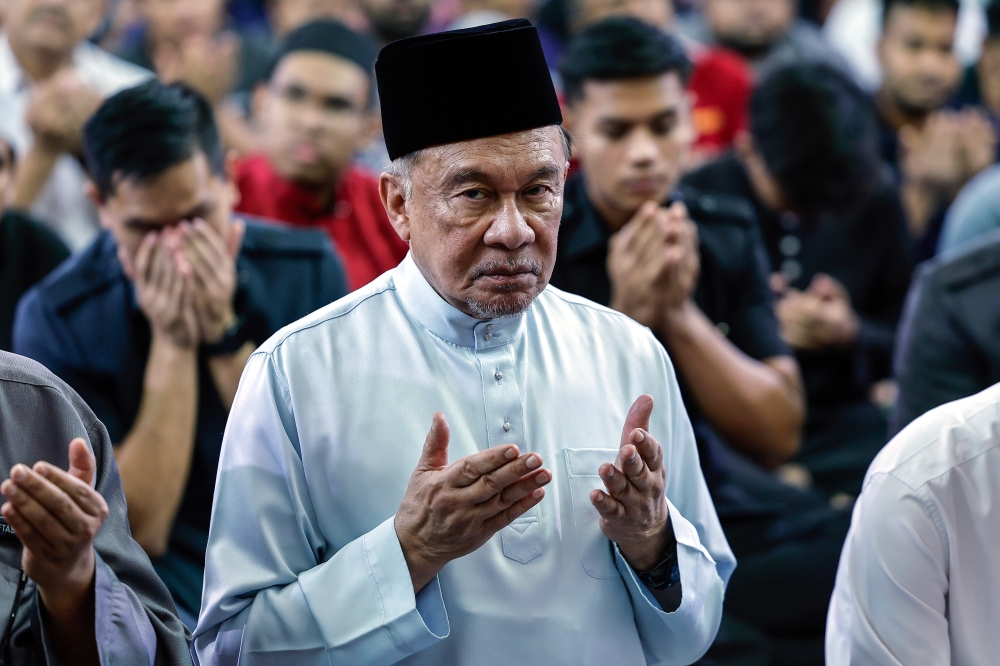
Prime Minister Datuk Seri Anwar Ibrahim has conveyed his heartfelt prayers and best wishes for the swift recovery of His Majesty Sultan Ibrahim, the Yang di-Pertuan Agong, as the constitutional monarch prepares to undergo medical treatment. The gesture reflects the close working relationship between Malaysia's political leadership and the institution of the monarchy, which remains a cornerstone of the nation's constitutional framework and institutional stability.
The timing of this public expression of support carries particular significance in Malaysia's political landscape, where the monarchy occupies a unique constitutional position distinct from Westminster democracies. The Yang di-Pertuan Agong serves not merely as a ceremonial figurehead but as the custodian of Islamic affairs in several states and plays an active role in constitutional matters, particularly in the exercise of royal prerogative powers concerning government formation and legislative assent. Anwar's prompt acknowledgement of Sultan Ibrahim's medical situation demonstrates the government's recognition of this institutional importance and its commitment to maintaining harmonious relations with the palace.
Sultan Ibrahim ascended to the position of Yang di-Pertuan Agong in October 2023, following the rotation system that governs the selection of Malaysia's head of state among the nine hereditary rulers of the Malay states. This system ensures that the monarchy remains geographically and politically representative across the federation, though it also requires periodic transitions that can sometimes generate procedural complexities. His tenure has thus far been marked by engagement with national affairs and the fulfillment of his constitutional duties across a diverse array of state and federal matters.
The announcement of any significant health matter involving the Yang di-Pertuan Agong typically triggers considerable public and institutional attention, given the paramount importance of the role to Malaysia's constitutional order. The smooth functioning of government depends significantly on the availability and active participation of the monarch in key constitutional functions, from the granting of royal assent to legislation to the exercise of discretion in matters of government formation during politically uncertain periods. Public expressions of support from the Prime Minister help reassure both domestic and international observers about the continuity and stability of Malaysia's political institutions during such periods.
Anwar's statement also reflects broader cultural and constitutional values embedded in Malaysian society, where expressions of respect towards the institution of the monarchy command widespread social acceptance across all communities. The Prime Minister's gesture demonstrates an understanding that maintaining institutional relationships transcends partisan political considerations and serves the national interest. This stands in contrast to more adversarial political systems where the executive and ceremonial branches might maintain greater distance or tension.
The government has likely coordinated this public message with palace officials to ensure appropriate tone and messaging. Such communications are typically calibrated to convey sincere concern without causing unnecessary alarm, whilst also demonstrating governmental transparency about matters affecting the highest office. The balance between respecting the privacy of the Yang di-Pertuan Agong's health matters and acknowledging the public interest in understanding the status of the nation's constitutional leadership remains a delicate one that requires careful handling.
For Malaysian citizens and the broader Southeast Asian region, the health and availability of the Yang di-Pertuan Agong carries implications that extend beyond ceremonial significance. International delegations, state visits, and formal diplomatic functions depend on the monarch's participation, and any extended absence could necessitate the appointment of a regent or the delegation of duties to the Tun Pertuan Agong's nominee. The constitutional framework provides mechanisms for such contingencies, but their activation would represent a significant moment in the nation's governance structure.
The medical treatment itself underscores the reality that even constitutional figures require ongoing healthcare, reminding the nation that succession planning and institutional continuity remain perpetually relevant concerns. Malaysia's rotation system means that planning for such transitions occurs with regularity, but the specific health circumstances of any individual Yang di-Pertuan Agong can present unanticipated challenges to governance. The professionalism with which such matters are handled contributes to public confidence in institutional stability.
Anwar's well-wishes should also be viewed within the context of his broader approach to executive-institutional relations since assuming the Prime Ministerial office. The PM has consistently emphasized respect for constitutional institutions and the rule of law, positioning these values as central to his administration's legitimacy and vision for governance. Such public gestures reinforce these messages and help cultivate a political culture that privileges institutional integrity over short-term political advantage.
As Sultan Ibrahim undergoes his medical treatment, the nation's constitutional machinery continues to function through established procedures and delegated authorities. The clarity and promptness with which the government has communicated about this matter reflects confidence in Malaysia's institutional frameworks and the depth of institutional reserves available to manage routine governance requirements during periods when the Yang di-Pertuan Agong's direct participation may be limited. The public's receptiveness to such information, combined with appropriate discretion regarding personal health details, maintains the balance between transparency and respect for individual privacy that characterizes a mature democracy.

