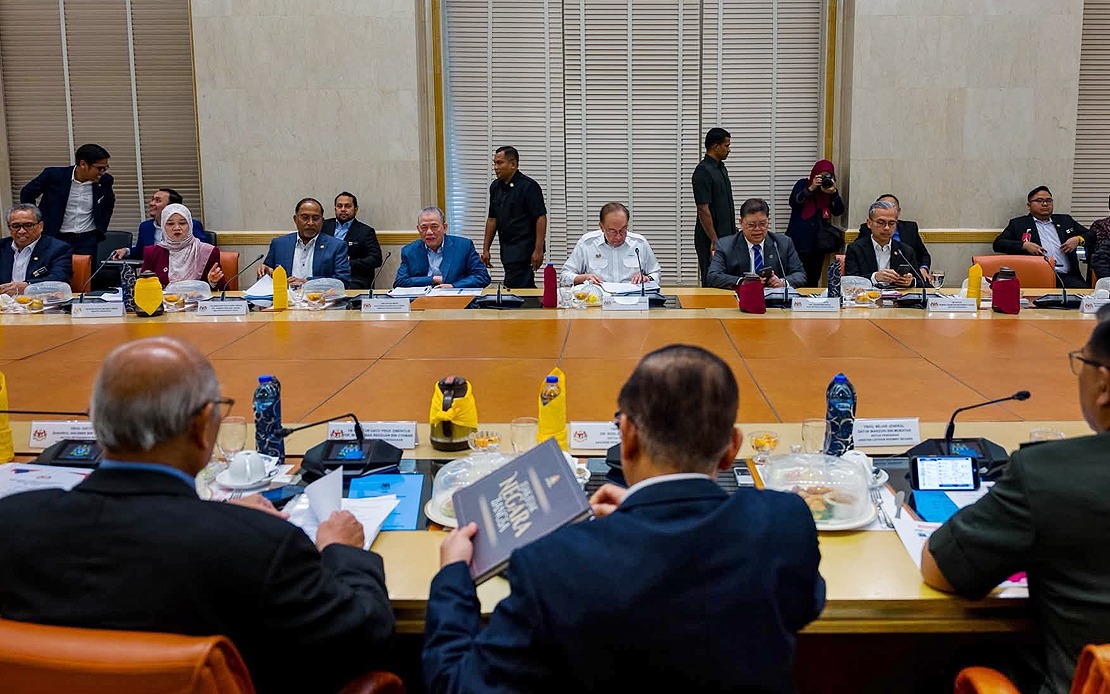
Prime Minister Datuk Seri Anwar Ibrahim has underscored the necessity of consistently reinforcing nationhood values throughout Malaysian society as a cornerstone strategy for nation-building. Speaking after chairing a Dewan Kenegaraan Board of Governance Meeting on July 6, the Prime Minister articulated his vision of developing individuals grounded in strong national identity, personal integrity and principled conduct as a means to enhance Malaysia's international standing and domestic cohesion.
Anwar framed the cultivation of these values as integral to fostering a genuine love for the country that permeates through the social fabric. Rather than treating patriotism as an abstract concept, the Prime Minister positioned it as something requiring continuous, deliberate investment through institutional mechanisms and societal engagement. This perspective reflects a recognition that national unity and pride cannot be assumed but must be actively nurtured across diverse populations with varying backgrounds and allegiances.
During the governance meeting, the Prime Minister specifically highlighted the progress achieved by the National Service Training Programme, known locally as PLKN. According to Anwar's remarks, the initiative has demonstrated encouraging momentum and garnered constructive feedback from both programme participants and their families. This positive reception suggests the scheme is resonating with intended beneficiaries and their support networks, a critical indicator for long-term programme sustainability.
The Prime Minister's emphasis on PLKN reflects understanding that structured national service mechanisms can serve multiple developmental objectives simultaneously. Beyond their surface function of military or civic training, such programmes provide platforms where young Malaysians from disparate ethnic, religious and socioeconomic backgrounds interact intensively, fostering interpersonal connections that transcend communal boundaries. This social cohesion dimension carries particular significance in Malaysia's pluralistic context.
Anwar advocated for sustained strengthening of PLKN as a crucible for cultivating discipline, resilience and collective identity among participants. The programme's role extends beyond individual character development to encompassing the broader societal objective of nurturing citizens equipped to navigate modern Malaysia's complexities with both personal fortitude and commitment to collective wellbeing. This dual focus addresses both instrumental skill-building and values-formation.
The governance meeting also examined the contributions of the Nationhood Fellows initiative, a mechanism designed to convene respected figures and experienced statesmen representing diverse professional, ethnic and ideological perspectives. By bringing these distinguished individuals into collaborative dialogue around nation-building priorities, the initiative seeks to transcend partisan divisions and ground policy discussions in broader principles of national interest. This cross-cutting engagement model acknowledges that sustainable nation-building requires consensus-building across traditionally fragmented constituencies.
The Nationhood Fellows framework represents an attempt to institutionalise high-level dialogue around core national values and developmental priorities. By recruiting accomplished individuals from varied backgrounds to contribute strategic thinking toward reinforcing the nation-building agenda, the mechanism aims to generate ideas and perspectives that command broader legitimacy than those emerging from narrower governmental or party structures. Such inclusive discourse models may help counter polarisation dynamics that have complicated Malaysian politics in recent years.
For Malaysia's broader development trajectory, the Prime Minister's emphasis on nationhood values addresses fundamental questions about social cohesion and national direction. As Malaysia navigates complex transitions in economic structure, demographic composition and geopolitical positioning, the question of shared national purpose becomes increasingly salient. Citizens who internalise strong nationhood values and feel genuine attachment to collective endeavours are more likely to support necessary reforms and sacrifice parochial interests for broader national benefit.
The timing of these remarks carries significance given Malaysian society's experience with heightened communal tensions and political polarisation over recent years. By centring the conversation on values that transcend sectarian divisions—integrity, identity, discipline, resilience—the Prime Minister attempts to anchor national discourse in unifying principles rather than divisive grievances. Whether such messaging can penetrate entrenched community attitudes and perceptions remains an open empirical question, but the rhetorical effort signals recognition of social cohesion's importance.
The Prime Minister's multi-pronged approach linking institutionalised programmes like PLKN with high-level intellectual engagement through the Nationhood Fellows demonstrates sophisticated understanding that value-formation operates across multiple registers simultaneously. Top-down messaging from political leadership, structured programmes engaging younger generations, and intellectual discourse among opinion-shapers all contribute to the broader cultural environment in which national identity develops and solidifies.
For regional observers, Malaysia's emphasis on deliberate nation-building through values cultivation reflects broader Southeast Asian preoccupations with maintaining social stability amid rapid transformation. As the region experiences urbanisation, economic restructuring and social fragmentation, governments across Southeast Asia grapple with how to sustain national coherence and popular identification with state projects. Malaysia's institutional experiments and policy discourse offer instructive examples, whether ultimately successful or contested, for other nations navigating similar challenges.
The effectiveness of these initiatives ultimately depends on implementation quality, resource allocation, and whether messaging resonates authentically with diverse population segments rather than appearing as top-down imposition. Sustaining genuine patriotic commitment requires demonstrable governmental commitment to fairness, transparency and delivering tangible improvements to citizens' lives. Nationhood values prove most compelling when they appear connected to concrete improvements in opportunity and security for all communities.

