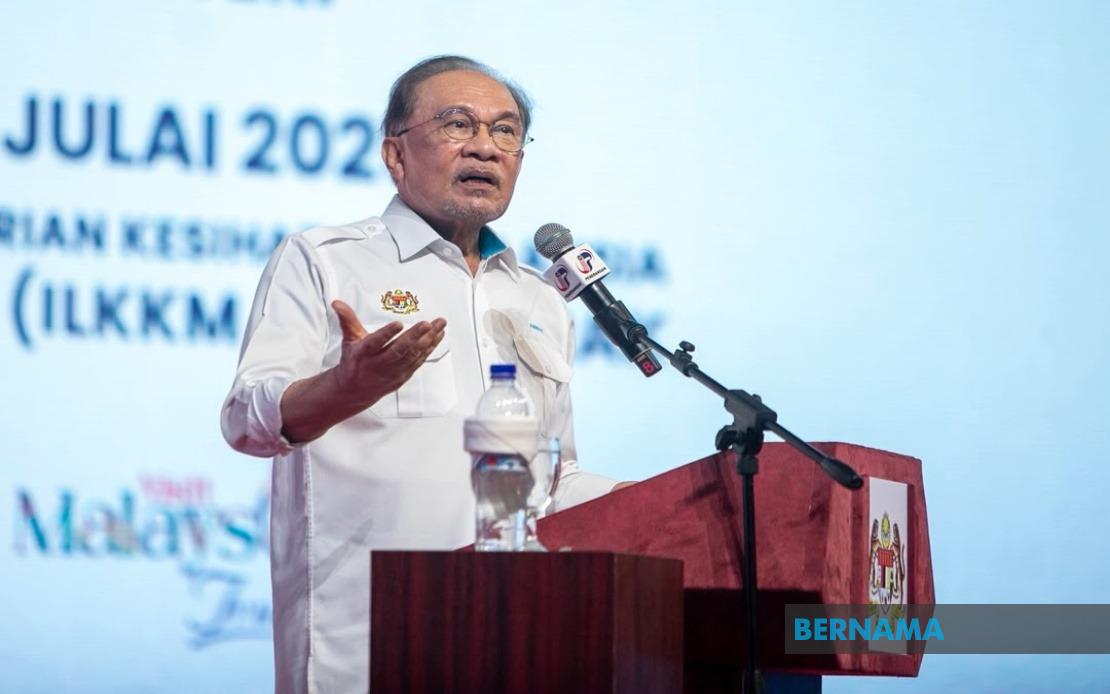
Prime Minister Datuk Seri Anwar Ibrahim has made an impassioned appeal to younger Malaysians to reconnect with their nation's independence heritage, stressing that the freedoms enjoyed today came at tremendous human cost. Speaking in Ipoh during the official launch of the 2026 National Month and Fly the Jalur Gemilang Campaign, he challenged the current generation to move beyond surface-level patriotism and develop a genuine understanding of what independence truly means within the Malaysian context.
Anwar's remarks reflect growing concern among political leaders about historical consciousness among young Malaysians. The Prime Minister framed the independence struggle not as a distant historical event but as a foundational narrative that should inform contemporary values and social cohesion. He drew explicit connections between the sacrifices of past freedom fighters and the comfortable circumstances many citizens experience today, suggesting that appreciation for national achievements requires understanding their origins.
The campaign launch, held in Perak's capital, represents a formal effort to shape the narrative around national identity as Malaysia approaches 2026, a significant year for reflecting on post-independence progress. By launching the initiative early, the government signals its intent to build momentum around civic engagement and patriotic consciousness well ahead of any commemorative events. The timing also suggests an awareness that meaningful national pride requires sustained messaging rather than last-minute mobilisation.
Anwar articulated a three-stage framework for contemporary patriotism: first, revisiting historical narratives with honesty and depth; second, performing symbolic acts of national pride such as displaying the flag; and third, channelling that awareness into building a better future for all Malaysians. This structured approach acknowledges that symbols alone are insufficient to maintain national unity and purpose without grounding them in historical understanding and forward-looking vision.
The phrase "blood, sweat and tears" that Anwar repeatedly invoked carries particular weight in the Malaysian context, where the path to independence involved negotiations between multiple communal and political actors, resistance movements, and complex British colonial dynamics. By emphasising the collective sacrifice required, he implicitly calls for a united approach to current challenges, suggesting that national problems demand the same commitment that independence required.
Several senior government figures attended the launch, including Communications Minister Datuk Seri Fahmi Fadzil, National Unity Minister Datuk Aaron Ago Dagang, and Perak Menteri Besar Datuk Seri Saarani Mohamad. Their presence underscores the cross-portfolio relevance of national identity messaging, with both communications and unity portfolios represented. This multi-ministerial approach indicates that the government views historical consciousness as integral to social cohesion rather than merely ceremonial.
The emphasis on youth represents a deliberate strategic focus. Young Malaysians, particularly those born after 1990, have limited direct exposure to the independence era through family memory or lived experience. They inherit a nation whose institutions, boundaries, and political systems were shaped by independence negotiations, yet may lack visceral connection to why those arrangements were considered important by their ancestors. Anwar's appeal attempts to bridge this generational gap through education and reflection.
The launch of a formal 2026 campaign also suggests recognition that spontaneous patriotism cannot be assumed. In an era of competing narratives, social media fragmentation, and diverse communal experiences of the nation, the government recognises the need for coordinated messaging to reinforce shared historical understanding. The Jalur Gemilang, Malaysia's national flag, functions as the visual anchor for this messaging, transforming a symbol into an invitation to historical consciousness.
For Malaysia and the broader Southeast Asian region, Anwar's emphasis on historical consciousness carries implications beyond ceremonial patriotism. Many Southeast Asian nations grapple with questions of national identity, communal cohesion, and the relevance of independence-era narratives to contemporary challenges. Malaysia's approach, positioning historical awareness as essential to navigating current difficulties, offers a distinctive model rooted in the belief that unity and progress require shared understanding of the past.
The specific invocation of independence fighters' sacrifice also subtly reframes contemporary political discourse. By emphasising what previous generations achieved through collective commitment, Anwar implicitly critiques approaches to governance based on narrow self-interest or communal advantage. The independence struggle, in this telling, transcended individual or sectional benefit in pursuit of a larger national project, a narrative that carries relevance for debates about corruption, patronage, and democratic governance.
Young Malaysians confronting complex contemporary issues—from economic inequality to environmental sustainability to digital transformation—are being asked to find inspiration in historical precedents of collective sacrifice and shared purpose. This connection between past heroism and present responsibility attempts to create psychological investment in national outcomes, suggesting that the stakes today, while different, carry comparable importance.
The campaign's focus on both reflection and forward momentum—revisiting history while simultaneously building a brighter future—reflects Anwar's broader political positioning as a leader attempting to balance continuity with reform. The message acknowledges legitimate pride in what Malaysia has achieved since independence while suggesting that complacency threatens those achievements. This framing positions patriotic consciousness as active and progressive rather than nostalgic or conservative.
As Malaysia moves toward 2026 and beyond, the success of campaigns like this will depend partly on whether they generate genuine engagement with historical complexity or remain surface-level ceremonialism. Anwar's challenge to the younger generation to truly understand rather than merely remember independence suggests awareness that superficial patriotism offers little cohesive power in diverse, rapidly changing societies.

