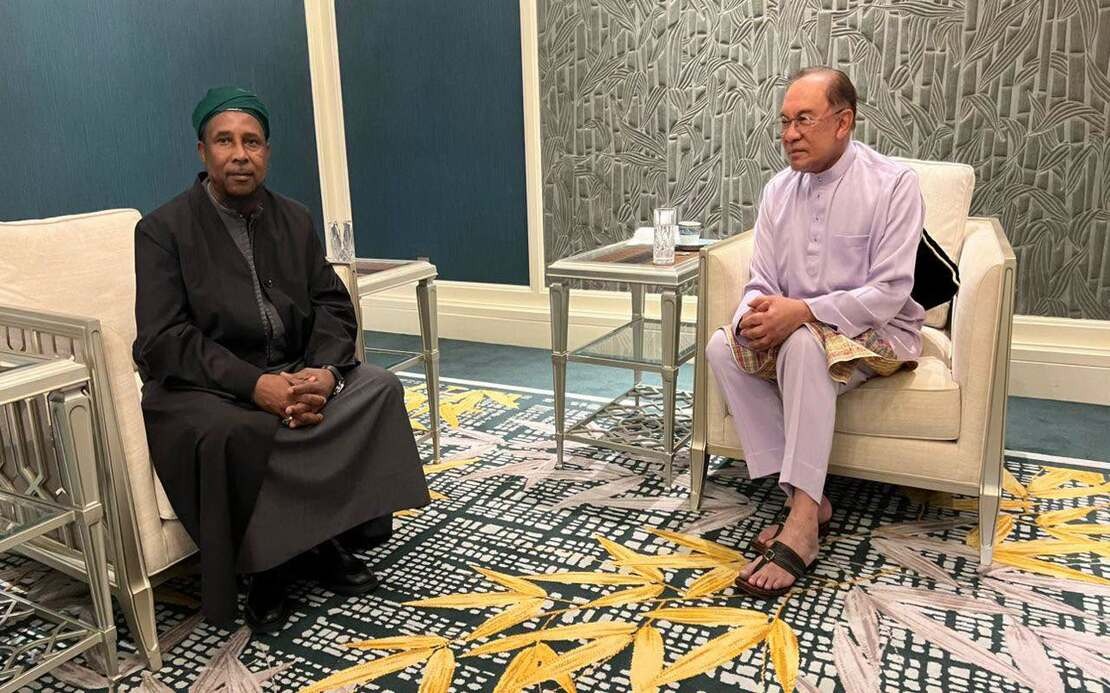
Prime Minister Datuk Seri Anwar Ibrahim received a farewell visit from prominent Gambian Islamic scholar Sheikh Muhammad Haydara Al-Jilani on 26 June, marking the conclusion of a month-long engagement that saw the respected religious figure conduct multiple educational and spiritual gatherings throughout Malaysia. The timing of the meeting, coinciding with the Day of Ashura and observed on a Friday, held particular significance for the Prime Minister, who sought the scholar's special invocations for the nation's continued prosperity and protection.
Sheikh Muhammad Haydara Al-Jilani's extended sojourn in Malaysia represented a carefully planned dakwah initiative designed to foster deeper religious understanding and spiritual growth among Malaysian communities. Throughout his stay, the Gambian scholar conducted a structured series of knowledge sessions and dhikr gatherings—spiritual remembrance ceremonies central to Islamic practice—at strategically selected venues across the country. This approach underscores Malaysia's ongoing engagement with international Islamic scholarship and the nation's role as a destination for religious education and interfaith dialogue within the Muslim world.
The farewell audience between Anwar and the visiting scholar reflected the Prime Minister's personal commitment to advancing Islamic knowledge and promoting spiritual enrichment across Malaysian society. By hosting such distinguished international Islamic figures, Malaysia continues to position itself as a hub for Islamic learning and cultural exchange in Southeast Asia. The meeting also demonstrated Anwar's active involvement in supporting religious and educational initiatives that align with the government's broader vision of inclusive nation-building grounded in Islamic principles.
In his public statement commemorating the occasion, Anwar emphasised the spiritual dimensions of the visit, noting that he had requested Sheikh Muhammad Haydara Al-Jilani to offer prayers specifically for the wellbeing of the Malaysian people and the nation's continued peace and stability. This appeal for divine blessing reflected both personal piety and the symbolic importance placed on spiritual intercession for national welfare—a practice deeply rooted in Islamic tradition and Malaysian cultural values. The invocation of Allah's mercy, blessings, and protection over Malaysia represented the Prime Minister's framing of national development within a broader spiritual and moral framework.
The choice to conduct this farewell during the Day of Ashura—observed by Muslims worldwide as a day of significant spiritual commemoration—lent additional weight to the occasion. Ashura carries deep theological meaning within Islamic tradition, and its observance typically involves heightened spiritual reflection and prayer. By consciously aligning the farewell meeting with this important date, particularly on a Friday when Muslims gather for congregational worship, Anwar signalled the religious and cultural gravity with which he viewed the scholar's visit and its implications for Malaysia's spiritual life.
Sheikh Muhammad Haydara Al-Jilani's month-long presence in Malaysia exemplifies the growing international networks connecting Islamic scholars and communities across Africa and Asia. The Gambian scholar's credentials and the scope of his engagement suggest that such visits serve multiple purposes: advancing theological discourse, strengthening transnational Islamic solidarity, and providing Malaysian audiences with exposure to diverse Islamic scholarly traditions. The breadth of the programme—spanning multiple locations nationwide—indicates deliberate efforts to distribute the benefits of such exchanges beyond Kuala Lumpur's elite circles, reaching communities across the country.
For Malaysian Muslims and the broader religious community, the visit represented an opportunity to engage with external Islamic perspectives while maintaining local institutional frameworks and leadership structures. Such knowledge-sharing arrangements contribute to Malaysia's rich Islamic intellectual heritage, historically characterised by openness to international scholarship while maintaining distinctive local interpretations and practices. The dakwah programmes conducted throughout the scholar's stay likely addressed contemporary issues facing Muslim societies, spiritual development, and the application of Islamic teachings to modern life.
From a diplomatic perspective, the hosting and formal farewell of international Islamic scholars like Sheikh Muhammad Haydara Al-Jilani reflects Malaysia's broader soft power strategy in the Muslim world. By facilitating such visits and providing platforms for knowledge dissemination, Malaysia strengthens cultural and religious bonds with Muslim-majority nations, including those in Africa. These engagements contribute to Malaysia's standing as a respected voice in global Islamic affairs and reinforce the nation's identity as a bridge between different regions and Islamic traditions.
The Prime Minister's request for special prayers during the farewell reflected an understanding that spiritual blessing and national prosperity are interconnected within Islamic worldview. This framing resonated with traditional Malaysian perspectives that integrate religious observance with governance and national welfare. By publicly articulating prayers for peace, wellbeing, and divine protection, Anwar connected individual spiritual practice to collective national interests, reinforcing the integration of Islamic values within Malaysia's political and social discourse.
As Sheikh Muhammad Haydara Al-Jilani departed Malaysia, his month-long visit concluded a chapter of meaningful exchange that will likely have longer-term implications for Islamic intellectual discourse within the country. The programmes he conducted and the networks established through this engagement contribute to an ongoing process of knowledge circulation that enriches Malaysia's Islamic institutions and communities. Such exchanges, when conducted at the highest political levels and with sustained institutional support, strengthen the foundations of Islamic scholarship and practice while positioning Malaysia as an active participant in the global Islamic intellectual and spiritual community.

