The impeachment trial of Philippine Vice President Sara Duterte reached a pivotal juncture on Wednesday when her legal team mounted a forceful constitutional challenge to the charges against her, contending that the alleged threats she issued fall outside the parameters of "other high crimes" as defined by the nation's 1987 Constitution. During cross-examination of the National Bureau of Investigation's senior agent John Mark Calilung on the third day of proceedings before the Senate impeachment court, defence counsel systematically questioned both the evidentiary foundation underpinning the prosecution's case and the legal sufficiency of the charges themselves, signalling a strategy focused on dismantling the case at its juridical roots rather than merely attacking factual assertions.
The defence's constitutional argument strikes at the heart of impeachment jurisprudence in the Philippines. Mark Vinluan, lead defence counsel, articulated a position that whilst Duterte did indeed make the controversial statements during a press briefing on November 23, 2024, these utterances do not satisfy the stringent constitutional criteria for impeachable conduct. The 1987 Constitution enumerates specific grounds for impeachment: culpable violation of the Constitution, treason, bribery, graft and corruption, betrayal of public trust, and the catch-all provision of "other high crimes." By emphasising this restrictive framework, the defence effectively challenged the House of Representatives to demonstrate that Duterte's remarks transcended the realm of political rhetoric or personal invective and entered the domain of conduct sufficiently grave to warrant removal from the second-highest office in the land.
Central to the defence narrative is a reframing of context that fundamentally recharacterises Duterte's motivations and emotional state at the time of the statements. Vinluan argued forcefully that when Duterte spoke those words, she was not functioning in her official capacity as Vice President but rather as a private individual protecting herself and her family against what the defence characterises as "Operation Romanov," an alleged coordinated surveillance and intelligence operation by government agents. This argument, if accepted, would transform the legal question from one concerning official malfeasance to one involving a mother and daughter responding to perceived existential threats against their security and wellbeing. The defence presented video evidence from the same press briefing showing Duterte's chief of staff Zuleika Lopez visibly distressed over her impending detention and forced transfer, suggesting this emotional moment catalysed the Vice President's subsequent statements.
The prosecution's own admissions during testimony have provided the defence with significant ammunition for its challenge. When Senator Risa Hontiveros directly questioned prosecution counsel Amando Ligutan about whether the video recordings conclusively proved that Duterte had actually hired an assassin to carry out killings, Ligutan was forced to acknowledge they did not. Instead, he attempted to pivot the argument toward demonstrating Duterte's intent through a pattern of statements, a position that the defence characterises as speculative and legally insufficient. The defence counsel seized upon this concession, arguing that the absence of concrete evidence linking Duterte to any actual assassination plot—the term "assassin" itself being supplied by interpreters rather than explicitly stated by Duterte—fundamentally undermines the gravity of the charges and their impeachability.
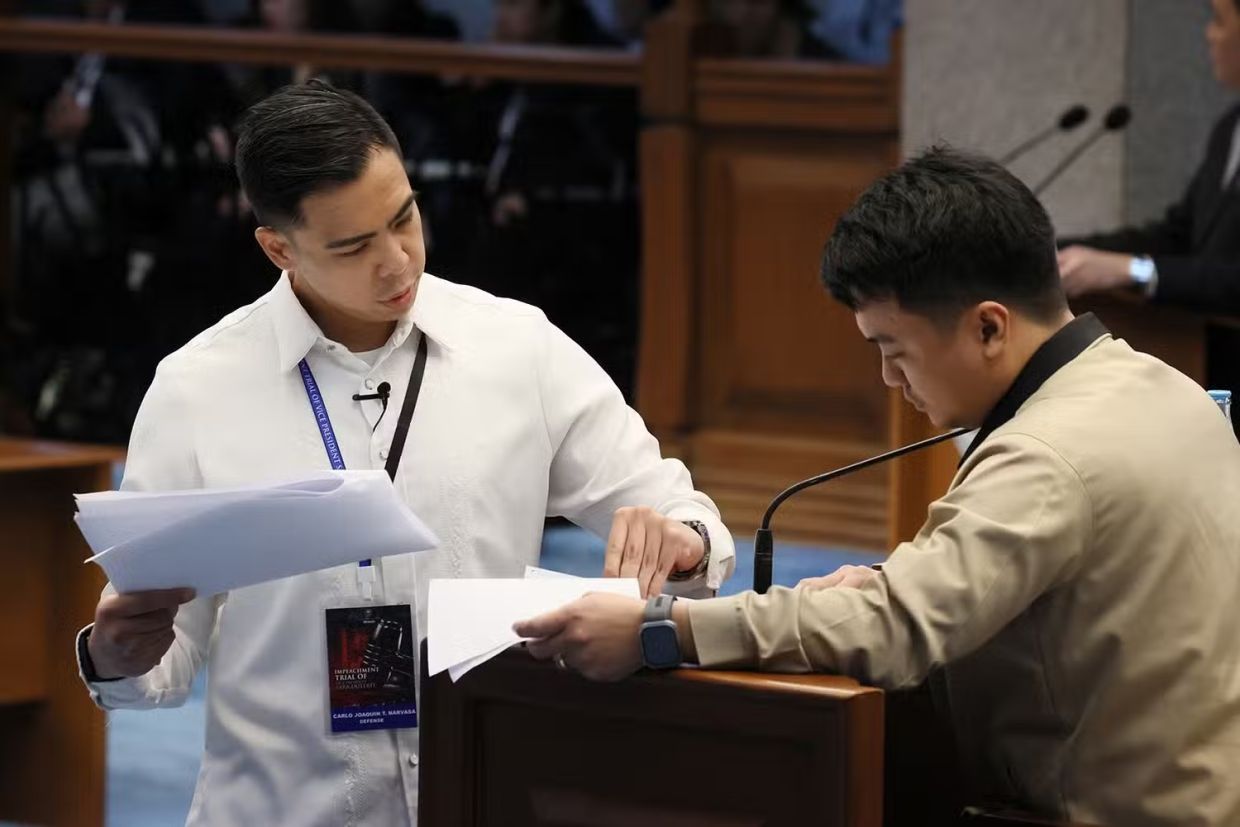
The cross-examination of Calilung exposed what the defence portrays as significant investigative deficiencies that undermine the evidentiary foundation of the entire case. Narvasa noted the conspicuous absence of sworn statements from the three supposed targets of the threats: President Ferdinand Marcos, First Lady Liza Araneta-Marcos, and former Speaker Martin Romualdez. Calilung acknowledged having no personal knowledge of whether these three individuals had filed criminal complaints with the NBI, nor could he confirm that any of them had appeared before the bureau in person. This revelation—that the alleged victims apparently did not formally lodge complaints against the Vice President—raises troubling questions about the authenticity of the threat perception and the prosecutorial motivation behind the case. The defence weaponised this gap in the investigation, questioning whether the NBI had truly conducted a thorough and legitimate inquiry or instead pursued a predetermined political objective.
Another dimension of the defence strategy centres on challenging the investigative methodology itself. The NBI conducted its investigation motu proprio, meaning without any formal complainant lodging an initial report. This procedural irregularity becomes more significant when coupled with the fact that the bureau's revised affidavit of February 10, 2025, lacks affidavits from the purported offended parties and notably also excludes statements from the journalists who attended the November 23 press briefing and could have testified about Duterte's actual words and tone. When Narvasa posed the withering question "Did you really investigate this case?" the defence had already established sufficient ground to suggest the investigation represented a fundamentally compromised endeavour. Calilung's explanation that he executed an affidavit attesting to minutes of investigators' interviews rather than obtaining primary evidence from key witnesses only reinforced this perception.
The narrative arc of systematic oppression that the defence has constructed operates on multiple levels and carries particular resonance given the intense political turmoil that has characterised the Marcos-Duterte relationship. The defence presented evidence that Duterte and her associates experienced what Narvasa characterised as "systematic oppression" by the House committee chaired by Representative Joel Chua, the same individual now serving as a House prosecutor in the impeachment proceedings. The timing of Lopez's citation for contempt on the very day of Duterte's statements, combined with the concerning circumstances of her forced transfer to the Correctional Institution for Women in Mandaluyong City and the denial of her lawyer's accompaniment, created a backdrop of escalating governmental pressure. This context, the defence argues, provides the necessary framework for understanding Duterte's statements not as premeditated threats but as desperate reactions to perceived persecution of herself and her inner circle.
The presiding officer of the trial, Senator Francis Escudero, intervened at one critical moment to redirect the proceedings and prevent what he characterised as counsel drawing legal conclusions during examination. When Hontiveros pressed whether grave threats could be justified if legitimate reasons existed, Escudero instructed senator-judges to avoid such questions, deferring legal interpretation to closing arguments. This procedural intervention reflects the delicate balance the court must maintain between rigorous examination of facts and premature adjudication of legal questions. However, Hontiveros's observation that previous impeachment trials have permitted broader questioning by senator-judges suggests potential disagreements about the appropriate scope of inquiry in these proceedings, a methodological tension that could influence how comprehensively the constitutional questions are examined.
For Malaysian and Southeast Asian observers, this trial illuminates recurring governance challenges across the region regarding the politicisation of impeachment mechanisms and the vulnerability of contentious interpersonal relationships among political elites to weaponisation through impeachment proceedings. The Philippines has not conducted a successful impeachment removal since the 1989 conviction of President Joseph Estrada, and the current trial against Duterte represents only the third impeachment case brought against a Vice President. The central question of whether statements made in emotional circumstances, absent concrete evidence of actual criminal conspiracy, can constitute impeachable conduct will establish important precedent affecting the scope of impeachment powers throughout Southeast Asia, where similar constitutional provisions exist. Furthermore, the trial's focus on investigative procedures and the primacy of affirmative evidence reflects judicial concerns about preventing impeachment from becoming merely an instrument of partisan political competition rather than a mechanism for addressing genuine constitutional transgressions.
The defence strategy ultimately rests on three interlocking propositions: first, that the constitutional definition of impeachable "other high crimes" does not encompass heated political rhetoric or personal invective; second, that the evidentiary foundation for the charges is fundamentally deficient, lacking even formal complaints from the alleged victims; and third, that the proper contextual understanding of Duterte's statements demonstrates they were responses to governmental overreach rather than premeditated threats. Whether the Senate impeachment court accepts these arguments will determine not merely Duterte's political fate but will establish crucial boundaries around impeachment powers that will reverberate through Philippine constitutional law and potentially influence how other democracies in the region conceptualise and execute impeachment proceedings against senior officials. The case demonstrates how a conflict rooted in personality and family history between powerful political factions can rapidly escalate into a constitutional crisis that tests the judicial system's ability to distinguish between legitimate oversight mechanisms and partisan weaponisation of extraordinary powers.

