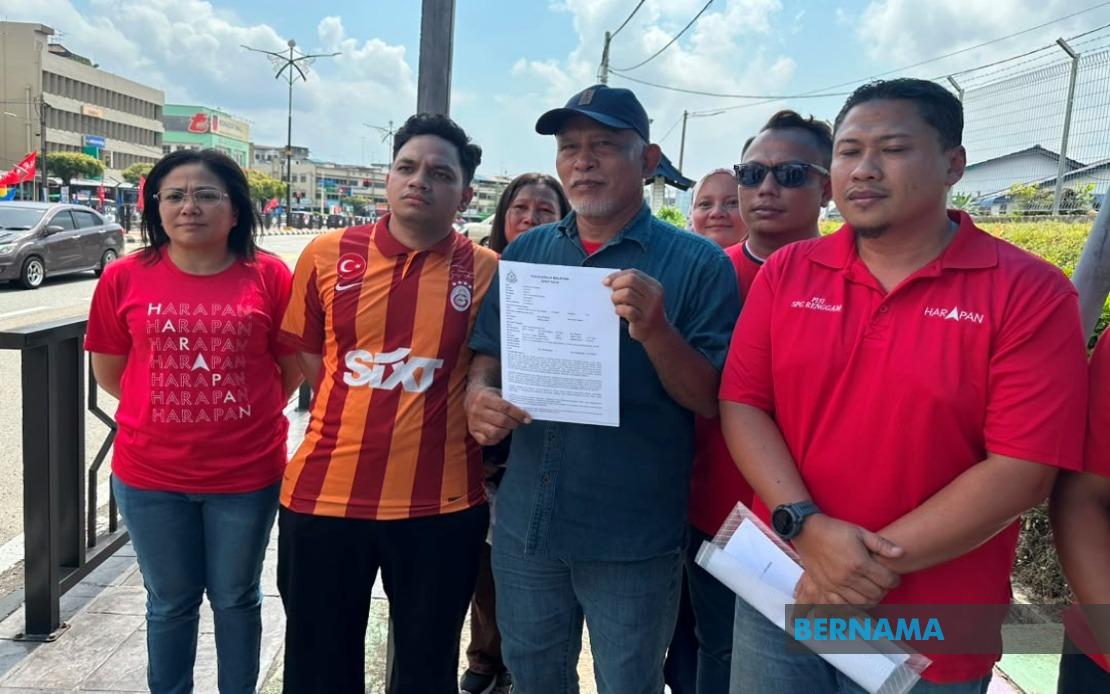
The Pakatan Harapan campaign for the Machap state seat escalated tensions on Wednesday when its representative lodged a formal police complaint against Johor Menteri Besar Datuk Onn Hafiz Ghazi, accusing him of misusing technical and vocational education institutions to influence students during the ongoing state election campaign. The report was filed at Simpang Renggam district police headquarters as voting preparations enter their final stretch ahead of Saturday's ballot.
Khiru Nasir Rohani, who also serves as Simpang Renggam Amanah deputy division chief, alleged that a deliberate campaign had been orchestrated to pressure TVET students into attending politically charged events designed to boost support for Barisan Nasional contenders. According to the complaint, this systematic mobilization represents a clear breach of electoral fairness and democratic principles embedded within Malaysian law. The allegation centres on the misappropriation of state institutions and their student bodies as instruments for partisan campaigning, a practice that critics argue undermines the neutrality essential to genuine democratic competition.
The specific incident underpinning the complaint involved a gathering in Kluang on July 4 where TVET students were allegedly mandated to participate in what was framed as an educational programme but functioned primarily as a campaign rally. Participants report that the event deviated sharply from its stated purpose, transforming instead into an open endorsement platform for state election candidates. This blurring of institutional functions and electoral activity raises fundamental questions about how Malaysian authorities distinguish between legitimate governance communications and prohibited political campaigning during election periods.
The complaint explicitly references violations of the Election Offences Act 1954, particularly provisions designed to prevent undue influence and the exploitation of official authority for electoral gain. By invoking these statutory protections, Khiru Nasir has framed the alleged conduct as more than a campaign irregularity—he characterizes it as a systemic circumvention of electoral safeguards that govern how institutions interact with voters during campaign periods. The invocation of multiple legal frameworks suggests a deliberate strategy to signal the severity of the alleged misconduct to both law enforcement and public observers.
Khiru Nasir has explicitly appealed to three separate enforcement bodies to initiate coordinated investigations. He called upon the police, the Malaysian Anti-Corruption Commission, and the Election Commission to jointly examine whether administrative power and institutional resources have been weaponized for electoral purposes. This multi-agency approach reflects growing expectations among opposition political actors that election integrity requires integrated oversight mechanisms rather than isolated institutional responses. The appeal underscores broader concerns within the opposition coalition about maintaining meaningful boundaries between the state apparatus and partisan political activity.
The timing of these allegations acquires particular significance given that Johor's 56 state seats remain actively contested by 172 candidates across multiple competing coalitions. The state election represents a crucial test of voter sentiment following recent shifts in Malaysia's political landscape, with control of the Johor state apparatus carrying substantial implications for both regional and national political dynamics. Allegations of institutional misuse during such a consequential election assume heightened importance, as they potentially influence public perceptions of electoral legitimacy and institutional impartiality.
The Machap constituency, where Khiru Nasir represents PH interests, forms part of a broader competitive landscape where margin of victory may prove decisive in determining overall state-level outcomes. Within this context, the complaint can be understood not merely as an isolated claim of misconduct but as part of the opposition's broader strategy to highlight systemic advantages enjoyed by incumbent coalitions with access to state machinery. Such allegations, whether ultimately substantiated or dismissed, shape the narratives through which voters interpret campaign dynamics and institutional reliability.
Historically, Malaysian elections have witnessed recurring patterns of complaints regarding institutional resource utilization by governing coalitions, though enforcement outcomes have remained inconsistent and frequently contentious. The involvement of TVET institutions and students represents a particularly sensitive dimension because it involves younger voters who may lack extensive experience navigating electoral processes and therefore remain more susceptible to institutional pressure. Educational institutions occupy a distinctive position within Malaysia's electoral ecosystem—they simultaneously represent bastions of youth engagement and potential venues for subtle coercion given hierarchical relationships between administration and students.
The Election Commission's role in investigating such allegations carries substantial weight for future campaign standards. If the inquiry confirms systematic student mobilization by state authorities, it would establish precedent regarding institutional boundaries during election periods. Conversely, if investigations determine that students participated voluntarily and political activity remained peripheral rather than central to the gathering's purpose, it could reinforce broader latitude for state actors in engaging with institutional constituencies. The commission's handling of this complaint will therefore reverberate beyond Johor, influencing how educational institutions navigate the intersection of civic engagement and electoral activity in subsequent campaigns.
For Malaysian voters and regional observers, this complaint highlights ongoing tensions between administrative efficiency and electoral neutrality within federalized systems where state governments wield substantial institutional leverage. Southeast Asian democracies consistently grapple with establishing robust mechanisms that prevent incumbent advantage from metastasizing into systematic distortions of electoral competition. Malaysia's experience in addressing institutional misuse allegations contributes valuable insights—sometimes cautionary—to regional discussions about sustaining democratic integrity amid asymmetric access to state resources.

