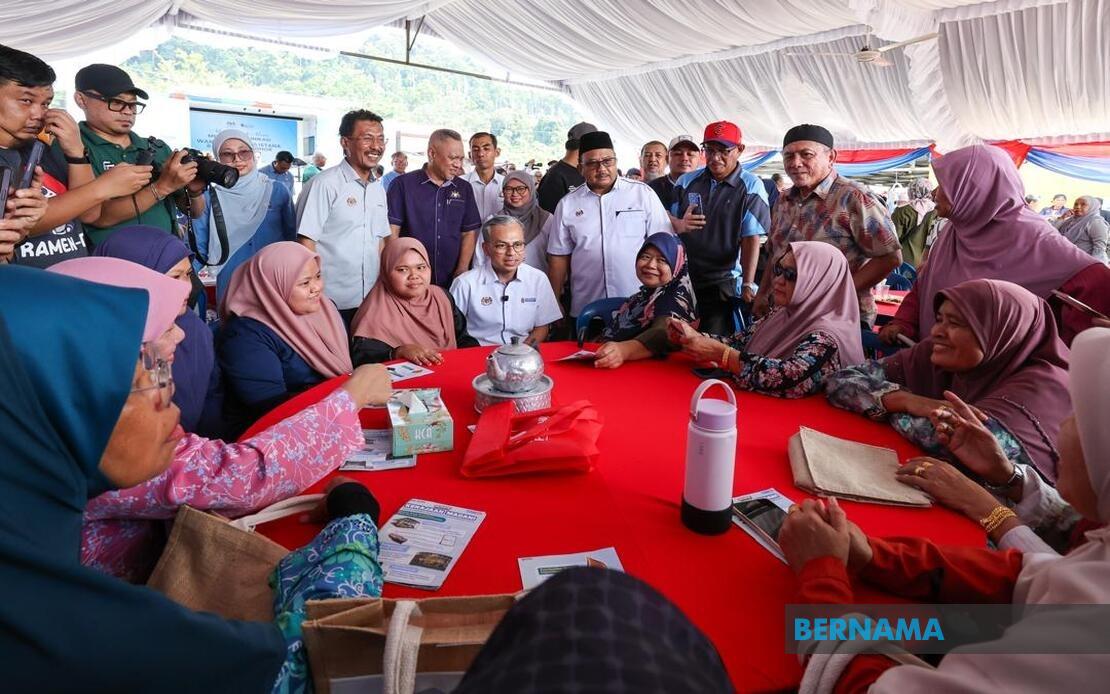
Pakatan Harapan's Communications Minister Datuk Fahmi Fadzil has pushed back against mounting criticism regarding the timing of the coalition's 'Johor for All' manifesto, insisting that the decision to release it during the second week of campaigning reflected careful strategic planning rather than organisational weakness. Speaking during a community engagement session in Batu Pahat on July 4, Fahmi characterised the manifesto launch as appropriately timed, coming after extensive internal deliberation and formal endorsement by the coalition's senior figures, including Prime Minister Anwar Ibrahim.
The defence came in response to concerns raised by former Bangi MP Ong Kian Ming, who had suggested that the delayed manifesto rollout could undermine PH's election machinery and messaging effectiveness during this critical period. Ong had also predicted a decisive Barisan Nasional victory, citing PH's apparent organisational disadvantages including the absence of a publicly announced menteri besar candidate and limited participation from senior party personalities in ground-level campaigning. Fahmi rejected these characterisations as divorced from the reality of PH's campaign performance on the ground.
The coalition's approach reflects a deliberate choice to prioritise content quality and institutional consensus over speed in the competitive race for Johor's 56 state seats. By waiting to present the manifesto until both major blocs had introduced their respective candidates to voters, Fahmi suggested, PH had positioned itself within a natural campaign rhythm that benefited comprehensive policy presentation. This sequencing allows voters to evaluate opposing platforms within a comparable timeframe, potentially offsetting any perceived disadvantage from a later launch.
Fahmi also seized on the opportunity to draw contrasts between different personalities within the opposing camp, noting that former UMNO Youth chief Khairy Jamaluddin appeared to be campaigning with considerably greater vigour and visibility than incumbent Johor Menteri Besar Datuk Onn Hafiz Ghazi. When deflecting criticism from Khairy regarding alleged similarities between the PH and BN manifestos, Fahmi employed pointed rhetoric, suggesting that if Onn Hafiz possessed Khairy's political energy and stature, the BN campaign might project greater strength.
The exchange highlights underlying tensions within the ruling coalition heading into a state-level election that carries significant implications for federal political dynamics. Khairy's prominent role in campaign activities has drawn notice, raising questions about succession planning and the relative positioning of competing factions within the broader BN structure. By highlighting this apparent imbalance, Fahmi sought to suggest that PH's campaign leadership presents a more cohesive front than its opponents, where visible fractures may indicate organisational discord.
Regarding the manifesto's substance, PH's communications apparatus has faced separate accusations from Khairy that the document amounts to little more than a reformulated version of BN's own policy proposals. Rather than engaging directly with this substantive critique, Fahmi adopted a rhetorical counter-attack, suggesting that if anything, Onn Hafiz would benefit from adopting some of Khairy's demonstrated capabilities and campaign zeal. This response, while politically effective in deflecting the specific allegation, notably sidesteps detailed policy comparison.
PH officials have also moved to contain potential fallout from intra-opposition controversies involving the Democratic Action Party, which forms a crucial component of the Pakatan coalition. Marina Ibrahim, a former Skudai assemblyman, recently announced her retirement from politics through social media, citing disillusionment with what she characterised as performative leadership within DAP regarding the thorny question of a potential pardon for former Prime Minister Datuk Seri Najib Tun Razak. Such defections, even from lower-profile figures, can accumulate into meaningful electoral consequences in closely contested races.
Fahmi expressed confidence that these internal opposition dynamics would not substantially damage PH's campaign momentum, grounding this assessment in observations of strong grassroots attendance and enthusiasm at coalition events throughout the campaign period. The presence of DAP candidates in specific state seats, including Bentayan, demonstrates the coalition's continued reliance on its component parties despite occasional public expressions of discontent. Fahmi specifically cited the robust turnout at recent PH gatherings as evidence that social media allegations regarding senior DAP figures have failed to penetrate voting intentions at the community level.
The 16th Johor State Election represents a significant barometer of political sentiment in one of Malaysia's most developed and economically important states. Scheduled for July 11, with early voting on July 7, the contest involves 172 candidates vying for 56 assembly seats across a complex political landscape where traditional divisions between urban and rural constituencies intersect with demographic and economic concerns. Johor's status as a prosperous state with established administrative structures makes it less susceptible to the protest voting that sometimes characterises federal elections.
For Pakatan Harapan, which assumed federal power in 2022 but faces questions about electoral viability at the state level, a strong showing in Johor would consolidate claims to be a viable long-term governing coalition. Conversely, any substantial losses would reinforce narratives about declining support or organisational challenges. The manifesto's timing and content thus carry significance extending well beyond this single state contest, potentially influencing broader coalition confidence and voter perceptions of PH's strategic competence.
The coalition's communication strategy—emphasising internal deliberation, top-level approval, and grassroots engagement rather than policy specifics—reflects an implicit assessment that election outcomes in Johor will be determined more by voter sentiment regarding incumbent performance and broad political direction than by detailed manifesto content. By framing the manifesto launch as methodical rather than belated, and by contrasting its leadership cohesion against apparent divisions in the opposition, PH aims to reorient the narrative from campaign timing to campaign capability.

