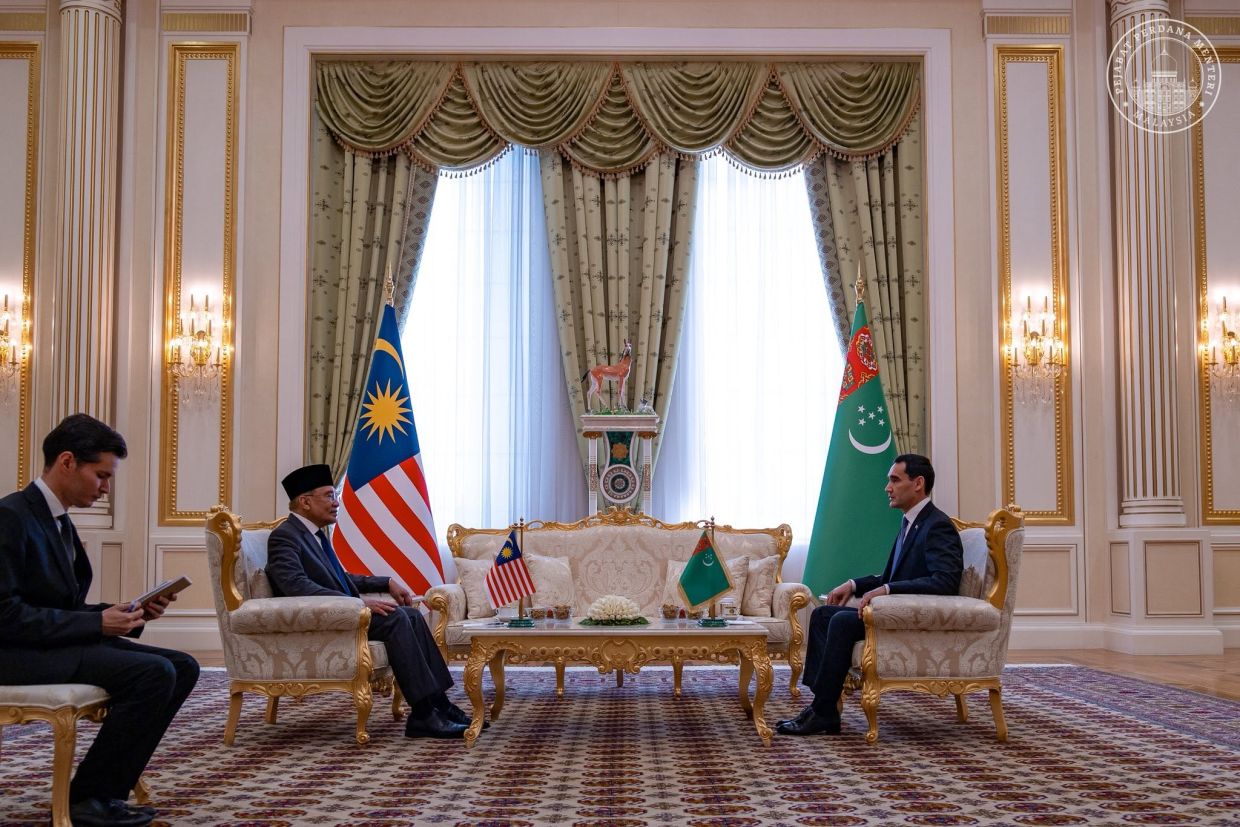
Prime Minister Datuk Seri Anwar Ibrahim stood alongside Turkmenistan President Serdar Berdimuhamedov in Ashgabat as the two nations formalized a landmark strategic partnership between PETRONAS and Turkmenistan's energy authorities. The agreement represents a significant milestone in deepening Malaysia's engagement across Central Asia and reinforces the country's growing role as a trusted energy sector partner on the international stage.
The partnership carries particular symbolic weight as it commemorates three decades of continuous Malaysian-Turkmen cooperation within the energy sector. This three-decade relationship has become foundational to the broader bilateral relationship between the countries, demonstrating how technical and commercial partnerships can serve as anchors for sustained diplomatic and economic engagement. The longevity of this cooperation underscores mutual confidence and the successful execution of complex energy projects across geographical and cultural boundaries.
According to the Prime Minister's Office, the agreement extends beyond immediate commercial interests to encompass broader developmental objectives. The partnership framework emphasizes knowledge transfer, talent cultivation, and technological advancement benefiting both parties. These softer dimensions of energy cooperation have become increasingly important in contemporary bilateral relations, as nations recognize that sustainable partnerships require capacity building and institutional strengthening alongside direct investment and resource extraction.
Turkmenistan's natural gas reserves rank among the world's largest, positioning the country as a critical player in global energy markets. The strategic partnership with PETRONAS specifically targets this vast potential, creating pathways for Malaysian energy expertise to contribute toward developing and optimizing these resources. For Malaysia, access to major gas reserves through established partnerships offers long-term energy security considerations and commercial opportunities. For Turkmenistan, PETRONAS's technical capabilities and international experience provide valuable expertise in resource development and commercialization.
The Malaysian government framed this partnership as validation of domestic capabilities competing successfully in international energy markets. Beyond the immediate commercial arrangement, officials highlighted how PETRONAS's technology, human capital, and operational know-how demonstrate Malaysia's capacity to deliver complex solutions at the global level. This narrative carries significance domestically, reinforcing confidence in national champions and their strategic importance to economic development policy.
Anwar's two-day official visit to Ashgabat provided the ceremonial framework for formalizing this arrangement. His reception at the Presidential Palace and subsequent bilateral meetings reflected the diplomatic priority both nations assign to their relationship. Such state-level engagement signals political commitment beyond routine commercial transactions, suggesting both governments view this partnership as strategically important for their respective foreign policy objectives.
Trade data reveals Malaysia's growing commercial importance within Turkmenistan's economy. In 2025, Turkmenistan ranked as Malaysia's fourth-largest trading partner among Central Asian nations, with bilateral trade reaching RM75.80 million. Malaysian exports to Turkmenistan amounted to RM75.50 million, representing a robust 9.0 per cent increase year-on-year. While these figures remain modest compared to Malaysia's global trade volumes, the growth trajectory demonstrates expanding commercial momentum.
PETRONAS's investment footprint in Turkmenistan stretches across nearly three decades, with cumulative investments reaching RM52.73 billion since 1996. This substantial commitment reflects long-term confidence in the market and represents one of Malaysia's most significant foreign direct investments within Central Asia. The scale of PETRONAS's commitment demonstrates that Malaysian energy companies view the region not as peripheral but as central to their portfolio strategies and future growth prospects.
The timing of this partnership announcement aligns with broader Malaysian strategic positioning in Central Asia. As global energy markets face transitions and geopolitical realignments, Malaysia seeks to strengthen relationships with resource-rich nations while maintaining relevance in energy sector development. The Central Asian region, often overlooked in Southeast Asian foreign policy discourse, holds significant untapped potential for Malaysian companies and investors.
For PETRONAS specifically, the partnership represents operational continuity and strategic expansion within existing markets. The company's three-decade presence provides institutional knowledge and relationship networks that newer competitors cannot easily replicate. This advantage allows PETRONAS to negotiate from positions of strength when formalizing expanded commitments with host governments.
The broader implications for Malaysia extend beyond energy sector considerations. Strengthening bilateral relations with Central Asian nations through high-level visits and strategic business partnerships enhances Malaysia's profile as a serious player in Asian regional affairs. Central Asia increasingly attracts attention from major powers and regional actors seeking influence, commerce, and strategic positioning. Malaysia's engagement in this space, though modest compared to Russia, China, or other major powers, reflects a deliberate diversification of foreign relations and economic partnerships.
The partnership framework encompasses future resource development opportunities, suggesting both parties anticipate long-term collaboration extending beyond current operational parameters. This forward-looking orientation indicates confidence that bilateral relations will remain stable and mutually beneficial across multiple political cycles and market conditions.
As Malaysia navigates an increasingly complex global energy landscape characterized by transition pressures and geopolitical competition, partnerships like those formalized in Ashgabat provide both immediate commercial value and strategic hedging. By deepening engagement with resource-rich Central Asian partners, Malaysia positions itself to benefit from diverse energy sources and maintains flexibility in navigating future market transformations.