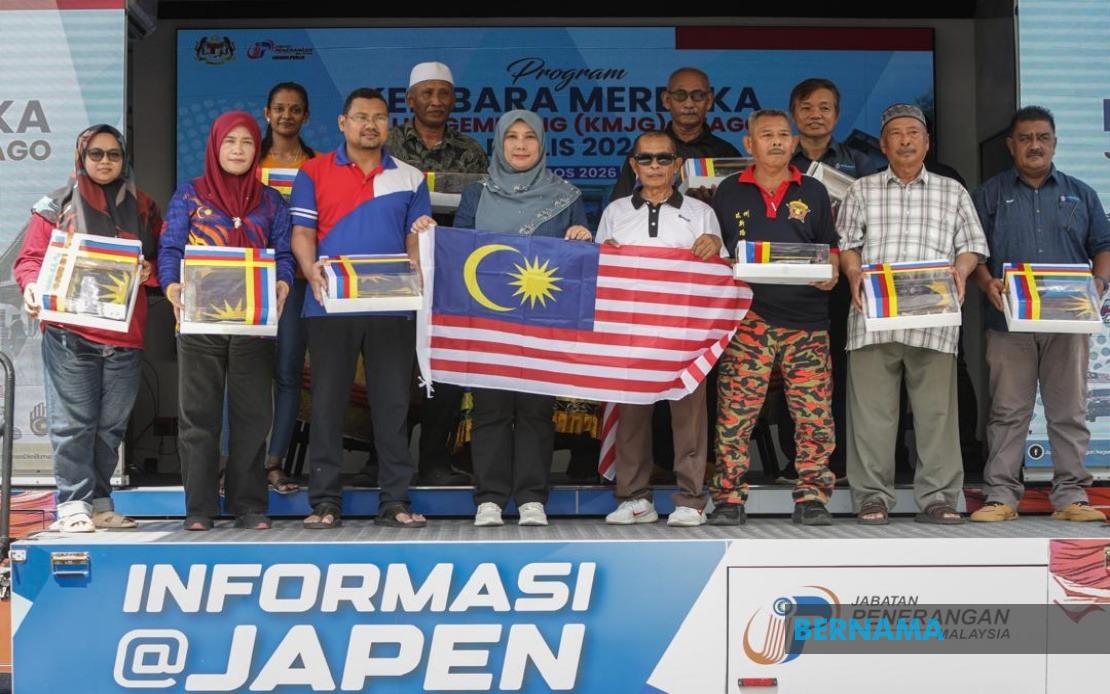
Patriotic fervour is being deliberately cultivated across Perlis as the state's information authority launched an expanded campaign to encourage flag-flying among residents and businesses. The 1 House 1 Jalur Gemilang initiative, which aims to make Malaysian flag displays a common sight throughout households, public buildings, and private sector installations, represents part of broader efforts by the Perlis Information Department (JAPEN) to build momentum ahead of 2026's National Day and Malaysia Day celebrations. The campaign, officials say, serves as a visible expression of national unity and collective pride in Malaysia's multicultural fabric.
Aidatul Shima Che Hassan, the state's Information director, outlined the department's multi-pronged strategy during remarks at the Kembara Merdeka Jalur Gemilang convoy programme held in Kampung Pauh Setia. Rather than limiting the initiative to isolated government directives, JAPEN is leveraging grassroots networks by engaging all 45 MADANI Communities scattered across Perlis to organise local activities that reinforce patriotic messaging. This decentralised approach reflects a growing recognition among Malaysian officials that sustained civic engagement requires embedding campaigns within existing community structures rather than relying solely on top-down announcements.
The department has adopted multiple communication channels to amplify the campaign's reach. Flags now prominently adorn Bangunan Tun Haji Abdul Razak in Kangar, the state capital, while PERLISfm radio and JAPEN's social media accounts disseminate promotional content. This multimedia strategy acknowledges the shifting media consumption patterns among Malaysian audiences, particularly younger residents who increasingly encounter civic messaging through digital platforms. By combining traditional broadcast media with online engagement, Perlis authorities are attempting to achieve broader demographic penetration than conventional flag-raising ceremonies might accomplish.
Che Hassan's public remarks emphasised practical aspects of flag maintenance and display, urging citizens to replace worn or faded flags with new ones and to install flags across diverse settings including private residences, government offices, corporate premises, and personal vehicles. This granular guidance reflects an understanding that patriotic campaigns often falter when abstract ideals lack concrete implementation steps. By specifying where and how flags should appear, officials aim to reduce ambiguity and lower barriers to participation. The emphasis on flag replacement also carries economic implications, potentially supporting retailers and manufacturers of national insignia throughout the state.
Perlis achieved distinction by becoming the first Malaysian state to formally launch the Kembara Merdeka Jalur Gemilang programme during 2026. This pioneering status positions the northern state as a testing ground for patriotic mobilisation strategies that other state governments may subsequently adopt or adapt. The convoy format—combining mobile education with festive celebration—offers advantages over static events by bringing campaign messaging directly to communities across dispersed geographic areas. This approach proves particularly valuable in Perlis, where rural settlements and smaller towns might otherwise remain peripheral to centralised awareness initiatives.
The participating agencies represent a cross-section of federal, state, and local governance structures, including the Perlis Federal Development Office, Perlis Broadcasting Department, the Malaysian Communications and Multimedia Commission's Perlis office, Pos Malaysia, the Civil Defence Force, and Royal Malaysia Police. This inter-agency coordination suggests that patriotic campaigns increasingly require logistical support extending beyond traditional information channels. The involvement of postal services, telecommunications regulators, and civil defence forces indicates that flag-flying initiatives are being integrated into broader national development and citizen engagement frameworks.
The thematic framing of the 2026 celebrations—'Malaysia MADANI: Kesejahteraan Dinikmati' or 'Malaysia MADANI: Shared Prosperity'—links flag displays to contemporary governance messaging emphasising inclusive economic development. Prime Minister Datuk Seri Anwar Ibrahim formally inaugurated the National Month campaign in Perak on July 19, establishing the conceptual foundation that Perlis and other states are now operationalising. This alignment between national leadership and subnational implementation reflects structured cascading of political messaging through Malaysia's federal system.
For Malaysian readers, the campaign illuminates how patriotic sentiment is actively constructed through coordinated state action rather than emerging spontaneously from populations. The 1 House 1 Jalur Gemilang initiative demonstrates that contemporary governance involves deliberate cultivation of civic symbols and expressions. This approach raises pertinent questions about the relationship between enforced patriotic displays and authentic national sentiment, particularly given Malaysia's plural society comprising diverse ethnic and religious communities who may harbour varying degrees of identification with specific national symbols.
Regionally, Perlis's campaign reflects broader Southeast Asian trends wherein nationalist messaging has intensified across multiple countries over recent years. Governments throughout the region increasingly employ flag-flying campaigns, patriotic education programmes, and civic mobilisation drives to reinforce national identity, particularly as globalisation and digital connectivity create centrifugal forces potentially weakening state-centric attachments. Malaysia's approach, emphasising community participation through MADANI Community networks rather than purely bureaucratic channels, represents one model within this wider regional pattern.
The sustainability of such campaigns remains uncertain. Initial enthusiasm often characterises newly-launched patriotic initiatives, but maintaining consistent citizen engagement beyond ceremonial occasions presents enduring challenges. Whether Perlis residents will sustainably display flags once campaign intensity diminishes, or whether participation will decline as media attention shifts to subsequent policy priorities, will likely determine the initiative's long-term efficacy. The department's reliance on community volunteers and local organisers suggests recognition that government capacity alone cannot perpetually sustain patriotic expression without community internalisation of underlying values.

