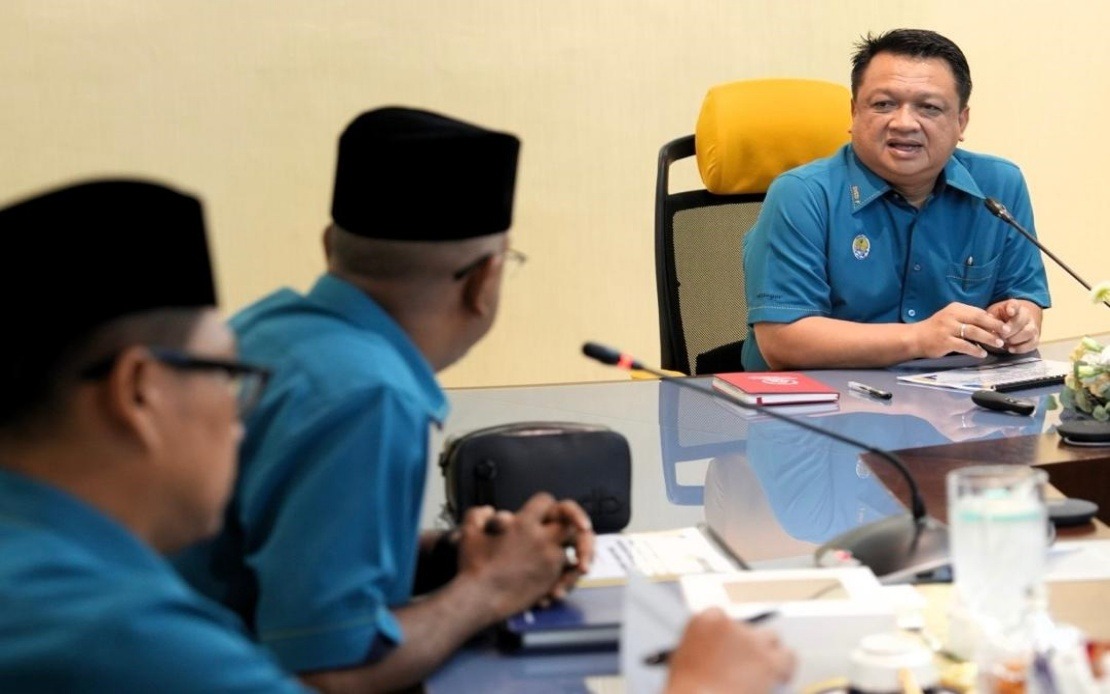
The Raja Muda of Perlis, Tuanku Syed Faizuddin Putra Jamalullail, has called for his state to serve as a pilot laboratory for Malaysia's environmental and sustainability agenda, positioning Perlis as a demonstration of how smaller jurisdictions can lead the country's transition to a greener economy. Speaking during an engagement with officials from the Kangar Municipal Council, he outlined an ambitious vision for transforming Perlis into a "Green Smart State" that would showcase Malaysia's commitment to global climate action whilst achieving zero-carbon operations.
The proposal gains particular significance given Perlis's geographic and administrative characteristics. As Malaysia's smallest state by area, Perlis possesses inherent advantages for comprehensive policy implementation and measurable outcomes. The Raja Muda emphasised that these structural benefits position the state uniquely to accelerate adoption of renewable energy technologies, particularly solar and biomass systems, whilst establishing integrated waste management frameworks that other states might subsequently replicate at greater scale. Such a demonstration effect could prove invaluable as Malaysia calibrates its broader decarbonisation strategy across diverse economic and social contexts.
The vision aligns closely with an emerging development document that municipal authorities have been preparing in coordination with multiple stakeholders. The Green City Action Plan, recently approved by the Kangar Municipal Council in February, represents a strategic blueprint designed to guide Perlis toward low-carbon urban development whilst simultaneously strengthening climate resilience. This document emerged through collaborative effort involving the Ministry of Economy, the IMT-GT Joint Business Council, ICLEI - Local Governments for Sustainability, and the Asian Development Bank, bringing international expertise to bear on Malaysia's regional sustainability challenges.
Among the five priority initiatives identified for immediate implementation is the rollout of solar photovoltaic systems across government facilities, public institutions, and private sector buildings. This transition to renewable electricity generation directly addresses the state's energy security whilst reducing operational carbon emissions. The project represents a practical convergence of environmental responsibility with economic efficiency, demonstrating how climate action need not impose burdensome costs on public budgets when renewable technologies achieve cost-competitiveness.
Transportation emerges as another critical focus area within the action plan. Authorities have committed to developing a Low Carbon Transport Plan whilst establishing dedicated Micro-Mobility Zones and Non-Motorised Transport facilities. These interventions acknowledge that decarbonisation extends beyond energy generation into the fundamental structuring of urban mobility systems. By prioritising walking, cycling, and shared transport options alongside reducing private vehicle dependency, Perlis can reshape settlement patterns in ways that lower emissions whilst improving public health and social connectivity.
Waste management and circular economy principles receive substantial attention through planned infrastructure development. An 80-tonne-per-day Material Recovery Facility represents a significant commitment to diverting waste from landfills into productive recycling streams, addressing one of Southeast Asia's persistent environmental challenges. Enhanced waste recovery not only reduces environmental burden but creates economic value through recovered materials, illustrating how sustainability and prosperity need not exist in tension.
Water resource stewardship forms an essential dimension of Perlis's sustainability vision. Implementation of comprehensive rainwater harvesting systems throughout the state reflects recognition that climate change amplifies water security risks across the region. By capturing and managing precipitation systematically, Perlis can build resilience against both scarcity and excess, protecting essential supplies whilst reducing pressure on conventional groundwater and surface sources increasingly stressed by development and demographic growth.
Disaster preparedness infrastructure represents a complementary strand of this sustainability agenda. Strengthening the Perlis Integrated Command Centre alongside developing a state-level disaster management plan acknowledges that climate change manifests not merely as gradual environmental degradation but as intensifying extreme weather events. The combination of mitigation efforts, adaptation measures, and emergency response capabilities provides comprehensive protection for residents and economic assets.
The strategic architecture underlying these initiatives reflects Malaysia's broader commitment to sustainable development goals and its international pledges to reduce greenhouse gas emissions. By concentrating implementation effort within a single jurisdiction, policymakers create opportunities for genuine experimentation, rigorous monitoring, and evidence-based refinement before wider rollout. This incremental approach to transformative policy change has proven effective in other jurisdictions grappling with similar environmental challenges.
For Malaysian readers and Southeast Asian observers, Perlis's trajectory carries broader implications. The region faces intensifying pressure from climate impacts including sea-level rise, changing rainfall patterns, and ecosystem disruption. If Perlis successfully demonstrates that jurisdictions of modest scale can achieve comprehensive sustainability transformations whilst maintaining economic vitality and social cohesion, the model becomes exportable across the region's diverse contexts. Smaller states and municipalities throughout ASEAN might draw confidence from Perlis's experience, recognising that substantial environmental progress does not require vast resources or impossible coordination challenges.
The initiative also reflects evolving relationships between traditional governance structures and contemporary sustainability imperatives. The Raja Muda's prominent role in championing environmental transformation signals that hereditary leadership recognises its stake in custodial responsibility toward natural systems and future generations. This integration of traditional authority with modern environmental governance represents a potentially powerful combination, as royal institutions often command cultural legitimacy that purely bureaucratic actors may lack.
Implementation success will depend substantially on sustained political commitment, adequate funding allocation, and coordinated action across multiple administrative layers and private sector participants. The involvement of international development institutions including the Asian Development Bank suggests access to technical expertise and potentially financial support beyond what state and municipal budgets alone could mobilise. However, translating strategic plans into tangible outcomes requires consistent execution and adaptive management as real-world complexities inevitably emerge.
Looking ahead, Perlis's green transformation experiment deserves close monitoring by policymakers throughout Malaysia and Southeast Asia. The state has positioned itself to generate practical knowledge about what works and what requires adjustment when pursuing ambitious sustainability goals within developing economy contexts. Whether Perlis achieves its zero-carbon aspirations whilst maintaining livability and economic opportunity will illuminate pathways for other jurisdictions confronting identical pressures to reconcile growth, prosperity, and environmental stewardship in an era of climate instability.

