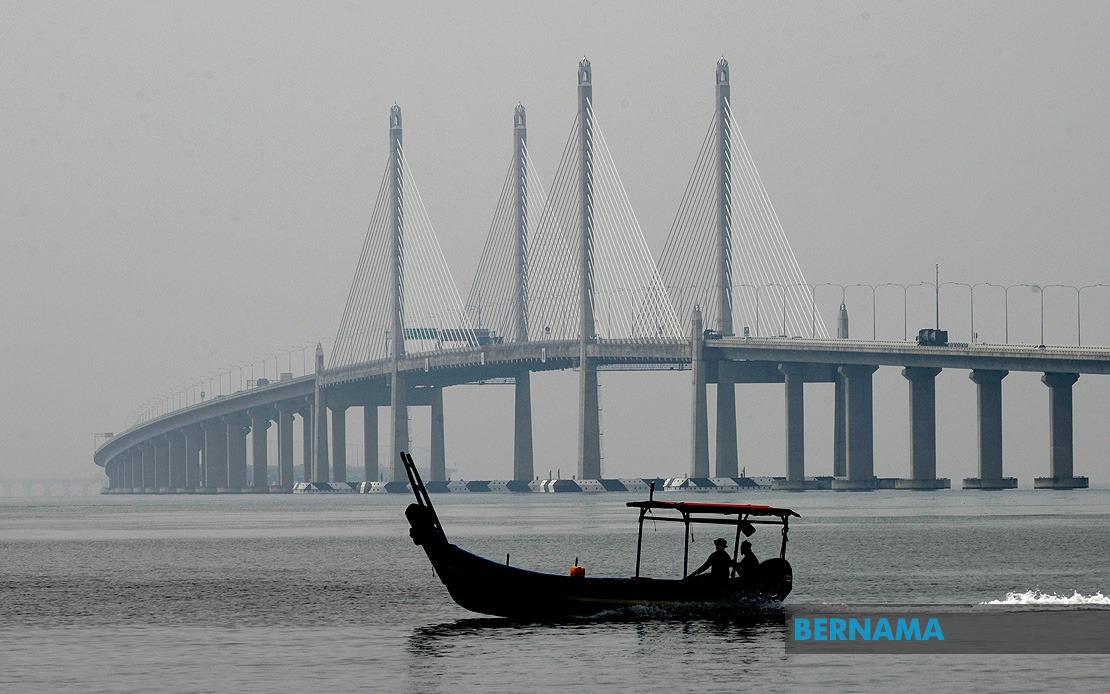
Penang authorities are preparing to engage with multiple parties in a bid to reconcile competing interests surrounding the enforcement of fishing bans beneath the Penang Bridge and the Sultan Abdul Halim Mu'adzam Shah Bridge. The initiative comes after boat operators raised mounting concerns about the restrictions, which they argue have severely constrained their commercial activities and those of dependent businesses throughout the region.
Datuk Rashidi Zinol, chairman of Penang's Rural Development, Agro-technology and Food Security and Entrepreneurship Committee, indicated that consultations would commence within days to chart a course that acknowledges legitimate security imperatives while addressing the economic plight of affected communities. His announcement reflects mounting pressure from operators who contend that the ban has triggered a sharp downturn in demand for their services, creating ripple effects across multiple economic sectors.
The restrictions stem from the designation of areas beneath both bridges as protected zones and National Key Points under the Protected Areas and Protected Places Act 1959 (Act 298). This legal framework establishes the foundations for the fishing prohibitions, grounding them in national security and public safety considerations that cannot be lightly dismissed. Yet the blanket application of these measures has generated friction between regulatory authorities and working communities dependent on maritime livelihoods.
Operators who met recently with Rashidi presented a detailed case for reconsideration, emphasizing that the ban's effects extend far beyond their immediate operations. Tourist boat services have experienced reduced patronage as traditional fishing grounds became inaccessible, while the fishing sector itself has contracted. This contraction reverberates through supply networks that provision vessels, distribute ice for preserving catches, and support countless small businesses reliant on fishing-related activity.
The economic footprint of these restrictions is considerably broader than initial enforcement might suggest. Equipment suppliers, ice manufacturers, seafood traders, retailers, and hospitality establishments all derive portions of their revenue from fishing communities and their customers. A prolonged ban therefore threatens employment and income stability across interconnected businesses that depend on a functioning fishing economy, even if they are not directly involved in maritime activities.
Rashidi's forthcoming consultations will need to navigate complex territory, balancing mandatory safety protocols against the practical hardships facing boat operators and their dependents. The discussions acknowledge that security requirements at these critical infrastructure points cannot be abandoned, yet the current one-size-fits-all approach may benefit from refinement that preserves safety while creating limited pathways for controlled activity.
The timing of this policy review reflects broader recognition within Penang's administration that rigid enforcement divorced from economic realities can generate social friction and political pressure that ultimately undermines stakeholder cooperation. By bringing multiple voices to the table—including boat operators, local businesses, security agencies, and potentially federal authorities—the state hopes to develop solutions that command wider acceptance and prove more sustainable than the present system.
Malaysia's maritime economy, particularly in regions like Penang with significant fishing traditions, remains economically and culturally significant despite modernization. The situation reflects tension between contemporary security infrastructure and heritage livelihoods that persist in many coastal communities. Resolution of such conflicts often requires creative compromise rather than categorical prohibition.
The involvement of both bridges—the original Penang Bridge and the newer Sultan Abdul Halim Mu'adzam Shah Bridge—suggests the restrictions cover substantial waterway distances, potentially affecting operators across a wide geographic area. The cumulative impact on Penang's fishing sector and associated businesses warrants the administrative attention it is now receiving, particularly given that maritime communities have fewer alternative income sources than urban populations.
Rashidi's public commitment to seeking a "balanced approach" signals that Penang's leadership recognizes the legitimacy of both security concerns and livelihood considerations. This stance could establish a template for resolving similar conflicts in other Malaysian coastal regions where critical infrastructure coexists with traditional maritime economies. The coming consultations will test whether such balance is actually achievable within existing legal and security frameworks.
The outcome of next week's discussions may determine whether the fishing restrictions remain comprehensive and unmodified, whether selective exemptions or designated zones emerge, or whether entirely revised protocols supplant the current system. Whatever emerges, the process itself represents acknowledgment that sustainable policy requires input from those bearing its costs, not merely proclamation from authorities insulated from practical consequences.
For Malaysian policymakers monitoring this situation, the Penang case offers instructive lessons about the necessity of regulatory review when initial enforcement generates unexpected cascading effects. Economic policies, including security-driven restrictions, benefit from periodic reassessment to ensure they achieve intended objectives without generating disproportionate collateral damage to communities that depend on affected activities.

