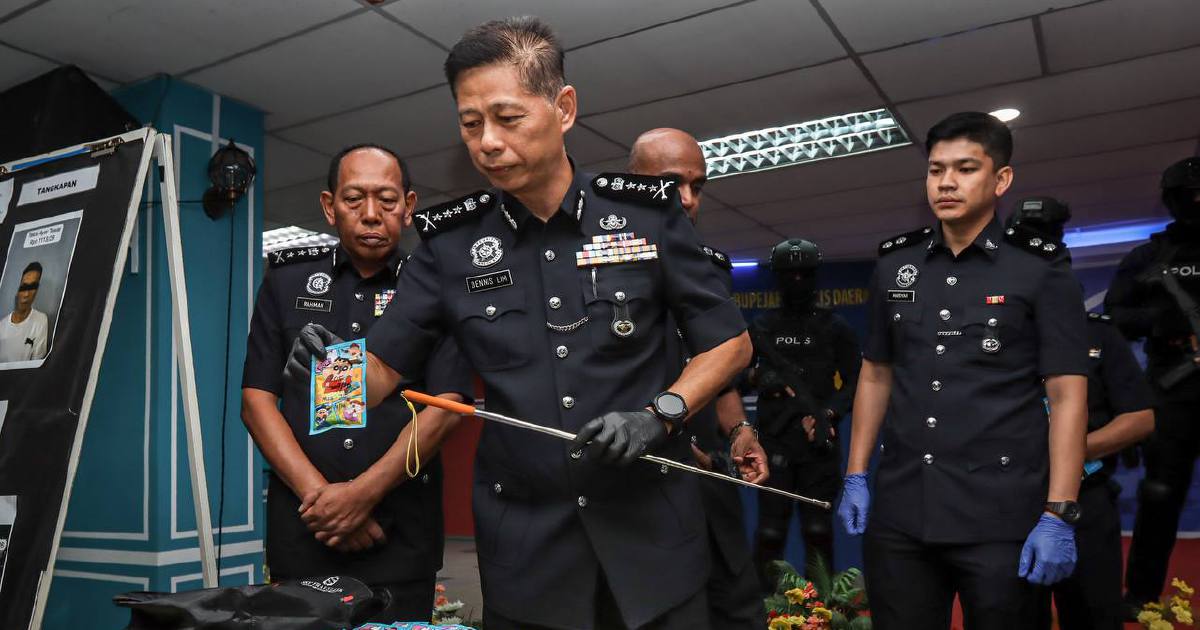
Penang police have dealt a substantial blow to drug trafficking operations in the state following a successful enforcement operation at Teluk Air Tawar on Sunday. Officers conducted a strategic raid that resulted in the discovery and seizure of 3.1kg of MDMA, the chemical compound commonly known as ecstasy, with an estimated street value of RM470,000. The operation, part of ongoing efforts to combat synthetic drug distribution networks, marks a significant recovery that underscores the region's continued vulnerability to illicit narcotics trafficking.
The successful interception represents a critical intervention in the supply chain of one of Southeast Asia's most popular recreational drugs among urban youth and affluent clubgoers. MDMA has become increasingly prevalent across Malaysian cities, particularly in Penang, where its availability has expanded substantially over the past decade. The scale of this single seizure—equivalent to thousands of individual tablets or doses—highlights the volume at which organised criminal syndicates are operating and the profitability that continues to drive their operations.
The Teluk Air Tawar location, situated within Penang's greater metropolitan region, reflects a pattern observed throughout the state where trafficking operations strategically position distribution hubs in suburban and semi-rural areas that offer comparative anonymity while remaining accessible to urban consumer markets. Proximity to transport corridors and port facilities has historically made Penang an attractive destination for international drug smuggling networks seeking to establish regional redistribution points. The seizure demonstrates that law enforcement agencies maintain capacity to identify and disrupt these operations, though the persistence of trafficking attempts indicates the lucrative nature of the trade.
One individual was arrested in connection with the raid, though specific details regarding their identity, role within any suspected network, and the charges they will face remain undisclosed. The arrest represents a starting point for investigating broader supply chains that likely extend beyond a single operator. Drug enforcement agencies typically pursue such cases with the objective of identifying upstream suppliers, downstream distributors, and financial enablers who collectively sustain trafficking operations.
The street value assigned to seized drugs carries significant implications for understanding both the retail market pricing and the profit margins that incentivise trafficking. A valuation of RM470,000 for 3.1kg suggests unit prices substantially exceeding international wholesale rates, reflecting the markup applied at distribution and street-level stages. This pricing structure explains why trafficking remains attractive despite enforcement risks, with individual doses potentially retailing between RM40 and RM100 depending on purity, location, and purchase volume.
Penang's significance as a drug trafficking corridor remains substantial despite the state's economic development and integration into regional commercial networks. The state's strategic geographic position, deep-water port facilities, international airport, and road connections to Thailand and other regional suppliers create inherent vulnerabilities that criminal organisations exploit systematically. Recent years have witnessed intensified trafficking in MDMA and other synthetic drugs, with seizures and arrests increasing across federal and state law enforcement agencies.
The timing and circumstances of this particular operation provide limited public information regarding intelligence sources or investigation methodologies employed. Police enforcement strategies against synthetic drug trafficking have evolved to incorporate financial intelligence, telecommunications monitoring, and collaborative intelligence-sharing with regional and international partners. The precision of the raid suggests either actionable intelligence from community sources, undercover operations, or surveillance activities that culminated in the deployment of enforcement teams.
For Malaysian readers, the continued prevalence of MDMA trafficking underscores broader challenges facing regional drug control authorities. Despite substantial investment in enforcement capacity, demand from affluent urban consumers, youth seeking social enhancement, and club-culture participants continues to sustain profitable trafficking operations. The synthetic nature of MDMA production means that supplies do not depend on natural agricultural production, allowing manufacturers operating in clandestine laboratories across multiple jurisdictions to adjust production volumes in response to enforcement pressures and market demand fluctuations.
The arrest and seizure will now proceed through Malaysia's criminal justice system, where trafficking in dangerous drugs carries severe penalties including imprisonment and, in cases meeting specific legislative thresholds, capital punishment. However, the conviction rate for high-level traffickers remains comparatively low, as prosecution requires establishing direct culpability and dismantling the presumption of lesser involvement through substantial evidence gathering.
From a broader policy perspective, this seizure highlights the ongoing necessity for sustained, intelligence-led enforcement operations whilst simultaneously raising questions regarding demand-reduction strategies, treatment availability, and community-level prevention initiatives. Law enforcement agencies across Southeast Asia have documented that interdiction alone proves insufficient for controlling drug trafficking when underlying consumer demand remains robust and profit incentives remain extraordinarily high. The RM470,000 street value of a single seizure represents merely one transaction disrupted within a vastly larger regional trafficking ecosystem that continues to expand.

