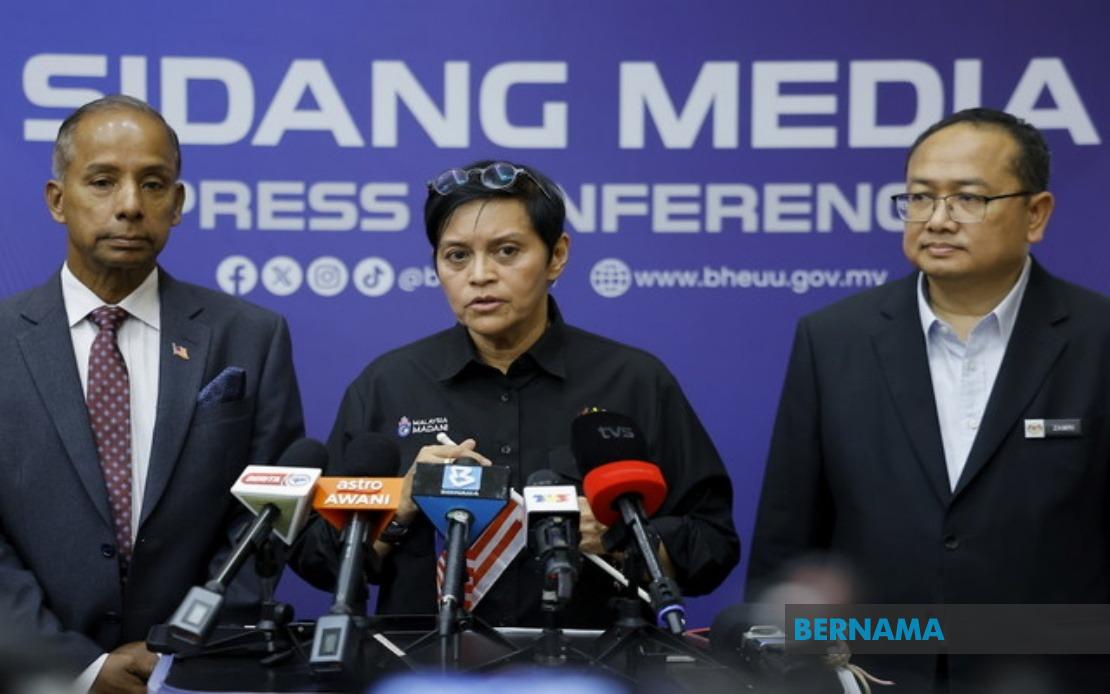
A Parliamentary Select Committee will commence its examination of the Freedom of Information Bill 2026 tomorrow, marking a significant step in advancing Malaysia's transparency framework. The committee, chaired by Minister in the Prime Minister's Department (Law and Institutional Reform) Datuk Seri Azalina Othman Said, will hold its inaugural session to establish the scope of its review before the proposed legislation proceeds to Parliament. The approach reflects a deliberate strategy to allow more comprehensive parliamentary scrutiny and broader engagement with stakeholders before formal tabling.
The initiative demonstrates a shift towards more consultative legislative processes in Malaysia. Rather than moving directly to parliamentary debate, the government opted for a Select Committee review that Azalina characterised as enjoying bipartisan participation. This structure allows multiple perspectives within Parliament to shape the bill's development, potentially building consensus around what remains a contentious policy area. The committee's first priority will be settling its terms of reference, establishing clear parameters for its investigation and determining the depth of examination across different provisions.
Azalina acknowledged considerable stakeholder concern regarding the bill's current scope. Non-governmental organisations and professional bodies have voiced reservations that the proposed framework does not extend far enough in guaranteeing public access to government information. These critics contend that Malaysia should adopt more expansive transparency provisions to align with international best practices and democratic governance standards. The minister indicated the committee would carefully evaluate these submissions, suggesting receptiveness to expanding the bill's reach where justified by evidence and argument.
The proposed legislation establishes a formal mechanism for Malaysian citizens aged eighteen and above to request access to information held by public authorities. This foundational provision represents a departure from Malaysia's current approach, which lacks comprehensive freedom of information legislation despite the constitutional recognition of information rights. The bill's framework would create standardised procedures for applications and responses, potentially reducing bureaucratic inconsistency and creating accountability mechanisms for information management across government departments.
However, significant limitations constrain the bill's potential impact. The draft legislation explicitly preserves existing secrecy laws, maintaining exemptions under the Official Secrets Act 1972 and other statutory restrictions on disclosure. These carve-outs are substantial in Malaysian governance, as the Official Secrets Act has traditionally encompassed extensive categories of information beyond traditional national security concerns. Consequently, the freedom of information regime would operate within pre-existing restrictions that critics argue substantially narrow its practical utility and limit genuine transparency gains.
The parliamentary portal's publication of the draft bill signals transparency in the legislative development process itself, inviting public comment and scrutiny before formal parliamentary procedures commence. This practice, increasingly adopted in Malaysian legislative processes, reflects evolving parliamentary conventions that encourage pre-parliamentary consultation. The Select Committee's mandate to incorporate stakeholder feedback represents the institutionalisation of this consultative approach, creating formal mechanisms for civil society input beyond informal submissions to ministers.
The timing of the Select Committee's work carries implications for Malaysia's broader governance agenda. Transparency frameworks increasingly feature in discussions about institutional reform, anti-corruption measures, and public trust restoration. A well-designed freedom of information regime could enhance government accountability and citizen participation in democratic processes. Conversely, overly restrictive provisions could replicate existing secrecy regimes under new nomenclature, frustrating reform advocates and limiting practical improvements to information access.
Regionally, Malaysia's approach to freedom of information occurs within a Southeast Asian context where transparency standards vary considerably. Thailand's regulatory environment differs markedly from Indonesia's framework, while Singapore maintains distinct protocols. Malaysia's legislation will likely influence regional discussions about information governance standards and democratic accountability. The balance struck between access rights and legitimate secrecy protections could inform neighbouring countries' deliberations on similar reforms.
The Select Committee's cross-party composition suggests an effort to achieve political consensus on fundamental governance issues transcending partisan divides. In Malaysian parliamentary practice, Select Committees have demonstrated capacity to forge agreements on technical and procedural matters, though success depends on political will and the substantive complexity of underlying issues. Freedom of information legislation touches sensitive governmental prerogatives, making consensus-building genuinely challenging. However, the perceived legitimacy and durability of transparency frameworks often depend on their embodying cross-party agreement rather than narrow partisan majorities.
Azalina's acknowledgment that the Select Committee would evaluate whether the bill should be substantially broader indicates flexibility in the legislative development process. This openness contrasts with situations where draft legislation represents settled government positions resistant to meaningful amendment. The committee's deliberations will reveal whether stakeholder advocacy succeeds in expanding the bill's scope or whether security and administrative concerns ultimately constrain its ambitions.
The procedural approach—referring legislation to Select Committee before parliamentary tabling—allows more thorough examination than rushed parliamentary debate would permit. However, it also extends the timeline before citizens gain any statutory right to information access. The committee's recommendations and findings must reach Parliament before the next sitting, suggesting a defined schedule that balances thoroughness with forward momentum.
Successful implementation of freedom of information legislation depends not merely on statutory language but on institutional capacity and political commitment to honouring access requests. Malaysian civil servants require training, systems, and cultural shifts supporting information accessibility. The Select Committee's work should extend beyond legislative language to examining implementation frameworks, resource allocation, and enforcement mechanisms that transform statutory rights into lived reality for citizens seeking government information.

