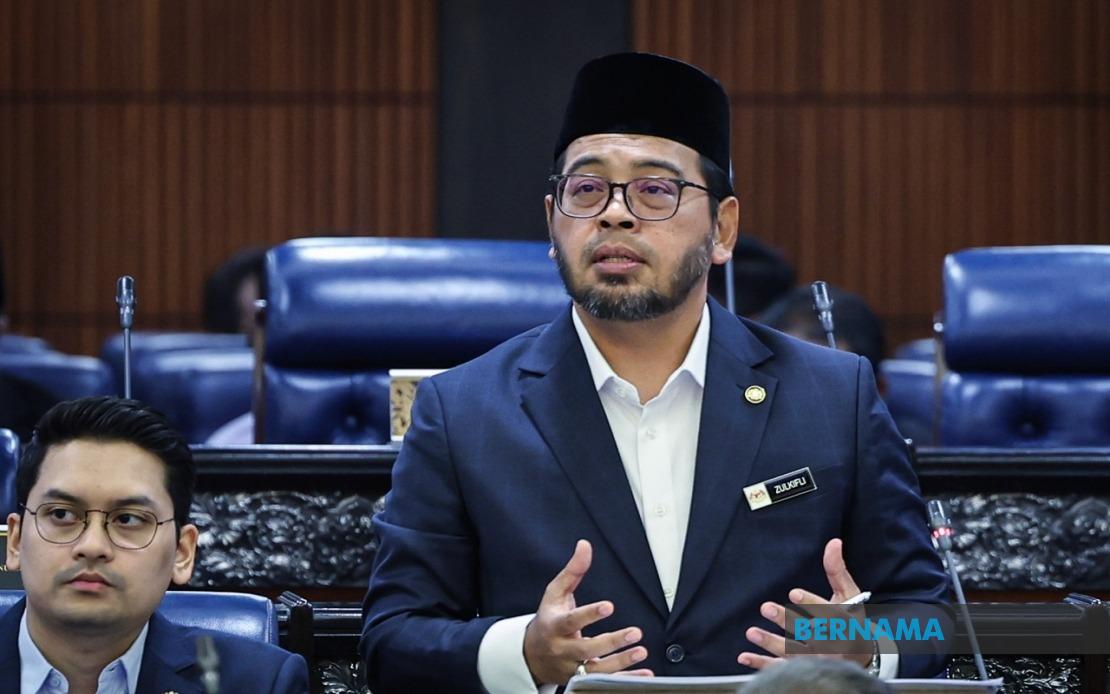
A special sitting of parliament on August 11 exposed deep institutional vulnerabilities at Lembaga Tabung Haji (TH) that extend far beyond financial mismanagement, as lawmakers spent more than ten hours debating the Royal Commission of Inquiry findings and demanding comprehensive systemic change. The extended debate underscored mounting political and public pressure to fundamentally restructure how the pilgrimage savings institution operates, with particular emphasis on preventing the recurrence of governance failures that resulted in staggering losses spanning the 2014 to 2020 period.
The scale of TH's financial deterioration became impossible to ignore during the sitting, as Finance Minister II Datuk Seri Amir Hamzah Azizan laid bare the anatomy of institutional collapse. Nearly RM13 billion in losses emerged from fourteen severely problematic investments, with seven suffering total losses across their investment lifecycle. The government absorbed RM10.2 billion through a 2018 rescue operation involving Urusharta Jamaah Sdn Bhd (UJSB), while TH itself bore another RM2.6 billion in impairment losses between 2018 and 2025 on investments that remained trapped in its portfolio. These staggering figures translate directly into diminished savings and returns for millions of Malaysian Muslim depositors relying on TH for haj financing and retirement security.
One particularly egregious case highlighted by lawmakers involved Al-Rawda Real Estates Development & Project Management Co Ltd, which received 1.4 billion Saudi riyals (approximately RM1.5 billion) supposedly to secure hotel leasing arrangements in Madinah and Makkah for haj pilgrims. The counterparty's catastrophic failure to settle rental obligations to TH cascaded into a full RM1 billion impairment write-down in 2024 alone, exemplifying the devastating consequences of inadequate due diligence and investment oversight. Such failures underscore how weak governance architecture enabled sophisticated schemes that external oversight might have detected and prevented.
Parliamentary discourse coalesced around demands for substantive legislative reform, particularly urgent amendments to the Tabung Haji Act 1995 (Act 535) that would entrench stronger protective mechanisms for depositor interests. Lawmakers stressed that legal frameworks must evolve to mandate greater transparency in investment decision-making, restrict political influence over appointment and operational decisions, and establish independent oversight structures insulated from executive or political pressure. The underlying recognition driving these calls reflects consensus that TH's institutional design created vulnerabilities that enabled mismanagement to flourish unchecked for extended periods.
Minister in the Prime Minister's Department (Religious Affairs) Dr Zulkifli Hasan attempted to frame government recovery efforts as substantive, noting that since 2018 the institution had implemented financial stabilisation measures, reinforced governance protocols, and improved investment quality standards. He highlighted that haj pilgrimage costs remained controlled at RM33,300 across three consecutive seasons from 2024 through 2026, suggesting recovery efforts protected ordinary depositors' ability to fulfil religious obligations. Yet parliament's scepticism toward administrative assurances ran deep, with sustained questioning about whether incremental improvements sufficed given the magnitude of past failures.
A critical tension emerged in Dr Zulkifli's closing remarks, as he articulated a governance philosophy premised on institutional rather than individual accountability. His assertion that systems, processes, controls and governance must transcend personnel changes acknowledged an uncomfortable reality: individual administrators may face consequences, but structural deficiencies enabling their misconduct must be fundamentally addressed. This principle resonates particularly for Malaysian governance contexts where personality-driven institutional failures recur when succession transitions occur without embedded systemic safeguards.
The government announced that investigations initiated following RCI recommendations had already resulted in detention of multiple individuals suspected of misconduct including bribery, abuse of authority, and governance violations. However, parliamentary members expressed determination that investigations proceed with full transparency, suggesting existing enforcement channels lack sufficient public accountability mechanisms. The proposal for establishing a multi-agency task force to investigate investments at imminent risk of loss represented recognition that single-institution oversight had proven inadequate historically.
A notably contentious element of the sitting involved several opposition MPs' decision to abstain from proceedings, generating accusations that they had abdicated their parliamentary responsibility for institutional oversight and failed to represent the interests of over 10 million depositors. The walkout appeared to encapsulate broader parliamentary dysfunction, where partisan politics sometimes supersedes substantive governance scrutiny that institutional crises demand. This dynamic raises questions about whether Malaysia's political framework consistently prioritises accountability mechanisms over factional considerations.
The RCI, whose findings became public on July 29, documented systematic governance deterioration across TH's management and operational systems, culminating in 25 formal recommendations for institutional reform. By July 30, TH reported implementing approximately 75 percent of recommendations, suggesting bureaucratic efficiency in formal compliance while questions persisted about whether implementation reflected substantive behavioural and cultural change. This implementation pace reflected pressure from political scrutiny, though deeper transformation typically requires extended periods for institutional culture to genuinely shift away from practices that previously fostered misconduct.
For Malaysian depositors and the broader Muslim community depending on TH for pilgrimage financing, the parliamentary debate signalled recognition that institutional restoration requires more than financial engineering or administrative reshuffling. The RM33,300 pilgrimage cost stabilisation provided immediate reassurance, yet sustainability depends on whether governance reforms prevent future investment disasters. The debate's emphasis on system-based rather than individual accountability suggests emerging parliamentary consensus that TH's future depends on structural transformation embedding transparency, professional expertise, and independent oversight that transcends political cycles and administrative transitions.
The debate's broader significance extends beyond TH's immediate recovery prospects to reflect evolving expectations regarding public institution governance across Malaysia more broadly. As a major repository of Muslim savings serving religious and economic functions simultaneously, TH's restoration represents both symbolic and practical importance for institutional trust. Whether parliament's rhetorical commitments to reform translate into substantive legislative action and sustained enforcement over multiple budget cycles will ultimately determine whether TH becomes a model for governance revival or another cautionary example of institutional promise undermined by insufficient follow-through and competing political interests.

