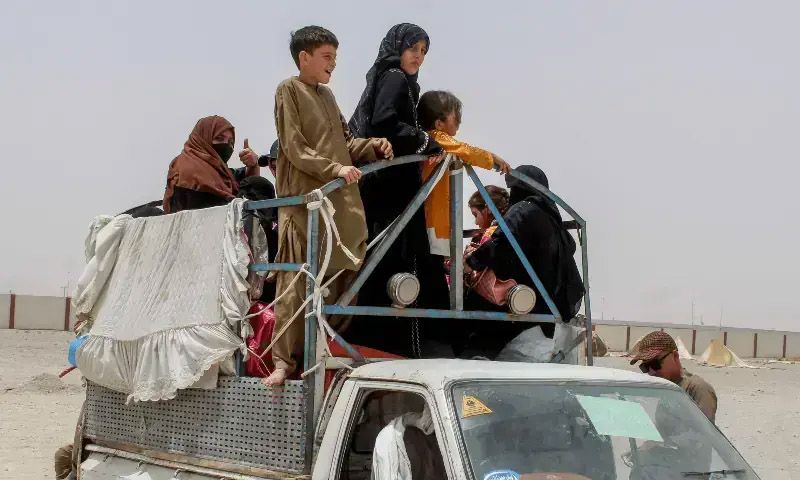
Pakistan's immigration authorities have expelled some 2.59 million Afghan nationals living illegally within the country since 2023, marking one of the largest deportation operations in South Asia in recent years. The campaign reflects an intensified governmental stance on immigration enforcement, with both federal and provincial administrations coordinating to process and remove undocumented migrants. The Punjab province, Pakistan's most populous region, has become the epicentre of this operation, shouldering the bulk of detention, documentation, and deportation responsibilities.
Punjab's home department has emerged as the driving force behind the deportations. The province's foreign national security cell continues its systematic sweep across urban centres and residential neighbourhoods, currently holding approximately 53 Afghan nationals across 36 functional detention facilities. These holding centres serve as processing hubs where authorities complete necessary documentation before arranging transport to Afghanistan. The scale of Punjab's involvement is substantial—the province alone has detained 138,342 Afghans, processed their paperwork, and overseen their deportation through established border protocols.
The policy framework underpinning this enforcement campaign is straightforward according to government representatives. Federal authorities have made clear that any foreign national lacking valid visa documentation cannot legally remain in Pakistan and must face deportation. This zero-tolerance approach represents a hardening of official policy and signals the government's determination to regulate its migrant population more rigorously. The deportation process itself involves multiple stages: arrest, detention in holding centres, document completion, and finally, transport through the Torkham border crossing into Afghanistan.
Operationally, the deportation machinery has expanded its reach into commercial districts and residential zones across Punjab. Government officials claim comprehensive surveys and examinations have been conducted in markets and populated areas where undocumented Afghans are concentrated. Those identified without proper immigration status are arrested and transferred to designated holding facilities, where they receive basic accommodation and logistical support during their processing period. The authorities then arrange their departure, funnelling deportees through the Torkham crossing, the primary land route between Pakistan and Afghanistan.
The public has been mobilised as part of the enforcement infrastructure. Home department officials have explicitly encouraged residents to report undocumented Afghan nationals by calling the emergency hotline 15, establishing a citizen-based reporting mechanism. Authorities have reportedly assured informants that their identities will remain protected, seeking to overcome potential hesitancy among communities where Afghan residents live intermixed with local populations. This approach transforms ordinary citizens into extensions of the immigration enforcement system.
For Malaysia and the wider Southeast Asian region, Pakistan's deportation campaign offers instructive parallels regarding immigration management and border control challenges. Several million undocumented migrants represent a substantial governance problem, and Pakistan's coordinated federal-provincial response demonstrates how countries address demographic pressures and resource constraints related to refugee and migrant populations. The scale of the operation—processing millions over approximately two years—reflects the enormous logistical complexity of managing irregular migration across porous land borders.
The humanitarian dimensions of such mass deportations warrant consideration. Afghanistan remains embroiled in conflict and economic instability, creating conditions that motivate emigration in the first place. Many Afghan migrants in Pakistan fled Taliban rule, security threats, or poverty, seeking economic opportunity in a relatively more developed neighbouring country. Their deportation to an uncertain situation at home raises questions about protection principles that international humanitarian frameworks typically emphasise, though Pakistan frames the deportations as enforcing legitimate immigration sovereignty.
The deportation campaign also reflects Pakistan's domestic resource pressures. With its own population exceeding 230 million and economic challenges requiring substantial fiscal management, the government views undocumented migration as an untenable drain on public services. Schools, healthcare facilities, and urban infrastructure in Pakistan face strain, and officials contend that removing illegally-residing foreigners allows greater resource allocation to Pakistani citizens. This domestically-focused rationale appeals to nationalist sentiment and addresses concerns about job competition and service availability.
Regionally, Pakistan's actions influence broader South Asian migration dynamics and international relations. Afghanistan's Taliban government has limited capacity to absorb returning nationals, yet Pakistan proceeds with deportations regardless. The Torkham crossing, operating under significant stress, becomes a critical junction where thousands transit monthly. India, Iran, and Central Asian states watch these movements carefully, as Afghan migration pressures can cascade across borders. Pakistan's unilateral approach, while asserting sovereign control, demonstrates how individual nations handle migration without regional coordination mechanisms.
The sustainability of mass deportation operations remains an open question. Maintaining 36 holding centres, processing hundreds of thousands annually, and managing logistical arrangements requires consistent government investment and political will. Economic cycles, political changes, or diplomatic pressure could alter enforcement priorities. Furthermore, many deported Afghans face repatriation challenges; some may lack family connections inside Afghanistan or secure housing, potentially creating new vulnerabilities in an already fragile post-Taliban society.
Looking ahead, Pakistan's immigration enforcement trajectory will likely influence how neighbouring countries approach similar challenges. The operation demonstrates feasible mechanisms for large-scale deportation but also reveals the human costs and diplomatic complexities involved. Regional governments, including Malaysia which hosts significant foreign populations, observe how neighbours balance sovereignty, humanitarian concerns, and practical capacity constraints when addressing irregular migration at scale.

