Pakatan Harapan's campaign for the Johor state election is building measurable momentum through a disciplined, data-driven approach to seat prioritisation that reflects the coalition's confidence in the emerging political landscape. Party secretary-general Datuk Seri Saifuddin Nasution Ismail attributed the growing support trend to what he characterised as a methodical segmentation of the 56 state constituencies into distinct priority tiers, allowing the coalition to concentrate resources and messaging in areas where ground conditions are most favourable. This represents a departure from past campaign methodologies that often applied uniform strategies across all contested seats regardless of local political dynamics or demographic composition.
The grading system employed by Pakatan Harapan reflects sophisticated campaign management principles now increasingly common in Southeast Asian electoral contests. Rather than treating constituencies as interchangeable units, the coalition has mapped each seat according to its unique profile, incorporating variables such as incumbent performance, demographic composition, historical voting patterns, and current sentiment measurements. Saifuddin Nasution illustrated this nuance by contrasting Puteri Wangsa with Johor Lama and Larkin with Endau, underscoring how vastly different challenges and voter priorities demand tailored communication and resource allocation strategies.
This granular approach carries strategic implications beyond simple efficiency gains. By concentrating efforts where victory margins appear achievable or defences appear vulnerable, Pakatan Harapan can maximise its seat gains within resource constraints while simultaneously managing expectations in constituencies where opposition strength runs deep. The coalition's confidence in this methodology suggests internal polling data has identified clear pathways to securing majority support in a sufficient number of seats to form government, though public statements remain deliberately cautious.
A significant factor amplifying Pakatan Harapan's campaign effectiveness has been the tactical miscalculation of rival political forces. Saifuddin Nasution highlighted Parti Islam Se-Malaysia's decision to contest only 11 of the 56 seats whilst explicitly directing supporters to back Barisan Nasional candidates in remaining constituencies. This move, ostensibly designed to avoid three-way splits, has inadvertently benefited Pakatan Harapan by clarifying voter choice and preventing opposition consolidation that might otherwise have proven formidable. PAS's approach essentially surrendered significant electoral terrain to the coalition without securing reciprocal arrangement or demonstrable coordination.
Packatan Harapan has deliberately positioned itself as the more transparent force in Johor's electoral contest. The coalition announced its seat distribution with clarity from the campaign's outset, assigning 20 seats to PKR, 19 to Amanah, and 17 to DAP across the full slate of 56 constituencies. This transparent allocation contrasts sharply with any perception of backroom dealing or unclear negotiations that might plague less unified opposition coalitions. The accompanying manifesto has been framed as reasonable and implementable, suggesting the coalition has invested in realistic policy promises rather than populist pledges unlikely to withstand scrutiny during implementation.
The appearance of former UMNO Supreme Council member Datuk Dr Mohd Puad Zarkashi at recent dialogue sessions alongside Prime Minister Datuk Seri Anwar Ibrahim at Felda Ulu Tiram carries symbolic weight within the Johor political context. The presence of a respected UMNO figure attending government events signals fractures within the Barisan Nasional coalition and suggests potential cross-defection networks that could reshape seat-level contests. Such signals matter considerably in Malaysian electoral psychology, where fence-sitter voters often take cues from prominent figures switching allegiance or appearing at opposition events.
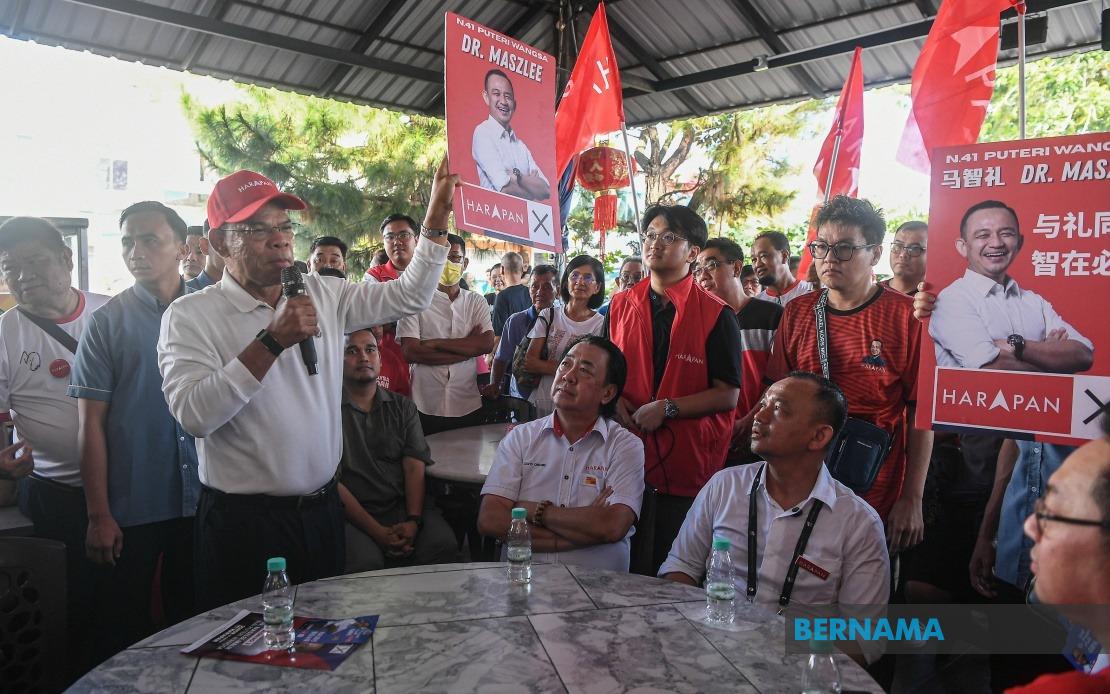
Candidates themselves form crucial components of Pakatan Harapan's campaign narrative. The coalition has positioned Puteri Wangsa candidate Dr Maszlee Malik as exemplifying the calibre of representation voters can expect under PH governance. By highlighting specific candidates' qualifications and potential contributions, the coalition transforms abstract coalition politics into concrete choices about local representation and constituency-level competence. This candidate-centric messaging helps counteract arguments that might question whether Pakatan Harapan possesses the administrative capacity to govern Johor effectively.
The timing of the Johor state election, scheduled for July 11 with early voting on July 7, compresses the campaign window and privileges campaigns that have pre-election operational infrastructure in place. Pakatan Harapan's seat-grading system suggests the coalition had already invested significantly in ground organisation before the formal campaign commenced, potentially providing considerable advantage during the intensive final phase. Organisations fielding candidates across all 56 seats typically enjoy superior grassroots deployment capabilities compared to rivals contesting selectively.
Johor's electoral dynamics carry implications extending well beyond the state's boundaries. As Malaysia's economically dynamic southern region and traditional Barisan Nasional stronghold, a Pakatan Harapan victory would represent a significant national political realignment. The coalition's success in Johor would reinforce the government's legitimacy and demonstrate renewed capacity to compete effectively in heartland constituencies, potentially reshaping calculations about the 2025 general election landscape. Conversely, a strong showing by Barisan Nasional would provide momentum to opposition narratives questioning the Anwar Ibrahim administration's political durability.
The coalition competition involving 172 candidates across 56 seats intensifies competition for each constituency, fragmenting protest votes and creating complex multi-way contests in numerous seats. In such environments, superior campaign organisation and voter contact programmes often prove decisive, potentially favouring the more cohesively structured coalition with clearer messaging discipline. Pakatan Harapan's systematic prioritisation framework appears designed precisely to navigate such fragmented competitive environments effectively.
Saifuddin Nasution's public confidence in momentum reflects broader coalition calculations that Johor represents a genuinely contested prize rather than a presumed opposition victory. The campaign's sophistication, evident in seat-specific strategies and transparent seat distribution, suggests Pakatan Harapan has moved beyond aspirational campaigning toward evidence-based electoral competition. The coalition's willingness to engage local communities systematically while maintaining coherent national messaging indicates preparation for genuine governance responsibility should voters provide the requisite mandate.
Regional observers monitoring Malaysia's democratic trajectory will closely scrutinise Johor results as indicative of broader trends affecting political competition across Southeast Asia. Whether Pakatan Harapan's targeted strategy successfully translates ground support into seat gains will influence assessments of coalition-based governance models and strategic campaign methodologies that other regional actors may subsequently attempt emulating. The Johor election thus functions as consequential test case extending beyond Malaysian politics.

