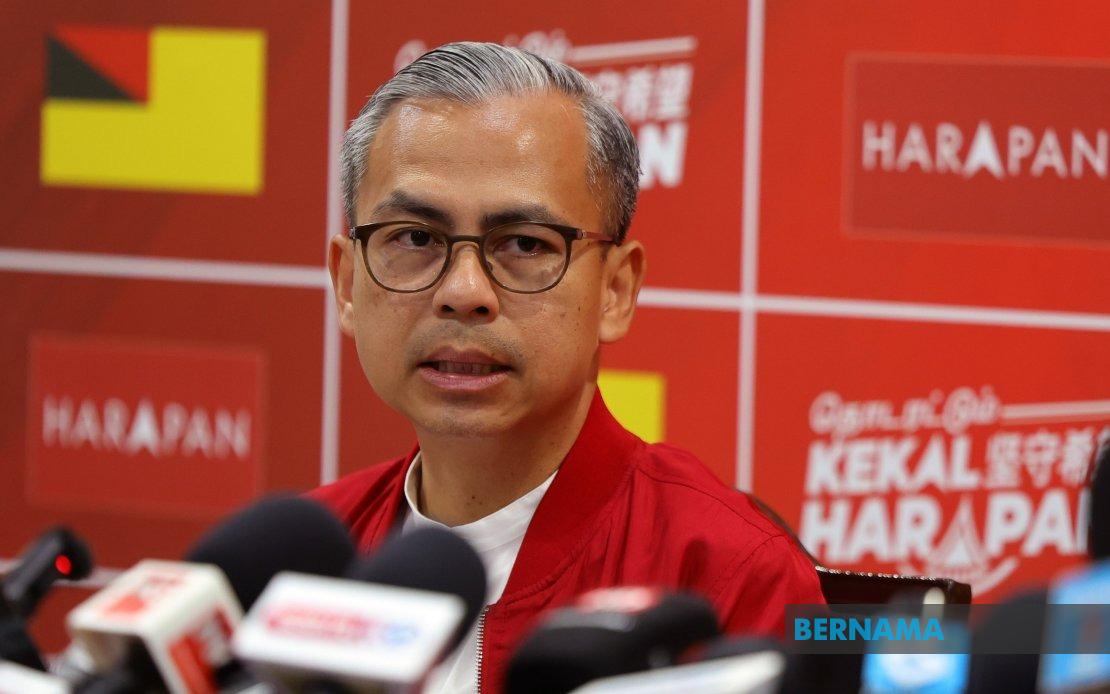
Pakatan Harapan has issued a forceful rebuttal to what its leaders characterise as divisive political messaging that wrongly suggests only one coalition can authentically represent the Malay-Muslim community. Speaking in Seremban on July 23, the opposition alliance—which controls several state governments and held federal power until 2023—rejected the premise that communities defined by religion or ethnicity require singular political spokespersons, arguing instead that Malaysia's strength derives from cross-communal engagement and shared civic purpose.
The intervention came during campaigning for the Negeri Sembilan state election, where tensions over community representation have surfaced as a campaign theme. Datuk Seri Fahmi Fadzil, who serves as PH's communications director alongside his ministerial responsibilities for Communications, used pointed personal examples to underscore his argument. He noted that both he and Khalid Abdul Samad, the Amanah party's communications director, are themselves Malay-Muslims who hold senior positions within the coalition, demonstrating that Malay-Muslim political participation extends across diverse organisational platforms rather than concentrating within a single bloc.
Fahmi framed the debate as fundamentally about whether Malaysian democracy should operate along pluralistic or exclusionary lines. He argued that attempts to establish one group as the authentic voice of any religious or ethnic community contradict the constitutional and social foundations upon which Malaysia was built. This articulation reflects a persistent tension within Malaysian politics: the question of how to balance community-specific concerns with a national identity that transcends demographic categories. For readers across Southeast Asia observing Malaysian electoral dynamics, this tension carries particular significance, as it speaks to challenges common across the region regarding the integration of communal interests within democratic frameworks.
The Pakatan Harapan narrative emphasises that marginalisation does not occur under its administration. Fahmi pointed to concrete developments in Negeri Sembilan, where the state government has increased mosque construction and substantially expanded zakat collection—a religious obligation among Muslims typically administered through government channels. According to his account, zakat revenues have grown by approximately two-and-a-half times compared with the preceding administration, suggesting that religious institutions and community welfare have received enhanced institutional support. These claims serve as evidence, in PH's argument, that the coalition's stewardship has strengthened rather than weakened the position of Malay-Muslims within the political system.
The broader philosophical position articulated by Fahmi emphasises unity constructed around shared values rather than ethnic or religious identity. This formulation seeks to distinguish PH's approach from what the coalition describes as "ethnic chauvinism"—a term deployed to characterise competitor messaging that privileges one community's interests. Instead, PH advocates for Malays, Chinese, and Indians to organise around common aspirations for ethical governance and social welfare, creating a political space where religious minorities and non-Muslim communities feel equally invested in outcomes. For Malaysian voters navigating complex identity politics, this represents one competing vision of how the nation should be governed.
The timing of these remarks matters considerably. With early voting scheduled for July 28 and polling day set for August 1, the Negeri Sembilan election offers an immediate referendum on whether voters find PH's pluralistic framing persuasive or whether competitor parties' community-focused messaging resonates more strongly. Negeri Sembilan, as a relatively compact and diverse state, provides a microcosm of Malaysian electoral composition, making its outcome indicative of broader sentiment regarding representation and community welfare. The presence of Cha Kee Chin, the DAP's state secretary, at the press conference emphasised cross-communal participation, signalling that non-Malay parties within PH are integral to the coalition's governing approach rather than peripheral stakeholders.
Menteri Besar Datuk Seri Aminuddin Harun's administration has become central to PH's defence. By highlighting the incumbent state government's record on religious infrastructure and Islamic financial instruments, the coalition establishes that governance outcomes rather than rhetorical posturing should determine voter confidence. This argument carries particular weight in Malaysian politics, where state-level performance directly affects citizens' lived experience of governance quality. The expansion of zakat systems, if substantiated, would represent enhanced institutional capacity serving the Muslim population—a tangible achievement that transcends sectarian political competition.
The broader context involves ongoing contestation over how Malaysian politics should accommodate religious and ethnic diversity. Some parties have emphasised that majority-Muslim, majority-Malay societies require policies explicitly protecting these communities' interests, viewing such advocacy as necessary counterweight to perceived minority empowerment. Pakatan Harapan's counter-argument, as articulated by Fahmi, suggests that explicit accommodation of all communities—through inclusive coalitional governance—better serves everyone's interests than systems predicated on demographic dominance. This disagreement reflects fundamental differences in how political leaders conceptualise representation and social cohesion in plural societies.
For observers tracking Southeast Asian democratic development, Malaysia's wrestling with these questions demonstrates how electoral competition navigates the intersection of religious identity, ethnic composition, and civic participation. The region encompasses nations struggling with comparable tensions—Thailand's Buddhist-majority politics, Indonesia's Islamic-majority democracy, and Singapore's deliberate multireligious institutionalism—making Malaysia's electoral choices instructive. How Negeri Sembilan voters respond to PH's pluralistic messaging may signal whether regional democracies trend toward increasingly communal or increasingly cross-communal political organisation.
Pakatan Harapan's communications strategy reflects recognition that the coalition cannot simply dismiss community-specific concerns as illegitimate. Instead, its leaders argue that their approach accommodates such concerns while refusing to accept that any single political organisation monopolises representation. This nuanced position requires demonstrating through governance outcomes that religious and ethnic communities receive adequate institutional attention and resource allocation. The emphasis on mosque construction and zakat collection serves as evidence for this claim, translating abstract commitments to inclusion into measurable results. Whether Negeri Sembilan voters find this evidence sufficient will partly determine the coalition's electoral viability and the trajectory of Malaysian pluralistic democracy in coming years.

