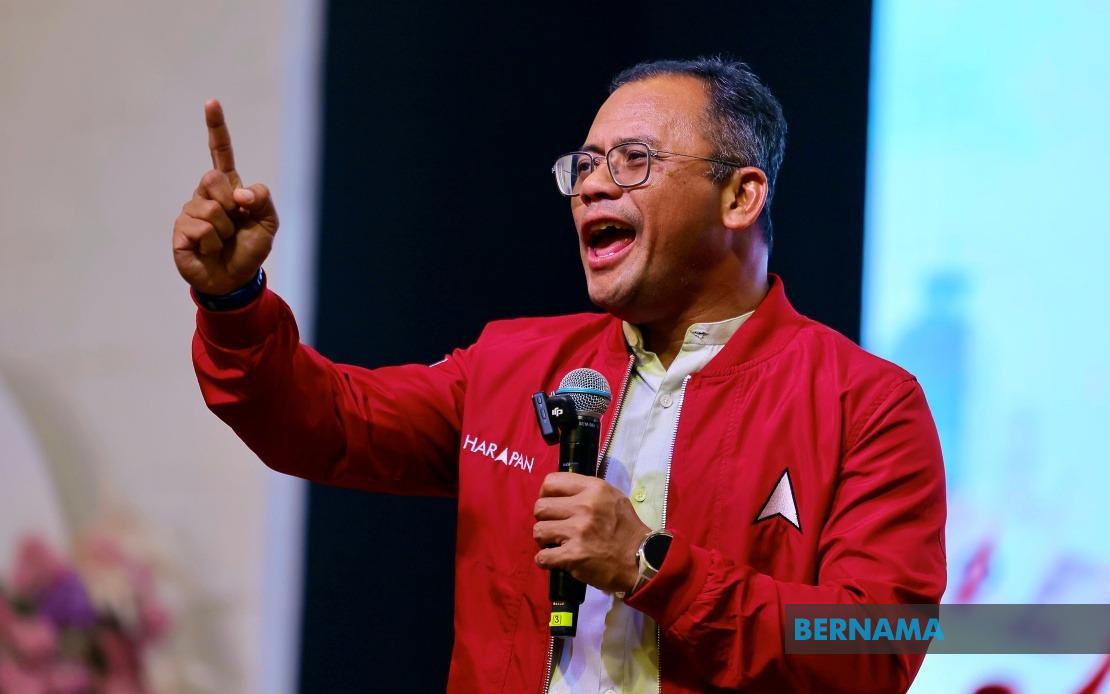
Pakatan Harapan has formally introduced its electoral blueprint for Johor, launching the 'Johor For All' manifesto as the coalition's central policy document ahead of the 16th state election. The unveiling ceremony took place in Johor Bahru, marking a significant milestone in PH's campaign strategy and setting the tone for how the coalition plans to engage with voters across the southern state.
The manifesto presentation was led by Datuk Seri Amirudin Shari, a member of PH's Presidential Council and co-election director for PKR, underscoring the national coalition's direct involvement in the Johor campaign. This high-level participation reflects the strategic importance of Johor, Malaysia's second-largest state by population and a historically competitive electoral battleground. The presence of senior leadership at the launch signals PH's determination to mount a robust challenge in a state where political fortunes have shifted significantly in recent years.
The coalition assembled key figures from its constituent parties to demonstrate unity and coordination. Aminolhuda Hassan, leading PH's organisational efforts at the state level, joined fellow party heads Teo Nie Ching from DAP and Datuk Seri Dr Zaliha Mustafa from PKR to present a unified front. This representation ensures that the three major components of the coalition—PKR, DAP, and Amanah—are publicly invested in the manifesto's content and messaging, a crucial foundation for campaign coherence across different demographic and geographic constituencies.
The 'Johor For All' branding carries significant symbolic weight, positioning the coalition as an inclusive force capable of transcending traditional political divides. The choice of this particular framing suggests PH's aim to appeal to voters across economic classes, ethnic communities, and urban-rural boundaries. In Johor's diverse landscape—ranging from Johor Bahru's cosmopolitan corridors to the rural farming communities of the interior—such a message attempts to forge a broad coalition of support rather than rely on narrow sectional appeals.
For Malaysian political observers, the manifesto launch occurs within the broader context of PH's resurgence after the 2023 federal election, when the coalition secured substantial parliamentary representation. The Johor state election therefore represents an opportunity for PH to consolidate gains and demonstrate that its federal electoral success can translate into state-level victories. The timing and scale of the manifesto presentation indicate serious institutional preparation for a competitive campaign.
The involvement of PH's candidates across Johor constituencies at the launch event emphasises grassroots engagement and locally-grounded campaigning. By bringing together those standing for election alongside senior party leadership and coalition architects, PH aims to connect national policy direction with community-level advocacy. This integration of top-down strategy with bottom-up candidate participation is essential in Malaysian state elections, where local issues—urban development, rural infrastructure, education quality, and economic opportunity—often outweigh national narratives.
From a Southeast Asian perspective, Malaysia's state elections continue to serve as important barometers of political sentiment and coalition dynamics. The Johor contest assumes significance beyond the state's borders, as Johor shares economic and demographic characteristics with other major Malaysian population centres and serves as a testing ground for electoral strategies that parties may apply elsewhere. The manifesto's policy commitments and messaging approaches will likely be studied and adapted by regional political actors.
The 'Johor For All' manifesto also reflects PH's efforts to move beyond purely oppositional politics. Rather than defining itself solely against incumbent rivals, the coalition is attempting to articulate a positive governance vision grounded in inclusive prosperity and broad-based development. This representational shift marks a maturation of PH's political messaging, particularly important given the coalition's experience governing at federal level since 2018.
For Johor voters, the manifesto launch signals the formal beginning of substantive campaign discourse. The document presumably outlines PH's specific commitments on economic development, infrastructure investment, healthcare, education, and social welfare—areas that consistently rank high in state-level electoral priorities. By publishing a comprehensive manifesto rather than relying on ad-hoc promises, PH is attempting to establish a more transparent and accountable relationship with voters.
The gathering in Johor Bahru also reflects the state's continuing political volatility and competitiveness. Unlike several Malaysian states where electoral outcomes appear largely predetermined, Johor remains genuinely competitive. Both incumbent authorities and challenger coalitions must invest significant resources and strategic thought to secure voter support. PH's comprehensive manifesto launch demonstrates recognition that winning in Johor requires sustained argument and detailed policy engagement.
Looking forward, the manifesto will serve as the measuring stick against which voters assess PH's campaign performance and promises. As the election campaign intensifies, the specific commitments outlined in 'Johor For All' will be debated, scrutinised, and compared against rival coalitions' proposals. The document thus becomes more than ceremonial—it transforms into an operational guide for campaign messaging, candidate advocacy, and post-election accountability.

