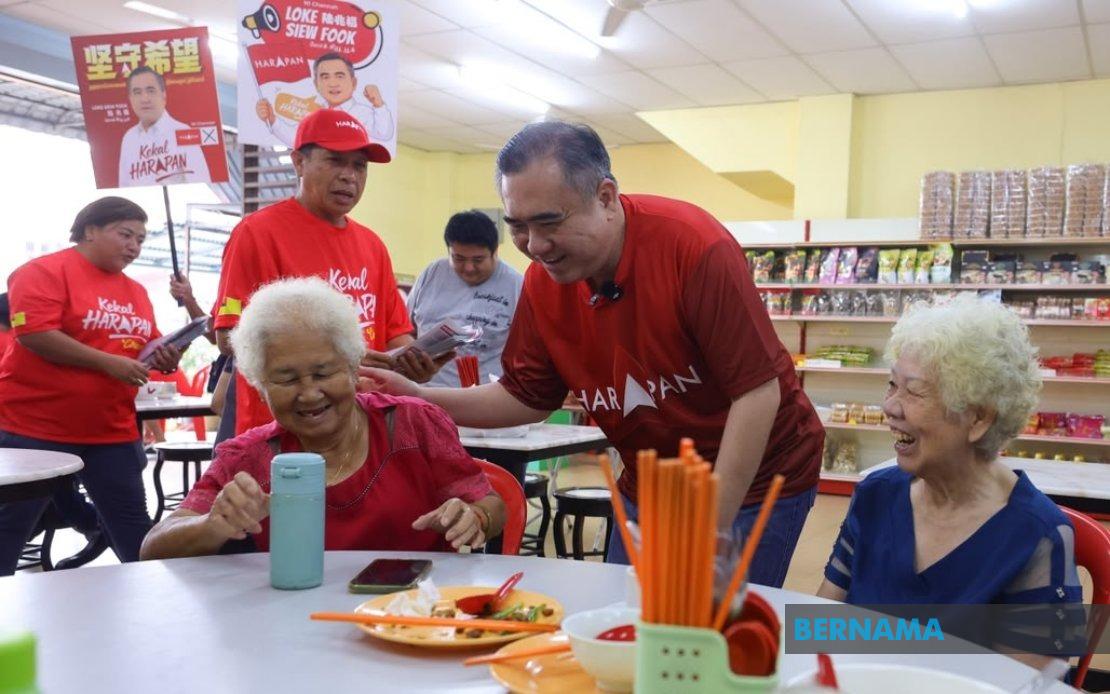
Pakatan Harapan is abandoning the one-size-fits-all approach to political campaigning in favour of granular, locality-focused strategies designed to resonate with the specific concerns and demographics of voters across Negeri Sembilan ahead of the state election on August 1. The coalition's strategy reflects a recognition that Malaysian voters are increasingly discerning about political messaging and expect parties to demonstrate genuine understanding of their particular circumstances rather than delivering generic talking points.
DAP secretary-general Anthony Loke, who is mounting a defence of his Chennah state seat against Barisan Nasional's Siow Kong Choon, outlined this approach during a campaign walkabout in Pekan Titi. Loke, who simultaneously holds the Transport Ministry portfolio in the federal government, explained that the coalition recognises the futility of uniform messaging across diverse constituencies with different socioeconomic profiles, cultural backgrounds, and pressing concerns. This strategic shift suggests that PH has absorbed lessons from previous electoral cycles about the importance of authentic engagement rather than symbolic visits.
The practical implementation of this locality-based strategy involves mapping constituencies with precision and determining which issues carry the most weight in individual villages and communities. Within Chennah alone, Loke indicated that PH has developed differentiated approaches for various areas, suggesting a sophisticated understanding of voter segmentation. This level of granularity in campaign architecture is computationally and organisationally demanding, requiring substantial resources and coordination across campaign teams at multiple levels.
Crucially, Loke emphasised that all PH candidates have been actively engaging with voters during the opening phase of the campaign period, moving beyond traditional rallies and media appearances to conduct direct conversations in residential areas. This ground-level engagement serves multiple purposes: it allows candidates to listen to voter grievances firsthand, provides campaign teams with real-time feedback about which messages are gaining traction, and creates the perception of accessibility and accountability that voters increasingly demand from political representatives.
The Transport Minister's emphasis on listening to voter concerns rather than simply broadcasting pre-prepared messages indicates a shift in campaign philosophy within PH. Rather than determining messaging from party headquarters and filtering it downward, the coalition appears to be creating feedback loops where grassroots intelligence informs the positions parties emphasise in particular areas. This approach is more labour-intensive but potentially more effective in contexts where voter scepticism about political promises remains high.
PH's campaign messaging will be anchored partly by a manifesto scheduled for launch on the evening of July 20, which party officials have indicated underwent extensive deliberation within an internal committee before finalisation. Loke's careful language around the manifesto—noting it was subject to "extensive consultation and discussion"—suggests internal negotiations over its contents and emphases, likely reflecting different priorities within the diverse PH coalition. The manifesto is framed as containing initiatives intended to benefit ordinary citizens, though Loke refrained from disclosing specific policy commitments before the official unveiling.
For Loke personally, the Negeri Sembilan election represents a defensive campaign in a seat he has represented since 2013. The straight fight against a single BN opponent simplifies the electoral mathematics but potentially heightens the stakes, as a three- or four-way contest might have fragmented the opposition vote. His dual role as Transport Minister and state candidate illustrates how PH seeks to leverage federal government positions and achievements during state elections, presenting a narrative of proven governance capacity at the national level.
The election timeline established by the Election Commission concentrates the campaign period into a compressed schedule, with early voting set for July 28 and polling day on August 1. This compressed timeframe places particular pressure on ground operations, making the locality-specific approach even more critical. Parties cannot afford inefficient use of volunteer time or candidate schedules; every appearance and campaign event must be calibrated to maximise impact within particular constituencies where the electoral arithmetic is most competitive.
For Malaysian voters and regional observers, the Negeri Sembilan contest serves as a barometer for PH's political momentum and organisational capacity following its experience in federal government. State elections, while often overshadowed by national politics, frequently generate sharper local accountability. Voters assess whether federal-level coalition partners have delivered tangible benefits to their state and whether local representatives have effectively articulated community needs to the central government. In this context, PH's emphasis on listening rather than lecturing represents a tactical adjustment to these elevated expectations.
The emphasis on tailored campaign strategies also reflects broader trends in Malaysian electoral politics, where traditional campaign methods face declining returns among increasingly mobile, information-consuming voters. Social media proliferation means that centralised messaging cannot dominate the information environment as effectively as a decade ago, making micro-targeted, locally-rooted communication more strategically valuable. Parties that fail to engage authentically with local constituencies risk being dismissed as remote or indifferent to particularised concerns.
Negeri Sembilan's electoral environment has shifted in recent years, with Pakatan Harapan consolidating influence but facing persistent challenges in capturing dominant majorities. The state's mix of urban and rural constituencies, diverse ethnic and religious demographics, and competing economic interests means that no single policy platform will equally mobilise all voters. PH's recognition of this complexity through its locality-specific approach suggests a more sophisticated understanding of electoral dynamics than traditional state-level contests have typically witnessed.
Look ahead to polling day on August 1, the effectiveness of PH's campaign strategy will become apparent in voter turnout patterns and seat distributions. If the coalition successfully translates ground engagement into electoral support, it may establish a model that other Malaysian parties seek to emulate in future contests. Conversely, if BN's more traditional campaign approach prevails despite PH's apparent sophistication, it would indicate that voter preferences remain rooted in factors transcending campaign methodology—whether economic performance, incumbent performance, or deeper partisan loyalties.

