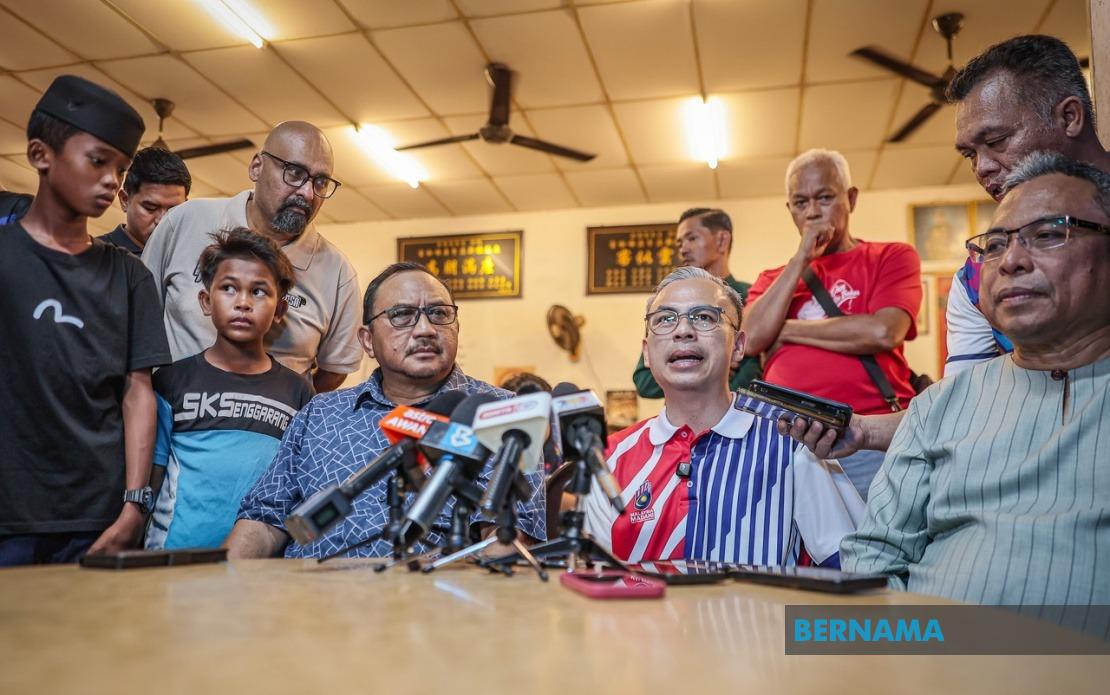
Pakatan Harapan is preparing to contest the 16th Johor State Election with a strategy that bridges the generational divide in voter engagement, fusing intensive ground-level organizing with social media momentum as the formal campaign period commences. The coalition's Communications director Datuk Fahmi Fadzil outlined this integrated approach at a press conference in Batu Pahat, underscoring that reaching voters effectively in 2024 requires presence both in neighbourhoods and online. The campaign officially kicks off after nominations conclude, with PKR contesting 20 seats and senior coalition figures already mobilizing across multiple constituencies to build momentum from day one.
Fahmi emphasized that the coalition's messaging framework prioritizes accuracy and substance, recognizing that misinformation poses a significant electoral challenge. By establishing dedicated media channels to rapidly disseminate information about PH candidates, the coalition aims to control the narrative and ensure voters encounter factual accounts of its platform rather than distorted versions spread through unverified sources. This reflects broader acknowledgment within Malaysian politics that digital spaces have become battlegrounds where elections are increasingly contested, requiring sophisticated real-time responses to false claims and competing narratives.
The decision to blend grassroots outreach with digital campaigning addresses a persistent challenge facing Malaysian political coalitions: how to maintain momentum across geographically dispersed constituencies while maximizing efficiency of campaign resources. PKR's presence in 20 Johor seats necessitates visible, consistent engagement with local communities through traditional methods such as door-to-door canvassing and community events, yet these efforts lack reach if unamplified by digital channels. Conversely, social media presence without ground-level credibility rings hollow to voters who expect to encounter candidates and party representatives physically present in their districts.
Fahmi's personal participation in campaign events, including his attendance at a community screening in Senggarang, exemplifies this philosophy. Rather than confining himself to media appearances or formal rallies, senior coalition figures are embedding themselves in neighbourhood activities to demonstrate accessibility and genuine interest in local concerns. This approach recognizes that Malaysian voters, particularly in smaller towns and rural areas, often respond more positively to politicians who show up in person and engage in everyday community activities rather than maintaining distance from grassroots settings.
The coalition's governance track record across Selangor, Negeri Sembilan, and Penang constitutes its primary strategic asset in the Johor contest. Rather than relying solely on promises, PH is positioning itself as a coalition with demonstrated capacity to deliver substantive development outcomes. Fahmi cited specific projects such as the Rapid Transit System Link and the Johor-Singapore Special Economic Zone as evidence that federal-state cooperation under PH governance produces tangible benefits. For Malaysian voters in Johor evaluating competing political offerings, this emphasis on completed projects and economic initiatives provides concrete grounds for assessing coalition competence beyond rhetorical claims.
The selection of high-profile candidates including Dr Maszlee Malik in Puteri Wangsa and Onn Abu Bakar in Senggarang signals that PH is concentrating senior party figures in competitive constituencies deemed critical to electoral success. Deploying experienced politicians in these seats reflects strategic calculation that certain races will determine overall election outcome, requiring maximum organizational strength and candidate credibility. This concentration of resources, however, also highlights a broader challenge facing opposition coalitions in Malaysia: the need to balance defensive positioning in strongholds against offensive positioning in swing constituencies where genuine competition exists.
PH's commitment to releasing a dedicated Johor manifesto indicates recognition that state-level elections demand tailored policy agendas rather than simply recycling national platforms. Voters in Johor have distinct economic interests, infrastructure needs, and governance priorities that diverge from concerns in other states. A focused manifesto addressing Johor-specific issues demonstrates that the coalition has invested time in understanding regional dynamics rather than treating the state election as secondary to national political preoccupations. This granular approach to policy messaging increasingly characterizes competitive Malaysian electoral contests.
The formation of a special task force comprising the Malaysian Communications and Multimedia Commission, Election Commission, Royal Malaysia Police, and Malaysian Media Council to monitor misinformation represents institutional acknowledgment that false information poses genuine threats to electoral integrity. Rather than treating this solely as a law enforcement matter, the multi-agency approach recognizes that combating misinformation requires coordination across regulatory, electoral, security, and media sectors. For Malaysian voters, this institutional response provides some assurance that authorities are actively working to maintain information ecosystem health during the campaign period, though implementation effectiveness remains to be demonstrated.
Social media's role in the campaign presents both opportunities and risks for PH. The coalition benefits from digital platforms' ability to amplify messages at minimal cost and reach younger, urban voters who rely heavily on online information sources. Yet these same platforms enable rapid spread of false claims, adversarial content, and divisive messaging that can undermine the coalition's fact-based communication strategy. The challenge for PH operatives managing the digital campaign involves maintaining message discipline across multiple platforms while responding quickly to competitor attacks and misinformation without amplifying false narratives through excessive fact-checking.
The Johor election assumes heightened significance within Malaysia's broader political trajectory because the state represents a bellwether for coalition performance in economically important, demographically diverse regions. Should PH perform strongly in Johor, the coalition gains momentum and credibility heading toward potential national elections. Conversely, underperformance in the state would signal vulnerability to electoral competition even in territories where PH claims governance expertise. For Malaysian political observers, the Johor contest offers important evidence regarding whether the coalition's proposed fusion of grassroots and digital organizing translates into measurable electoral gains.
The campaign strategy outlined by Fahmi reflects evolution in Malaysian political practice as established parties recognize that twenty-first-century electoral competition demands multimedia, multilevel engagement approaches. Candidates and party officials must maintain simultaneous presence across community events, digital platforms, and traditional media to achieve comprehensive voter reach. This integration of channels represents operational sophistication beyond previous electoral cycles, requiring campaign staff trained in both community organizing and digital communications. As Malaysian elections become increasingly complex in their strategic demands, successful parties will be those capable of executing coordinated campaigns across multiple domains simultaneously rather than relying on single-channel approaches.

