Pakatan Harapan has pitched a markedly broader policy vision for the upcoming 16th Negeri Sembilan state election, with coalition leaders arguing that their latest manifesto reflects a strategic shift to support a wider cross-section of the electorate. The opposition coalition released the document on July 21, just over a week before polling day on August 1, under the banner 'Negeri Sembilan Kekal Harapan', embedding ten core pledges aimed at delivering tangible improvements across income levels. This represents a significant recalibration from earlier PH positioning, which had historically concentrated its welfare narrative around the B40 bottom-income segment of Malaysian society.
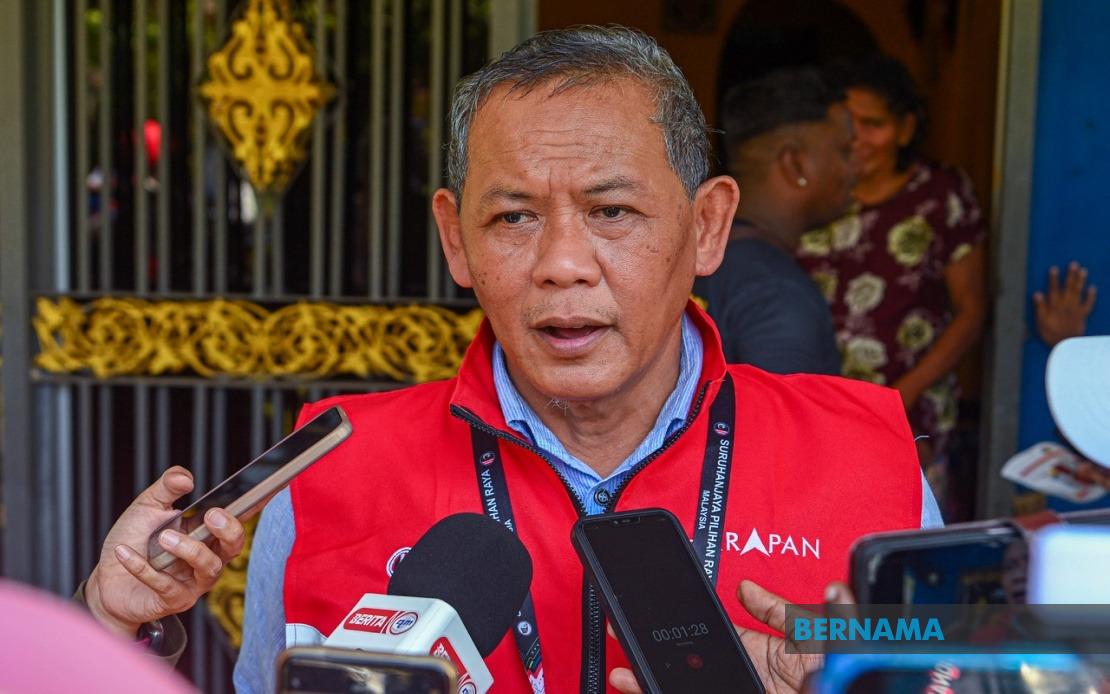
Menteri Besar Datuk Seri Aminuddin Harun, who chairs Pakatan Harapan's Negeri Sembilan state division, characterised the expanded manifesto as a response to evolving economic needs across the state. Speaking after a community engagement session with Indian residents at Sekang Estate in Linggi, Aminuddin explained that the coalition had deliberately widened its policy aperture to incorporate families earning within the M40 middle-income range—those typically earning between roughly RM4,850 and RM10,970 monthly. This strategic expansion signals PH's recognition that Malaysia's traditional three-tier income classification system no longer fully captures voter concerns, particularly as cost-of-living pressures affect households across the earnings spectrum.
The shift carries meaningful implications for how Malaysian opposition coalitions now position themselves ahead of state elections. By extending support frameworks to the M40, PH is attempting to construct a coalition that transcends strict income-based categorisation, potentially appealing to skilled workers, young professionals, and aspirational families who may feel squeezed by rising inflation but do not qualify for conventional poverty assistance. Education initiatives have been particularly broadened, with PH now committing to extend school support programmes previously reserved for B40 children to include offspring from M40 households. This reflects acknowledgment that education costs—from uniforms and books to tuition supplements—represent a pressure point across multiple income tiers.
Aminuddin, simultaneously holding portfolios as Negeri Sembilan PKR chairman, PKR vice-president, and Port Dickson Member of Parliament, underscored that PH distinguishes itself through demonstrated delivery rather than mere campaign rhetoric. He pointed to the coalition's record governing the state since the 2018 general election as evidence of institutional capability, arguing that fulfilling campaign promises proves substantially more demanding than articulating them during election season. This framing seeks to inoculate PH against accusations of overpromising, a vulnerability opposition coalitions frequently face when confronted with incumbent governments' resource advantages and administrative machinery.
The political context surrounding Negeri Sembilan's August 1 polls remains intensely competitive. Aminuddin himself faces a three-way challenge in the Linggi state seat, defending his position against Barisan Nasional incumbent Datuk Mohd Faizal Ramli and 54-year-old Bersatu candidate Zamri Md Said. This multi-cornered contest mirrors broader fragmentation within Malaysia's political landscape, where Bersatu's decision to contest separately from BN has complicated traditional opposition-versus-government binaries. The resulting electoral complexity means that manifesto clarity and perceived competence become even more critical tools for voter persuasion.
State-level elections in Malaysia increasingly serve as critical bellwethers for national political sentiment, and Negeri Sembilan's contest assumes particular significance given the state's demographic diversity and relatively competitive political terrain. The dissolution of the State Legislative Assembly on June 5 set machinery in motion for what election observers characterise as a closely fought encounter. Early voting commenced on July 28, allowing specific categories of voters to cast ballots ahead of the main polling day, a mechanism reflecting Malaysia's evolving electoral administration.
PH's manifesto expansion also addresses a recognisable anxiety within Malaysian middle-income households. The M40 segment has experienced gradual compression of real purchasing power despite nominal income stability, creating political space for messaging that acknowledges their struggles without deploying poverty-focused language. Access to quality healthcare, affordable housing down-payments, and education financing emerge as probable focal points within PH's ten commitments, resonating with households that earn above poverty thresholds yet struggle with fundamental necessities in an era of persistent inflation.
Aminuddin issued explicit appeals for electoral maturity during the campaign period, urging all competing parties to avoid issues capable of fracturing Negeri Sembilan's social cohesion. This plea carries weight in a state with substantial Indian, Chinese, and Malay-Muslim communities, where divisive rhetoric can rapidly polarise electorate segments and inflame communal sensitivities. His emphasis on responsible campaign conduct reflects broader concern within Malaysian political circles about election-season rhetoric occasionally exceeding democratic norms.
The manifesto's timing—released in the narrow window between assembly dissolution and polling day—follows established Malaysian electoral practice, allowing PH to command media attention while offering voters concrete policy reference points during the final campaign phase. For Malaysian observers and Southeast Asian analysts tracking opposition coalition strategy, the deliberate expansion from B40-centric positioning to M40-inclusive framing represents a tactical evolution reflecting sobering realities of electoral mathematics and voter composition across increasingly diverse state constituencies.

