Pakatan Harapan is treading carefully as it navigates the July 11 Johor state election, particularly mindful of the electoral complexities emerging from 23 constituencies where its rival Perikatan Nasional has chosen not to field candidates. The opposition coalition's caution reflects a broader uncertainty about where PN voters will direct their support when their traditional choice is unavailable, and whether such movements could fundamentally reshape outcomes in marginal contests across the state.
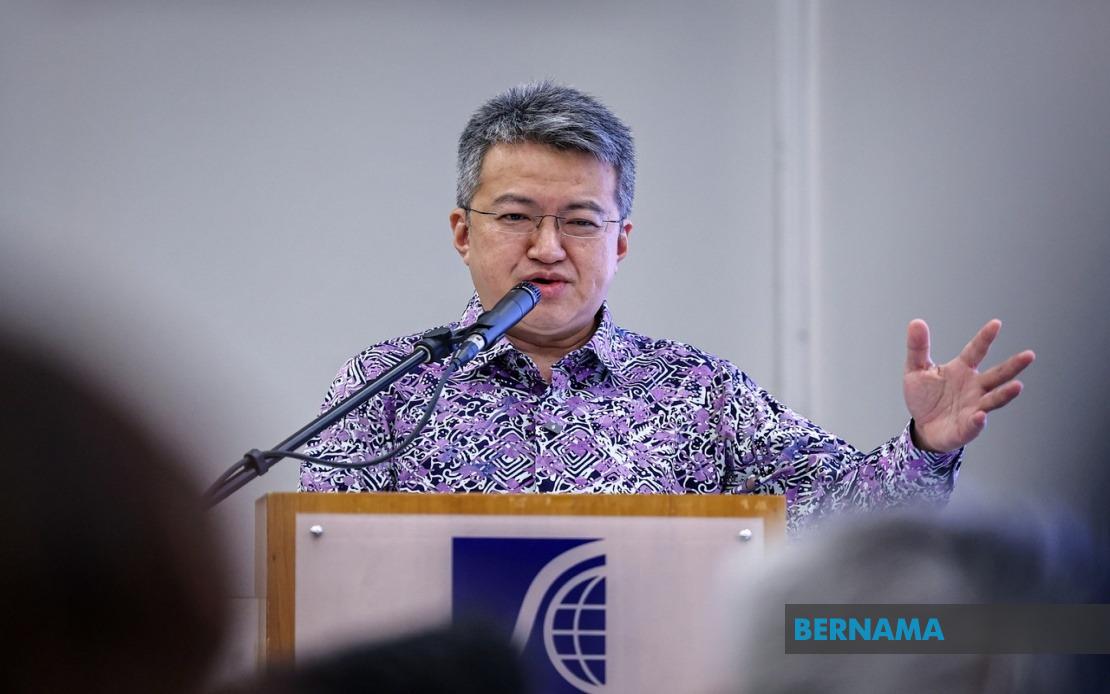
DAP Strategic Director Liew Chin Tong articulated these concerns explicitly, identifying voter defection as a critical wildcard that could determine the election's trajectory. His comments underscore a fundamental reality in Malaysian electoral politics: when major political blocs withdraw from specific contests, their supporters do not simply disappear. Instead, they scatter across the political landscape, and their ultimate destination often remains opaque until ballot day. This phenomenon has historically shifted outcomes in tightly contested seats where victory margins depend on mobilising every available vote.
The mechanics of this electoral uncertainty carry particular weight for DAP candidates, whose presence in Johor politics has historically invited tactical voting from multiple directions. Some PN voters might drift toward Barisan Nasional out of conservative instinct, while others could support DAP candidates if they perceive them as the strongest challengers to BN dominance in their respective constituencies. This bifurcation of traditional opposition support—itself a consequence of the broader PH-PN split—creates genuine volatility for campaign strategists attempting to forecast seat distributions.
Liew's remarks reveal an organisation preparing for multiple scenarios rather than assuming linear voting patterns. The Deputy Finance Minister acknowledged that elections inherently contain unpredictable elements that meticulous planning cannot fully account for, a recognition that extends beyond mere political courtesy toward genuine operational humility. He outlined PH's response strategy: maintaining vigilant ground organisation, intensifying campaign activity, and presenting policy alternatives compelling enough to consolidate voter confidence even amid uncertainty surrounding PN supporter movements.
The broader context shaping this caution involves PH's fielding of what the coalition characterises as a carefully curated slate of younger, credible candidates positioned to appeal across demographic and ideological divides. This emphasis on fresh faces represents a deliberate counter-narrative to any perception that PH governance has become stale or disconnected from grassroots concerns. However, candidate quality alone cannot overcome the structural challenge posed by concentrated opposing forces in constituencies where voter choice has suddenly expanded unexpectedly.
Liew's personal decision to vacate the Perling state seat he secured in 2022 illuminates DAP's internal philosophy regarding institutional accountability and talent circulation. His withdrawal reflects a principled position against dual parliamentary-state assembly representation, a stance that prioritises democratic norms over personal political entrenchment. By relinquishing the seat despite a successful previous campaign, Liew demonstrates commitment to the principle that elected representatives should focus their efforts rather than fragmenting attention across multiple jurisdictions.
The candidacy transfer to former Senai assemblyman Alan Tee Boon Tsong carries strategic implications for DAP's presence in the Klang Valley region, where Perling's 109,992 registered voters represent a substantial electoral force. Tee's prior state assembly experience provides continuity in understanding local governance challenges, though he faces the disadvantage of not inheriting the incumbent's organisational machinery and constituent relationships. His introduction to a three-cornered contest against Barisan Nasional's P. Pannir Selvam and Parti Bersama Malaysia's Boo Wei Han significantly complicates PH's targeting calculus.
The three-way competition in Perling exemplifies the fragmented opposition landscape characterising contemporary Johor politics. Neither PH nor PN fielded a consensus alternative to BN dominance in this seat, instead presenting separate challenges that likely dilute anti-establishment voter concentration. This splintering reflects deeper fractures within Malaysian opposition politics, where personality conflicts and ideological disagreements have hardened into institutional separation. For voters seeking alternatives to BN governance, such fragmentation generates frustration and reduces confidence that opposition forces can effectively challenge incumbents.
The election calendar compressed into a relatively short period—early voting on July 7 followed by main polling on July 11—creates additional pressure on campaign operations. PH must simultaneously maintain ground presence, manage candidate transitions, and navigate the PN vote-shifting uncertainty across 23 constituencies, all while contending with BN's substantial incumbent advantages and resource superiority. The condensed timeline limits opportunities for momentum-building, requiring campaigns to achieve maximum impact through intensive rather than extended outreach efforts.
For Malaysian and Southeast Asian observers, the Johor contest serves as a significant test of opposition coalition dynamics post-2022 general election. The PH-PN rupture has fundamentally altered the competitive landscape, creating situations where traditional opposition blocs now compete directly against each other, benefiting ruling coalitions in several constituencies. Johor's election will provide empirical data about whether fragmented opposition forces can nonetheless erode BN's three-decade dominance, or whether internal divisions have sufficiently weakened challenge capacity to ensure continued establishment control.
Liew's candid acknowledgment of electoral unpredictability reflects mature campaign management that accepts complexity rather than pretending false certainty. His emphasis on vigilance and substantive policy alternatives suggests PH intends to compete on positive grounds rather than merely exploiting PN's absence. Whether this approach sufficient to overcome the disadvantages posed by voter fragmentation and the geographic distribution of PN's non-contested seats will become apparent once Johor voters cast ballots, delivering either vindication of PH's cautious confidence or confirmation of deeper opposition vulnerabilities.

