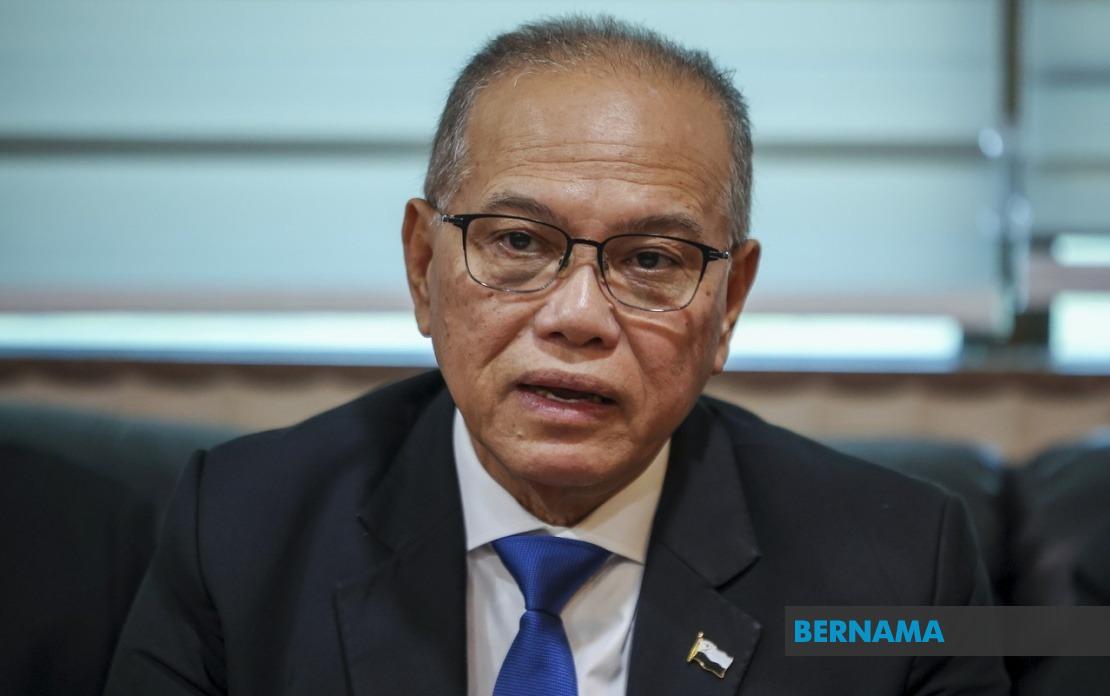
Pahang is on course to surpass its annual revenue collection target after securing RM921.72 million by late August, according to Menteri Besar Datuk Seri Wan Rosdy Wan Ismail. The figure represents 72 per cent of the state's total revenue objective of RM1.279 billion for the year, prompting state leadership to express confidence in achieving and potentially exceeding fiscal goals before year-end. The disclosure came during a sitting of the Pahang State Legislative Assembly at Wisma Sri Pahang, where the Menteri Besar addressed questions about the state government's economic performance and financial management.
The revenue collection milestone reflects broader economic momentum within Pahang, a state that has historically relied on resource extraction, manufacturing, and increasingly, tourism and diversified industries. Strong collection rates at this stage of the financial year suggest both effective tax administration and genuine economic expansion within the state, providing a firmer foundation for government service delivery and development initiatives. Such performance gains are particularly significant for a state navigating the post-pandemic economic recovery period and managing competing demands for public investment across multiple districts.
Wan Rosdy highlighted that Pahang's economy has maintained robust expansion, with the state's Gross Domestic Product climbing to RM71 billion in 2025 from RM68.8 billion in the preceding year. This steady growth underscores the diversification efforts undertaken by the state government and private sector, moving beyond traditional economic pillars to build resilience against commodity price volatility and external economic shocks. For Malaysian policymakers and investors, Pahang's GDP trajectory serves as a positive indicator of how state-level economic management can contribute meaningfully to national economic targets.
Investment activity has also shown encouraging signs, with the state government recording RM11.47 billion in committed investments as of August 2026, while realised investments reached RM1.044 billion. The gap between committed and realised figures reflects the typical pipeline dynamics of major projects, though the substantial committed investment pipeline suggests considerable economic activity ahead. These figures signal that Pahang continues to attract both domestic and foreign capital, a critical factor for sustaining employment growth and technological upgrading in the state's manufacturing and services sectors.
The financial stability achieved through strong revenue collection has enabled Pahang to expand its welfare and development initiatives. The state government has channelled RM173.93 million into the Makmur Pahang Initiative between 2024 and 2026, with allocations progressively increasing from RM38.8 million in 2024 to RM84.59 million in 2026. This ascending allocation pattern reflects the state's growing fiscal capacity and commitment to direct welfare transfers, a policy approach that mirrors similar initiatives in other Malaysian states seeking to provide immediate relief to constituents while supporting household consumption.
The Makmur Pahang Initiative represents the state government's effort to translate economic gains into tangible benefits for ordinary residents, addressing cost-of-living pressures and supporting vulnerable populations. The decision to substantially increase allocations to this programme in 2026, with further expansion planned through the upcoming state budget, demonstrates a deliberate policy choice to prioritise social spending during a period of strong revenue inflows. Such initiatives carry particular weight in Pahang's context, given the geographic and economic diversity within the state, which encompasses affluent urban centres alongside rural and semi-rural areas with varying development levels.
Wan Rosdy's remarks to the state assembly underscore the political significance of fiscal performance in Malaysia's state-level politics. Revenue collection figures and economic growth metrics serve as key performance indicators through which state governments justify their governance records and build electoral narratives. In Pahang's case, the combination of expanding revenue, GDP growth, and increased social spending allows the state administration to present a comprehensive picture of effective governance, though such statistics remain subject to ongoing public scrutiny and debate over resource allocation priorities.
The state government's ability to sustain strong revenue collection while maintaining economic growth offers flexibility in balancing competing fiscal demands. Strong revenues permit investment in infrastructure and human capital development necessary for long-term economic competitiveness, while simultaneously allowing governments to meet immediate social expectations through welfare programmes and direct assistance. This fiscal space becomes particularly valuable given Malaysia's ongoing need to balance development spending with debt sustainability concerns at both federal and state levels.
Looking ahead, Pahang's state government has signalled its intention to expand the Makmur Pahang Initiative further through the upcoming state budget presentation. This forward commitment suggests confidence in sustained revenue performance and continued economic expansion, though global economic uncertainties and commodity price fluctuations remain potential risk factors. For Malaysian investors and business operators in the East Coast, such policy signals indicate a stable policy environment with government backing for continued development spending and social investment.

