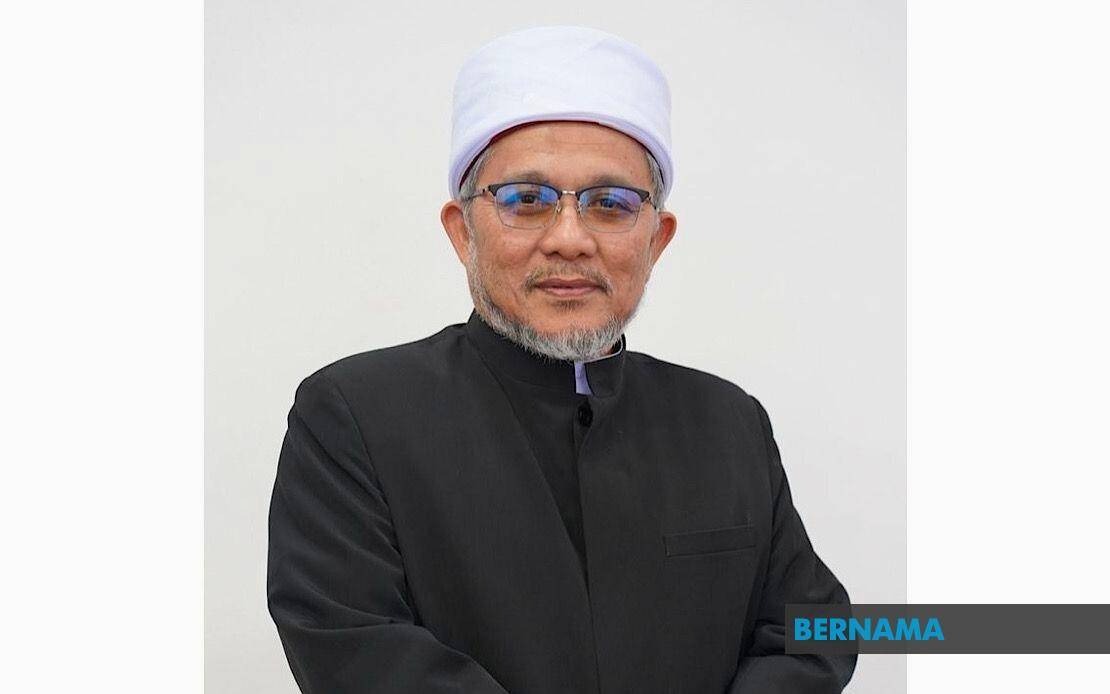
The Pahang State Mufti Department and the Pahang Islamic Religious and Malay Customs Council (MUIP) have formally restated the Sultan of Pahang, Al-Sultan Abdullah Ri'ayatuddin Al-Mustafa Billah Shah's commitment to strengthening and elevating the institutional standing of mosques and suraus throughout the state, signalling a clear position on religious infrastructure governance at a time when debate has intensified over prayer facilities in commercial spaces.
According to Pahang Mufti Prof Datuk Dr Asmadi Mohamed Naim, the Sultan's decree directly addresses recent proposals to establish Friday prayer facilities in shopping malls nationwide. The pronouncement underscores the traditional hierarchy of religious spaces in Malaysia's federal structure, where states retain constitutional responsibility for religious affairs. This positioning reflects deeper constitutional principles: the Federal Constitution's Ninth Schedule explicitly designates mosque administration as a state responsibility, granting Pahang's religious authorities primary jurisdictional control over where congregational prayers occur.
The Mufti's statement emphasises that all Friday prayers in Pahang must continue to take place exclusively at mosques and suraus formally authorised to conduct such prayers, locally designated as SKJ facilities. This restriction is not merely administrative convenience but reflects rigorous Islamic jurisprudence. Under the Syafi'i school of Islamic law—the predominant madhab in Malaysia—Friday prayers must satisfy multiple stringent conditions: they must occur during the Zohor prayer period, gather a minimum of forty congregants, be preceded by two formal sermons, and operate from designated venues arranged such that nearby congregations do not overlap or divide the community of worshippers.
Pahang's religious authorities argue that the state's existing mosque and surau infrastructure already adequately serves population needs. The Mufti noted that mosque planning and distribution across Pahang has deliberately accounted for local demographic requirements, ensuring that current facilities possess sufficient capacity to accommodate worshippers. Among key venues cited are the Sultan Ahmad 1 State Mosque in Kuantan, the Tepian Putra Mosque, the anticipated Bandaraya Mosque opening, and the Al-Shafie Mosque in Kota SAS. These facilities represent substantial investments in purpose-built religious infrastructure designed specifically to meet both the spiritual and administrative requirements of congregational worship.
The Pahang declaration arrives amid an evolving national conversation about religious space modernisation. Just days prior, Minister in the Prime Minister's Department (Religious Affairs) Datuk Dr Zulkifli Hasan had expressed openness to introducing Friday prayers in shopping malls following reportedly positive experiences with such arrangements in the Federal Territories. This ministerial receptiveness created space for states to reconsider traditional approaches, prompting Pahang's leadership to formally reaffirm its established framework.
The constitutional dimension underlying Pahang's position warrants particular attention for understanding Malaysia's religious governance architecture. While the federal government coordinates aspects of Islamic affairs, the Federal Constitution reserves mosque administration, Islamic law enforcement, and related infrastructure matters to individual states. This constitutional arrangement means Pahang's MUIP enjoys primary authority as the custodian and administrator of mosques and suraus within its territory. The Sultan's decree therefore represents not merely preference but a formal exercise of constitutionally delegated powers.
For Malaysian readers and policymakers, the Pahang position signals how state-level religious authorities are interpreting their constitutional mandates amid modernisation pressures. Shopping mall prayer facilities present genuine practical advantages for urban Muslim workers requiring convenient lunch-hour worship options. However, the Pahang authorities prioritise preserving what they characterise as the religious and communal integrity of designated prayer spaces. The Syafi'i jurisprudential requirements they cited—particularly the prohibition against overlapping congregations—reflect theological concerns about maintaining unified, properly-led communal worship rather than fragmented, isolated prayer gatherings.
This approach also reflects broader considerations about preserving distinctive religious institutional spaces within increasingly commercialised urban environments. Shopping malls function as consumption-oriented spaces governed by commercial rather than religious logic. By confining authorised Friday prayers to traditional mosques and suraus, Pahang's authorities maintain clear institutional boundaries between sacred and secular spaces, a principle many Muslim-majority societies regard as important for religious and cultural preservation.
The practical implications for Pahang's Muslim population remain modest, given that the state's mosque infrastructure appears adequately distributed. However, the declaration establishes important precedent about how states may respond to federal-level experimentation with alternative prayer facilities. Should other states follow Pahang's model, it could create significant variance across Malaysia regarding where congregational Friday prayers are permitted, potentially complicating national religious standardisation efforts.
The Sultan's reaffirmation also reflects the continued relevance of traditional religious authority structures in Malaysian Islam. Despite modernisation and institutional evolution, the Sultan's personal decree regarding mosque governance carries genuine weight in shaping state religious policy. This demonstrates how Malaysia's constitutional monarchy continues functioning as active custodian of religious matters in individual states, not merely ceremonial figurehead positions.
Looking forward, Pahang's position invites reflection on how Malaysia can balance religious tradition with urban modernisation. The state's argument that purpose-built mosques better serve congregational worship than commercial space prayer rooms possesses practical merit. Yet the pressure to accommodate Muslim workers' scheduling needs remains genuine. Other states may adopt different approaches, gradually establishing a polycentric Malaysian model where religious infrastructure governance reflects state-level priorities and constitutional interpretations. For Malaysian readers across other states, the Pahang precedent offers valuable insight into how individual state religious authorities are exercising their constitutional prerogatives during this period of evolving practice regarding Islamic worship facilities.

