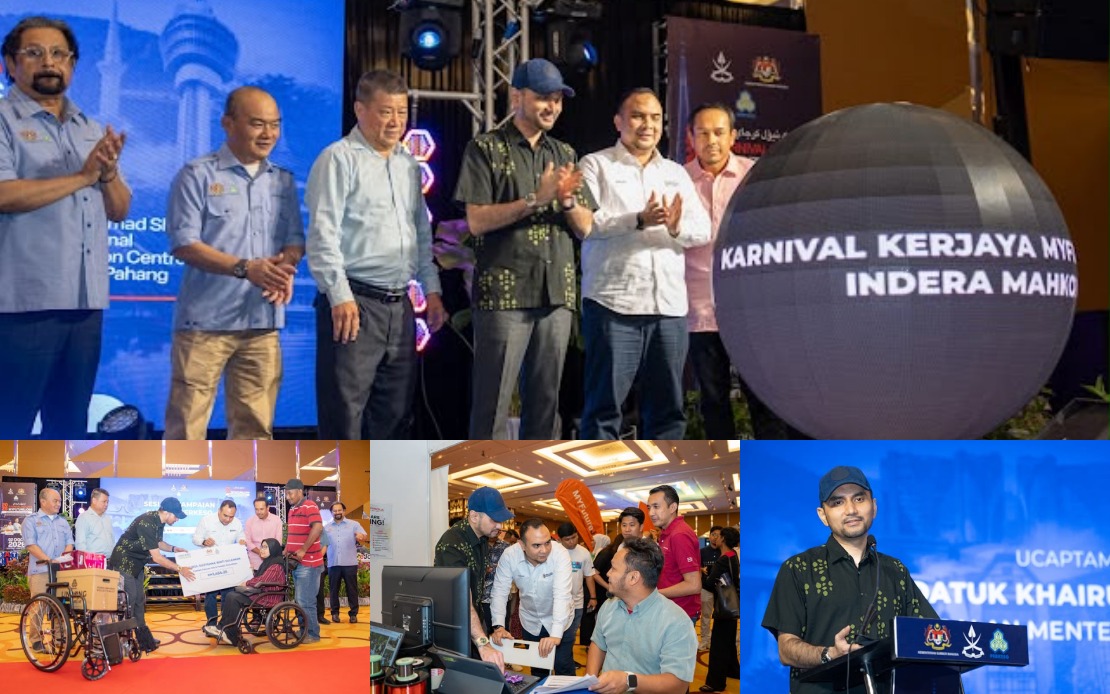
Pahang has emerged as the employment leader along Malaysia's east coast, recording a labour force participation rate of 65.3 per cent in the first quarter of 2026 while maintaining one of the region's lowest unemployment rates at 1.9 per cent. The state's performance reflects the effectiveness of coordinated federal and state-level efforts to connect job seekers with employment opportunities across multiple sectors, signalling a robust recovery in regional labour markets as the country advances through the year.
Deputy Human Resources Minister Datuk Khairul Firdaus Akbar Khan attributed Pahang's success to sustained implementation of employment programmes coordinated through the Social Security Organisation, particularly the MYFutureJobs initiative. He underscored that the ministry views employment generation not merely as an economic statistic but as a pathway for younger Malaysians to enter the workforce and establish financial independence during a critical period of their careers. The government's approach combines direct job matching with broader skills development, recognising that durable employment requires both opportunity and readiness.
The scale of the MYFutureJobs programme in Pahang reveals substantial institutional commitment to employment services. From 2023 through July 24, 2026, the platform facilitated employment for 26,877 job seekers across the state, while PERKESO organised 1,277 interview programmes and career carnivals designed to bring employers and candidates into direct contact. This infrastructure represents a deliberate effort to reduce friction in labour markets, particularly in areas where traditional recruitment channels may be limited.
At the Indera Mahkota MyFutureJobs Career Carnival 2026 event, thirty employers across diverse industries offered 6,000 job vacancies, demonstrating broad-based participation from the private sector. The sheer number of openings available simultaneously suggests that Pahang's labour shortage is being offset by investment in recruitment mechanisms. By July 2026, the MYFutureJobs portal had advertised over 10,000 vacancies statewide, with 11,857 job seekers registered on the platform during that year alone, indicating growing awareness and uptake among potential workers.
Beyond immediate placement, the ministry has recognised that sustainable employment requires workers equipped to meet evolving industry demands. Datuk Khairul Firdaus encouraged continued participation in training programmes designed to enhance technical skills and adaptability, acknowledging that technological change and sectoral transformation require ongoing workforce development. This emphasis on human capital reflects international best practice in labour policy, where upskilling complements job matching as a dual strategy for reducing long-term unemployment.
The integration of MYFutureJobs with the Sahabat MADANI initiative represents a strategic broadening of the government's employment outreach. Where MYFutureJobs focuses on direct employment services, Sahabat MADANI functions as a grassroots volunteer movement aimed at community engagement and social cohesion. Prime Minister's political secretary Datuk Ahmad Farhan Fauzi characterised the initiative as a bridge between government institutions and local communities, positioning volunteers as conduits for feedback and service delivery in underserved areas.
The Pahang-level launch of Sahabat MADANI achieved its initial recruitment target of 2,000 members, yet Ahmad Farhan indicated intentions to expand the volunteer base substantially. This approach addresses a persistent challenge in Malaysian governance: ensuring that employment services and social programmes reach rural and remote populations who may lack access to conventional recruitment channels or awareness of available opportunities. Volunteers operating at the grassroots level can identify and mobilise potential job seekers who might otherwise remain invisible to formal labour statistics.
For Southeast Asia's labour dynamics, Pahang's performance carries broader significance. The east coast region historically has faced employment challenges relative to more industrialised western and central areas, with geographic dispersion and lower concentration of manufacturing and services limiting job creation. Pahang's success suggests that coordinated investment in employment platforms, combined with volunteer-based community engagement, can meaningfully alter regional labour market outcomes. This model may offer insights for neighbouring countries grappling with similar geographic disparities in employment opportunities.
The 1.9 per cent unemployment rate in Pahang during Q1 2026 approaches functional full employment, the point beyond which further reductions become technically difficult as remaining joblessness reflects frictional rather than cyclical unemployment. This achievement raises questions about labour supply constraints and sectoral mismatches that may limit further improvement. Future policy focus will likely shift toward addressing skills gaps, geographic mobility, and wage levels that encourage workforce participation among demographic groups with lower engagement rates.
For Malaysian employers, Pahang's tight labour market signals intensifying competition for talent, particularly in sectors offering lower wages or less desirable working conditions. Companies seeking to expand operations or fill vacancies in the state may need to invest more substantially in compensation, training, and workplace conditions to attract and retain workers. This competitive dynamic could accelerate productivity improvements and wage growth in the region, benefiting local workers while potentially increasing business costs.
The government's dual strategy—combining technology-enabled job matching with community-based volunteer networks—reflects recognition that employment policy operates simultaneously at institutional and interpersonal levels. The MYFutureJobs platform provides efficiency at scale, while Sahabat MADANI volunteers offer personalised guidance and cultural familiarity. This complementary approach may prove particularly effective in Malaysian contexts where informal networks and personal relationships remain significant in hiring decisions.
Moving forward, sustaining and building upon Pahang's employment performance will require ongoing calibration of skills training to actual employer requirements, continuous expansion of the volunteer network to maintain grassroots reach, and periodic assessment of wage levels and job quality to ensure that participation translates into genuinely improved living standards. Policymakers will need to monitor whether current employment momentum can be extended to populations with structural barriers to workforce entry, including older workers, individuals with disabilities, and those in geographically isolated communities.

