The Pahang government has moved to clarify its approach to degazetting Permanent Forest Reserves, emphasizing that the process operates within a carefully defined framework rather than at executive whim. Menteri Besar Datuk Seri Wan Rosdy Wan Ismail outlined this position during a ceremony in Kuantan on August 30, responding to ongoing scrutiny regarding the state's handling of forest land conversions.
Central to the Menteri Besar's defence is the assertion that Pahang's land and forest management decisions derive legitimate authority from state-level jurisdiction. This distinction proves significant in Malaysia's federal structure, where certain environmental and land matters fall under state purview despite national forestry frameworks. Wan Rosdy contended that the decision to forego a public inquiry requirement reflects this constitutional allocation of powers, suggesting that such inquiries, while procedurally valuable, do not constitute a legal prerequisite under the state government's operational mandate.
The degazettement question has drawn regional attention because Pahang stands among only four Malaysian states that have declined to adopt both principal safeguards introduced through the National Forestry Act (Amendment) 2022. These safeguards—mandatory public inquiry and provision of replacement forestland—represent attempts to enhance transparency and environmental protection in reserve conversions. By not implementing these measures, Pahang joins a small cohort of states maintaining alternative protocols for forest management decisions.
Wan Rosdy's framing emphasizes that other states have similarly declined to adopt the 2022 amendments' full requirements, suggesting a broader pattern rather than isolated non-compliance. This positioning attempts to normalize Pahang's approach within a multi-state context, though the practical implications remain subject to interpretation. Environmental advocates argue that public inquiries serve essential communication functions, allowing stakeholders to understand rationales for reserve conversions and raising concerns about development pressures on remaining forest estate.
The degazettement framework that Pahang applies does incorporate multiple controls and specified procedures, according to the Menteri Besar. However, the precise nature of these constraints and the transparency mechanisms embedded within them remain incompletely detailed in official communications. This opacity itself fuels concerns among conservation organizations and observers who contend that robust public engagement strengthens policy legitimacy and environmental outcomes.
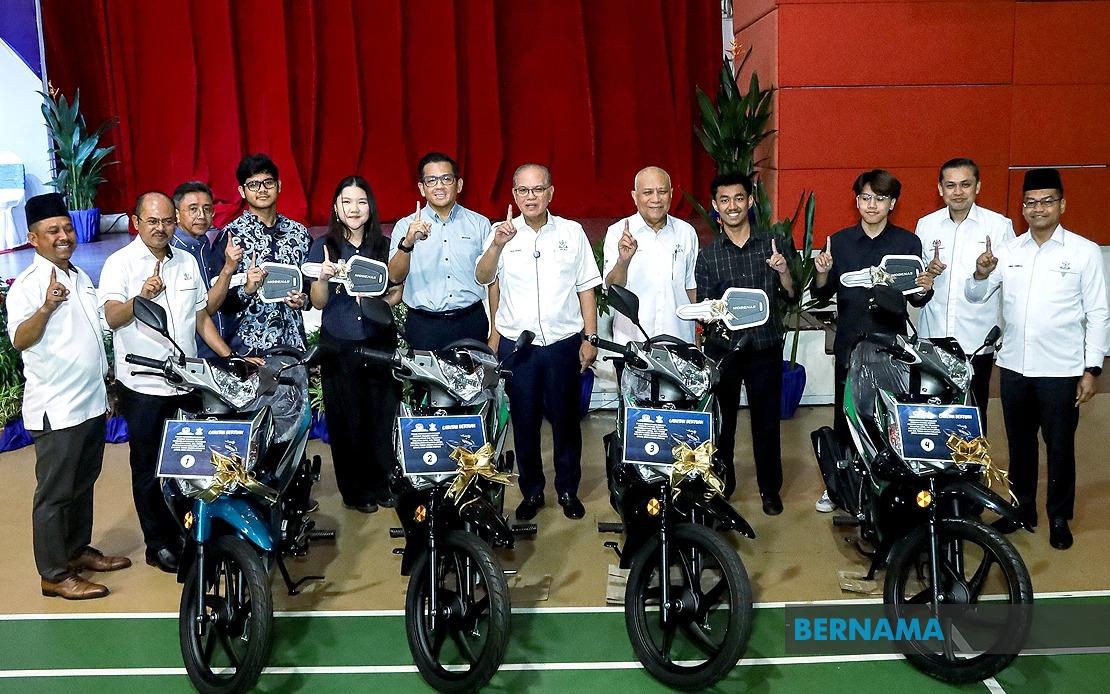
Beyond the forest governance question, the Pahang government simultaneously unveiled a youth-focused economic initiative addressing higher education accessibility. The proposed interest-free motorcycle loan scheme targets students aged 18 to 21 attending either public or private tertiary institutions. This initiative addresses a practical challenge facing university students in Malaysia, where personal transportation often proves essential for attending lectures, participating in internships, and managing campus life, particularly in suburban or rural institutional locations.
The financing proposal, if implemented as planned, would constitute a novel state-level intervention in education-related expenses. Most student support mechanisms focus on tuition fees or living allowances; dedicating concessional financing to motorcycle purchases reflects assumptions about mobility barriers within Pahang's student population. The scheme's targeting of both IPTA (public higher education institutions) and IPTS (private institutions) suggests inclusive intent, though implementation details—including eligibility verification, loan quantum, and repayment terms—await specification in the 2027 state budget deliberations.
Timing the initiative's announcement during an awards ceremony honoring academic excellence creates symbolic coherence. On the same occasion, the Pahang government presented incentives totaling RM2.4 million to more than 2,000 students who achieved outstanding results in the 2025 Sijil Pelajaran Malaysia (SPM), Sijil Tinggi Agama Malaysia (STAM), and Sijil Tinggi Persekolahan Malaysia (STPM) examinations. This layered approach—combining immediate cash recognition with proposed longer-term financing mechanisms—positions education support as a multifaceted state priority.
The RM2.4 million allocation distributed across 2,000 high-achieving students suggests modest per-capita incentives, likely in the range of RM1,000 to RM1,500 per recipient. While symbolic recognition carries psychological value for young achievers, such modest financial awards function primarily as encouragement rather than substantive educational subsidy. The proposed motorcycle scheme, by contrast, addresses a tangible infrastructure need with potentially more meaningful economic impact for recipient students.
For Malaysian educators and policymakers monitoring state-level education initiatives, the Pahang announcement signals emerging focus on post-secondary access barriers. Transportation challenges, though rarely prominent in national policy discussions, significantly affect student performance and persistence rates, particularly in states with dispersed institutional geography. Recognizing this through concessional financing represents incremental policy sophistication.
The forest governance and youth financing announcements, while thematically distinct, both reflect state administrative approaches to complex policy terrain. The forest degazettement stance maintains existing authority prerogatives while acknowledging emerging environmental standards; the education financing proposal acknowledges practical student needs while requiring budget commitments extending years into the future. Together, these positions reveal a Pahang government navigating between developmental ambitions and emerging governance expectations.
As the state budget process unfolds toward the stated 2027 implementation timeline, the motorcycle loan scheme will face scrutiny regarding fiscal sustainability, administrative capacity, and policy design details. Similarly, ongoing monitoring of forest reserve conversions will continue examining whether Pahang's procedural framework adequately protects remaining forest estate while enabling legitimate development. These parallel initiatives underscore the multidimensional character of contemporary state governance in Malaysia.

