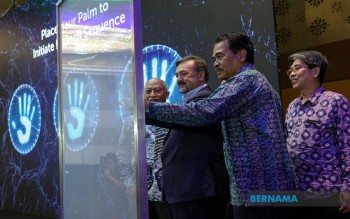
Pengurusan Aset Air Bhd (PAAB), the state-owned water asset management entity under the Minister of Finance, has rolled out a landmark sustainable Islamic finance framework that represents three significant national firsts. The framework combines Malaysia's inaugural blue finance mechanism—a financing approach dedicated to water-related projects—with Islamic financing principles and sustainability standards. The launch marks a pivotal moment in aligning domestic capital markets with global environmental and governance standards whilst addressing Malaysia's acute water infrastructure challenges.
The framework achieved Platinum Rated certification, the highest available rating, through a comprehensive development process helmed by Maybank Investment Bank as the primary sustainability structuring adviser and RAM Sustainability as the independent second party opinion provider. This collaborative approach ensured that the framework meets rigorous international sustainability benchmarks whilst remaining compliant with Islamic finance principles and Malaysian regulatory requirements. The certification signals to both domestic and international investors that the instrument meets globally recognised standards for environmental and social impact, enhancing its appeal across diverse investor bases seeking ethical returns.
PAAB's portfolio reflects the scale of Malaysia's water infrastructure challenge and the company's role in addressing it. As of December 31, 2026, the company had migrated and committed investments totalling RM46.88 billion into the nation's water services sector. These financial commitments have translated into substantial physical infrastructure. The company has completed 21 water treatment plants with a combined daily capacity of 2.085 billion litres, substantially expanding the country's water processing capability. Additionally, construction of 42 reservoirs with total storage capacity of 783 million litres provides greater buffer against supply volatility and seasonal variations.
Beyond treatment and storage, PAAB has installed 3,263 kilometres of replacement pipeline infrastructure. This extensive distribution network modernisation addresses one of Malaysia's persistent challenges—non-revenue water losses from ageing pipes that leak before reaching consumers. By replacing deteriorating infrastructure, PAAB reduces these losses whilst simultaneously improving supply reliability across urban and semi-urban centres. PAAB chairman Datuk Seri Jaseni Maidinsa framed these achievements as evidence of federal commitment to long-term water security, emphasising that modern infrastructure forms the foundation for sustainable development across generations.
The framework's most innovative element is the blue sukuk instrument planned for issuance in the third quarter of 2024. Finance Minister II Datuk Seri Amir Hamzah Azizan revealed that this sukuk will be the world's first to employ a taxonomy jointly developed by PAAB, Maybank, and RAM Sustainability under Securities Commission Malaysia guidance. The taxonomy provides a standardised classification system for water-related assets eligible for financing, creating transparent criteria for investors assessing environmental impact and asset quality.
The securitisation mechanism represents a novel approach to funding water infrastructure. By using water assets as collateral within a structured Islamic financing framework, PAAB can unlock capital markets for essential but traditionally underfinanced sectors. This approach transforms illiquid infrastructure assets into tradeable securities, broadening the investor base beyond conventional project finance channels. For sophisticated institutional investors—particularly those with environmental, social and governance mandates—blue sukuk offers both financial returns and measurable environmental impact through direct connection to water security improvements.
Finance Minister Amir Hamzah articulated the strategic imperative driving this innovation. Insufficient water asset investment creates cascading problems across economic sectors, from manufacturing and agriculture to domestic consumption. By expanding financing channels through blue sukuk, the government aims to accelerate capital deployment into the water sector. This perspective recognises that infrastructure financing is inherently constrained by government budget allocations; mobilising private capital through innovative instruments becomes essential for meeting infrastructure demand.
The framework carries particular significance for Southeast Asia's financial architecture. Malaysia's blue sukuk innovation could establish a template for other regional economies facing similar water security challenges. Countries across Southeast Asia grapple with urbanisation-driven water demand, ageing infrastructure, and climate-related variability in water availability. If PAAB's blue sukuk proves successful in capital markets, it may catalyse similar instruments across Indonesia, Thailand, Vietnam, and the Philippines, creating a regional market for water-linked Islamic financing.
The alignment of Islamic finance principles with environmental sustainability objectives reflects broader evolution in global capital markets. Islamic finance's emphasis on asset-backed transactions and prohibition of speculative instruments naturally suits infrastructure financing. Sustainable finance's focus on measurable environmental outcomes aligns with Islam's traditional emphasis on stewardship and intergenerational responsibility. This convergence enables PAAB to appeal simultaneously to Islamic finance specialists, environmental investors, and conventional infrastructure investors.
For Malaysian market participants, the framework opens new investment categories. Domestic institutional investors—including pension funds, insurance companies, and sovereign wealth vehicles—gain access to water-linked instruments meeting stringent sustainability criteria. Retail investors through unit trust platforms may eventually access blue sukuk through pooled instruments. This broadening of participation democratises investment in critical national infrastructure whilst potentially lowering funding costs through increased competition among investors.
The framework also establishes governance precedents. By publishing clear sustainability criteria, asset classification methodologies, and impact measurement standards, PAAB creates institutional architecture that other Malaysian entities can adopt. Future sustainable Islamic finance initiatives in renewable energy, waste management, or sustainable agriculture could reference PAAB's framework, creating consistency across sectors and reducing development costs for subsequent initiatives.
Looking forward, the framework's impact depends on successful market reception of the inaugural blue sukuk. Capital markets will assess whether the Platinum rating, asset backing, and environmental credentials attract sufficient investor demand to raise capital at competitive rates. Success would validate blue finance as a viable mechanism within Islamic financing structures and potentially trigger larger infrastructure investment flows. Conversely, weak investor response would suggest that blue finance requires further development or that market demand for water-linked instruments remains limited.
The initiative positions Malaysia as an innovation leader in sustainable Islamic finance whilst addressing legitimate infrastructure funding constraints. Whether this framework becomes a cornerstone of future Malaysian water investment or remains a specialised instrument will emerge through market reception and implementation outcomes over coming quarters.

