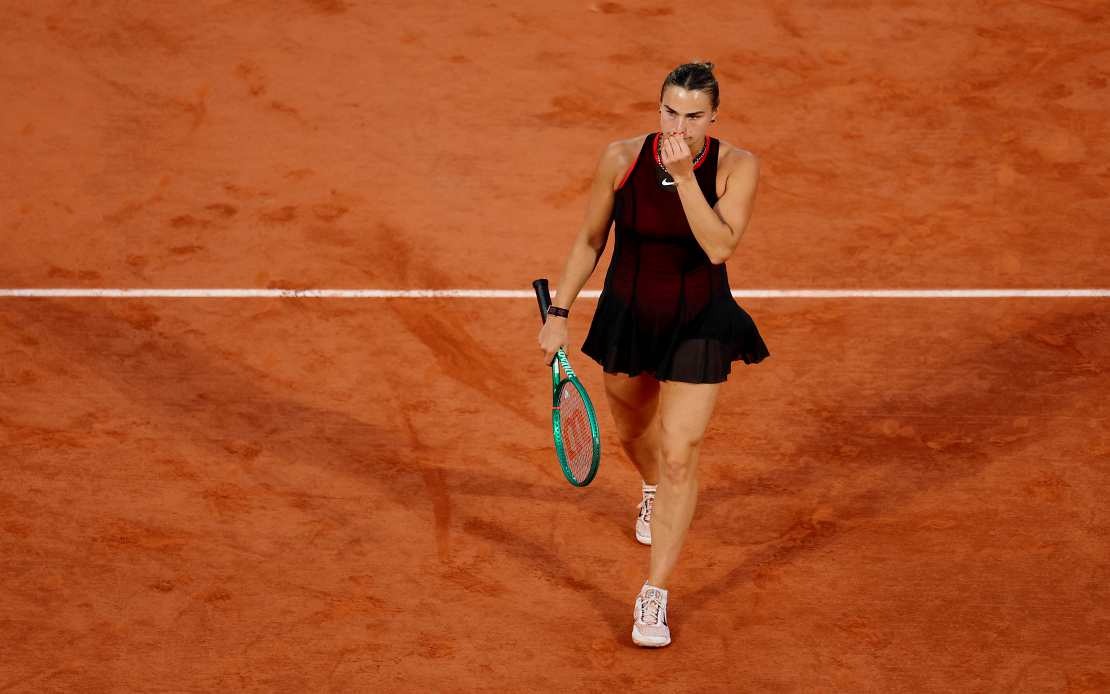
Japan's former world No. 1 Naomi Osaka delivered a commanding performance on Centre Court at Wimbledon on Sunday, dismissing top-seeded Aryna Sabalenka of Belarus 6-2, 7-6(2) in the fourth round to secure her maiden appearance in the quarterfinals at the All England Club. The 14th-seeded Osaka's straight-sets victory represented a significant breakthrough for the four-time Grand Slam champion, who has struggled to recapture the form that once saw her occupy tennis's highest ranking.
Osaka's advance to the last eight marked a historic moment for Japanese tennis at Wimbledon. The achievement made her the first Japanese woman to reach the quarterfinals at the prestigious grass-court tournament since Ai Sugiyama accomplished the feat nearly two decades earlier in 2004, underscoring both the rarity of such deep runs for Japanese players at this venue and the significance of Osaka's breakthrough this year.
The psychological dimensions of this victory extended beyond the mere achievement of reaching a new stage at Wimbledon. Osaka had entered the match bearing the weight of three consecutive losses to Sabalenka in 2024, including a disappointing defeat in the fourth round of the French Open earlier in the season. These setbacks had tilted the head-to-head record decisively in the Belarusian's favour, creating a mental hurdle that the Japanese star needed to overcome to progress at the All England Club.
Osaka's display against Sabalenka demonstrated a level of command that suggested she had found a formula to neutralize her opponent's powerful serving and aggressive baseline game. The first set proved particularly decisive, with Osaka claiming it 6-2 and establishing control from the opening games. Though Sabalenka mounted a more determined challenge in the second set, the tiebreaker proved no contest, as Osaka prevailed 7-2 to seal a dominant victory that will likely restore considerable confidence to the Japanese champion.
The emotional resonance of the victory was palpable during Osaka's on-court interview immediately following the match. She expressed the significance of performing at such a high level and achieving this particular milestone on grass, one of the sport's most demanding surfaces. Osaka reflected on how the experience of competing freely and joyfully in London carried special meaning, suggesting that she is gradually rebuilding the mental and emotional foundations of her game following the challenges she has faced in recent years.
Osaka's turnaround against Sabalenka assumes particular importance given the trajectory of her recent career. Having previously held the world No. 1 ranking and accumulated four Grand Slam titles, Osaka had experienced a period of relative inconsistency at tennis's highest level. The performance in London suggested that with her confidence restored through reaching the quarterfinals, she may be positioned to mount a more sustained challenge against the tour's elite competitors moving forward.
Looking ahead, Osaka will face 10th-seeded Karolina Muchova of the Czech Republic in the quarterfinals, with a place in the semifinals at stake. Muchova represents another formidable challenge, as the Czech player possesses considerable skill and has demonstrated her ability to compete effectively at Grand Slam tournaments. However, momentum from her victory over Sabalenka should provide Osaka with positive psychological impetus as she prepares for this encounter.
While Osaka's ascent provided cause for celebration in Japanese tennis circles, the story of Japan's men's challenge at Wimbledon took a different trajectory. Shintaro Mochizuki, the qualifier who had captured attention with his unexpected run through the draw, fell at the fourth-round stage to defending champion Jannik Sinner of Italy. Mochizuki, ranked world No. 151, succumbed 6-3, 7-6(0), 6-3 to the top-seeded Italian, whose dominance and consistency demonstrated why he holds the defending champion's status at the tournament.
Mochizuki's elimination, while disappointing, should not overshadow the achievement of a world No. 151-ranked qualifier reaching the fourth round at one of tennis's most prestigious championships. The Japanese player's run had nevertheless captured the imagination of observers and represented a remarkable accomplishment for someone operating outside the upper echelons of the professional tour.
The contrasting fortunes of Osaka and Mochizuki illustrate the competitive gaps that exist even among high-performing athletes in professional tennis. Osaka's established credentials as a multiple Grand Slam winner, combined with her experience navigating the pressures of major tournaments, provided advantages that proved decisive in her confrontation with Sabalenka. The victory reinforces the importance of mental resilience and strategic acumen in securing victories against the world's best players on tennis's biggest stages.

