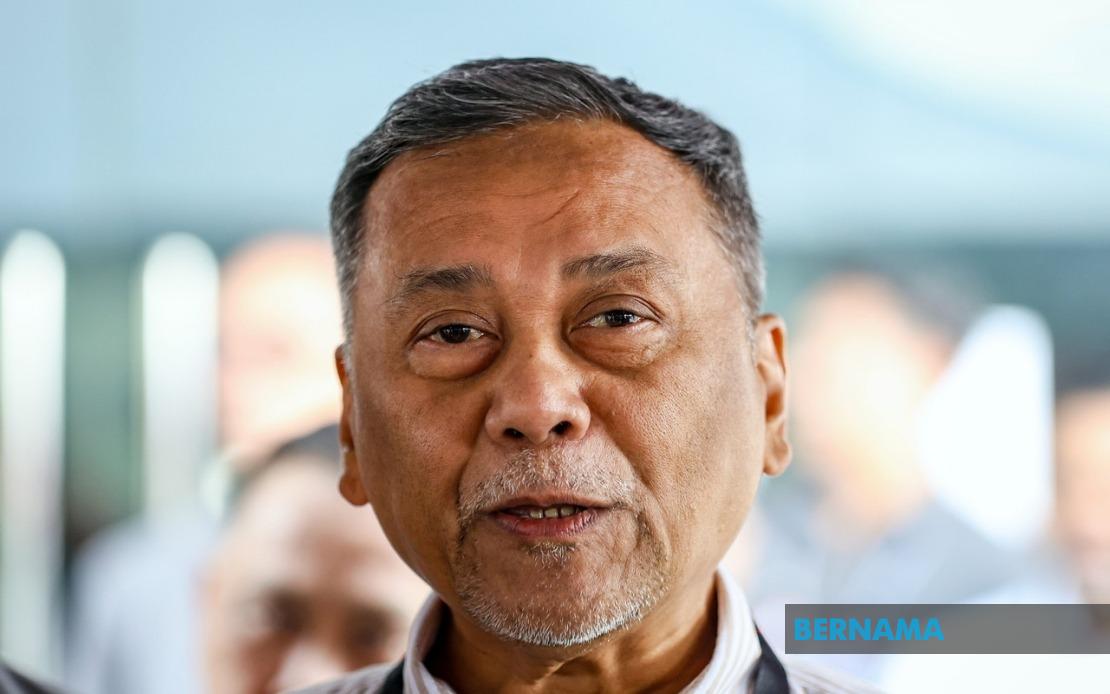
The Election Commission has issued fresh guidance to voters in Johor, directing them to report problematic online campaign materials directly to the Malaysian Communications and Multimedia Commission rather than to the electoral body itself. This clarification comes as the Johor state election enters its final stretch, with polling day scheduled for tomorrow when 2.7 million registered voters will head to the ballot box to elect 56 state assemblymen.
EC Chairman Datuk Seri Ramlan Harun made the announcement during an inspection of ballot preparation facilities in Pontian, explaining that the commission's enforcement capabilities cover only physical campaign materials. He noted that the EC's team has already removed posters and banners from various locations following public complaints, but acknowledged that the digital realm operates under different regulatory authority. By directing the public to report online violations to MCMC, the EC is effectively drawing a clear boundary between its traditional enforcement role and the communications regulator's jurisdiction over digital platforms and content.
The distinction between physical and digital campaign materials has become increasingly important in Malaysian electoral processes. While the EC maintains traditional oversight of tangible campaign items posted on walls, utility poles, and public spaces, the rapid proliferation of campaign content on social media, messaging platforms, and other digital channels has created a regulatory grey area. Ramlan's statement seeks to clarify that voters who encounter questionable online campaign materials should channel their concerns through MCMC's complaint mechanisms, ensuring that reports reach the appropriate authority with the technical capacity and legal mandate to take action.
This guidance arrives in response to growing concerns about the nature of campaign materials being used in the Johor election. Yesterday, UMNO Supreme Council member Datuk Seri Shahaniza Shamsuddin lodged a complaint about political posters and banners prominently featuring the likenesses of former Prime Minister Datuk Seri Najib Razak and his wife, Datin Seri Rosmah Mansor. Shahaniza, who serves as Pahang UMNO's information chief, characterised the use of images of individuals not directly contesting the election as inflammatory and potentially manipulative, designed to sway public opinion rather than to genuinely promote specific candidates.
The broader context of this dispute reflects ongoing tensions within the ruling coalition regarding campaign tactics and ethical standards. The use of figures with significant political history and controversial associations to drive voter messaging raises questions about whether such approaches serve the democratic process or undermine it by redirecting attention away from actual candidates and their policy platforms. Shahaniza's intervention suggests that even within UMNO, there is discomfort with campaign strategies that rely on celebrity or notoriety rather than substantive electoral messaging.
The EC's enforcement operations in the lead-up to tomorrow's polling have been relatively active. The commission's team has responded to complaints by physically removing unapproved materials from various locations throughout the state, indicating a responsive approach to maintaining campaign standards. However, the volume of digital content circulating across Malaysian social media platforms far exceeds what traditional enforcement teams can monitor or address independently. This practical limitation necessitates a division of labour where MCMC takes the lead on digital violations while the EC focuses on terrestrial campaign materials.
From a voter perspective, understanding where to lodge complaints is crucial for ensuring accountability throughout the electoral process. The clear articulation of this responsibility between EC and MCMC helps prevent reports from being misdirected or delayed. Voters who encounter campaign materials they believe violate electoral regulations now have explicit guidance to report online content to MCMC, potentially accelerating the removal or investigation of problematic digital material.
The timing of this clarification, arriving just before voting commences, underscores the seriousness with which the electoral authorities are treating campaign conduct standards. With nearly 2.7 million voters preparing to participate in the 16th Johor state election, maintaining confidence in the integrity of the campaign process becomes essential. Violations and irregularities, whether physical or digital, can undermine public trust in the electoral system more broadly.
The Johor election represents a significant political event in the Malaysian calendar, with control of the state assembly at stake. The composition of voters, regional dynamics, and party positioning have made this contest closely watched nationally. Any irregularities in campaign conduct, whether through inappropriate use of political figures or other means, could become contentious if results are close or disputed. Clear and transparent enforcement mechanisms, properly allocated between appropriate authorities, help protect the legitimacy of outcomes.
Moving forward, the experience gained from managing campaign materials in this election—both physical and digital—will likely inform improvements to electoral regulations and enforcement procedures. As digital platforms become increasingly central to political communication, Malaysian electoral authorities will need to develop more sophisticated frameworks for managing online campaign conduct. The cooperation between EC and MCMC demonstrated here may serve as a model for future refinements to electoral administration.

