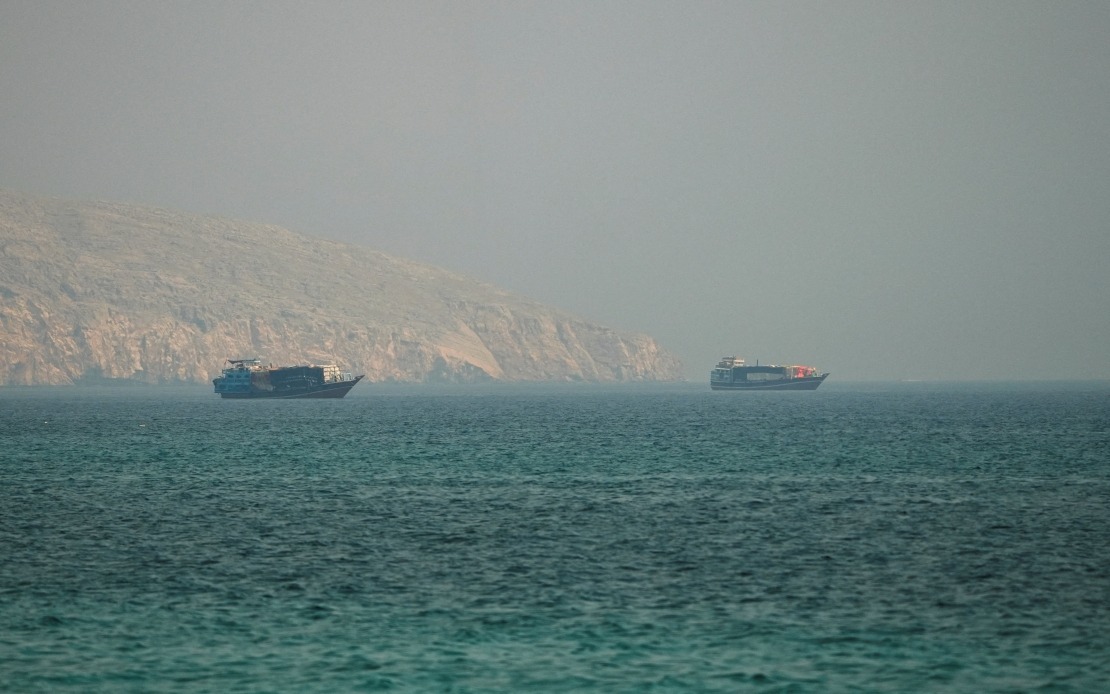
Oman has firmly rejected the imposition of mandatory transit fees on vessels transiting the Strait of Hormuz, signalling instead a preference for voluntary arrangements centred on navigational support services. An Omani representative made this position clear during the 137th session of the International Maritime Organisation Council in London on Thursday, emphasising the country's unwavering commitment to the established principle of transit passage under international law. The declaration marks Oman's attempt to chart a middle course in a geopolitical dispute that has increasingly threatened the security and economic viability of one of the world's most critical maritime chokepoints.
Oman's measured approach appears designed to defuse tensions in the strategically vital waterway, which handles roughly one-third of global seaborne petroleum trade. The country has reportedly submitted a proposal to the United States and allied Western nations outlining how shipping companies could voluntarily contribute fees in exchange for enhanced navigational and safety services, rather than facing compulsory tolls extracted through state authority. This framework mirrors existing cooperative arrangements already operational in the Strait of Malacca and Singapore, suggesting a pragmatic model that has proven workable in Southeast Asian waters. For Malaysian readers, the reference to these regional precedents carries particular significance, as Malaysia's experience with voluntary contribution schemes in the Malacca Strait demonstrates how shipping interests can be incentivised to pay for services that benefit collective maritime security and environmental protection.
The Omani initiative represents a diplomatic pivot away from the more contentious approaches that have characterised recent disputes over the Strait's governance. Iran has increasingly asserted control over the waterway and has been accused by international observers of imposing unilateral transit levies on passing vessels—a practice that threatens to destabilise global shipping routes and inflate energy costs worldwide. The United Arab Emirates and several other nations submitted a formal proposal at the IMO Council condemning Iran's reported imposition of transit tolls, reflecting broader international concern about unilateral taxation of crucial maritime corridors. Iran responded with its own submission, asserting that it has maintained ongoing consultations with Oman regarding management and coordination mechanisms that conform to international law and applicable national regulations.
Oman's careful diplomatic positioning highlights the complex balancing act required of nations situated within strategically sensitive maritime zones. As a neighbour to both Iran and the Arabian Peninsula's major shipping hubs, Oman occupies a unique position to mediate between competing interests and to propose solutions that might command wider acceptance. The voluntary contribution model offers several advantages over mandatory schemes: it avoids triggering confrontations over sovereign authority, respects the established legal principle of transit passage, and generates funding through incentive-based mechanisms rather than coercive extraction. This approach acknowledges the legitimate concerns of shipping companies anxious about predictable costs while creating space for investment in navigational aids, search-and-rescue capabilities, and environmental monitoring—services that benefit all maritime users.
The broader context of these negotiations underscores growing tensions over maritime governance in a region already fraught with geopolitical complexity. The Strait of Hormuz carries approximately 21 million barrels of oil daily, making it indispensable to global energy markets and particularly significant for Asian economies dependent on Middle Eastern energy imports. Any disruption to free passage through the Strait has immediate consequences for fuel prices, supply chains, and economic stability across Southeast Asia and the wider Indo-Pacific region. Malaysian policymakers, in their capacity as major shipping and refining centres, have considerable interest in ensuring that any arrangements governing the Strait remain transparent, rules-based, and predictable. The precedent established here could influence how other strategic waterways manage competing claims and revenue-generation ambitions.
Oman's reaffirmation of commitment to international maritime law principles carries weight because the country has consistently maintained a reputation for measured diplomacy and regional stability. By explicitly rejecting mandatory tolls while remaining open to voluntary cooperation, Oman signals that viable middle-ground solutions exist between unilateral assertion of control and capitulation to external pressure. The proposal's modelling on Malacca Strait precedents suggests that proven frameworks from Southeast Asian experience offer valuable templates for resolving maritime governance disputes elsewhere. These regional arrangements have evolved over decades to balance the interests of coastal states seeking sustainable funding for maritime services against the legitimate expectations of international shipping that passage remain open and non-punitive.
The IMO Council session itself provided the appropriate forum for these discussions, reinforcing the importance of multilateral maritime institutions in managing shared interests. By presenting competing proposals—condemning unilateral transit fees while proposing voluntary alternatives—the assembled nations have created pressure for negotiated solutions and discouraged unilateral action. Iran's emphasis on consulting with Oman and adhering to international law suggests recognition that naked coercion would face resistance and diplomatic costs. The ongoing consultations mentioned in Iran's submission indicate that diplomatic channels remain open and that negotiated arrangements may yet be achievable, though significant disagreements clearly persist about what constitutes lawful exercise of authority over the Strait.
For Malaysia and other Southeast Asian maritime nations, the implications extend beyond immediate concerns about oil transit. The Strait of Hormuz situation establishes precedents for how international maritime governance disputes are resolved, what mechanisms can legitimately regulate passage through critical waterways, and how coastal states may or may not assert control over international navigation. Regional cooperation frameworks like those referenced in the Malacca Strait model offer tested alternatives to conflict and unilateral assertion. Malaysian experience with managing one of the world's busiest shipping routes while maintaining open passage and collecting reasonable fees for navigation services provides valuable insights that could inform solutions elsewhere. The success or failure of Oman's voluntary contribution proposal will likely influence how other coastal states approach maritime governance challenges in coming years.
Moving forward, the voluntary arrangement proposed by Oman may offer the most politically feasible path toward resolving immediate tensions while addressing legitimate state interests in maritime security and revenue. Such an approach would preserve the principle of transit passage essential to international trade while acknowledging that provision of navigational services, safety infrastructure, and environmental protection requires sustainable funding mechanisms. The challenge lies in ensuring that voluntary contributions remain genuinely voluntary rather than devolving into extortionate pressure, and that participating states commit to transparent, rules-based administration of fees and services. International maritime authorities and major shipping nations will need to monitor implementation carefully to prevent voluntary schemes from becoming de facto mandatory tolls, thereby preserving the openness and predictability that global commerce demands. The coming weeks and months will reveal whether diplomatic solutions can prevail over unilateral assertions of control in this critical waterway.

