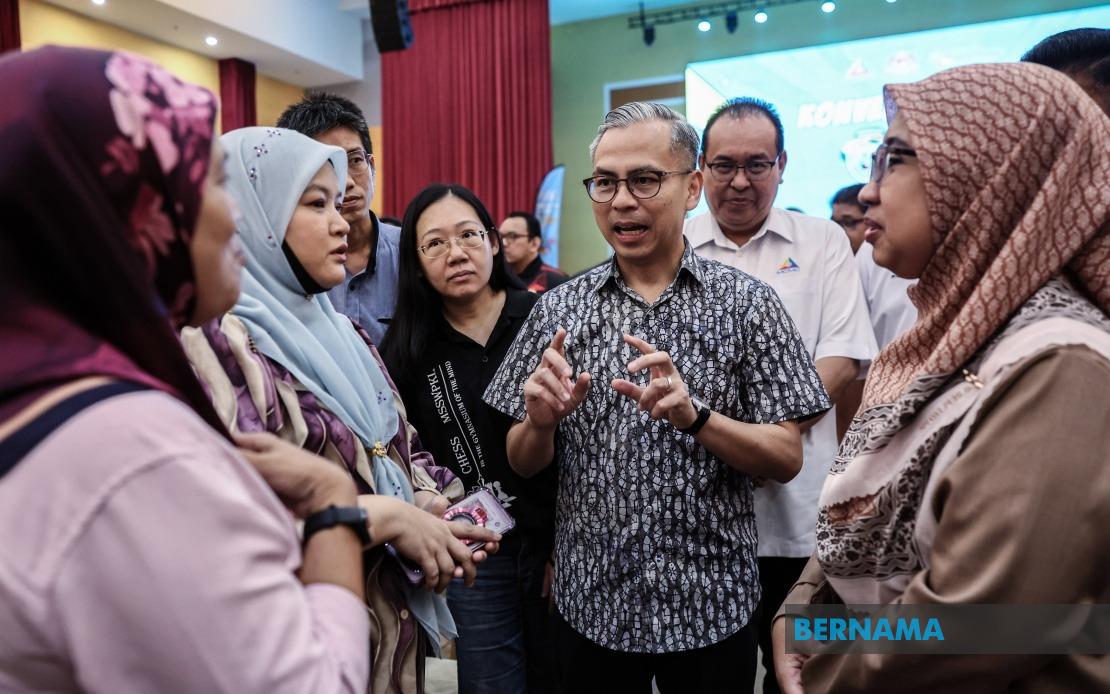
The People's Justice Party (PKR) has moved to reassure members and observers that the organisation will continue operating smoothly despite Nurul Izzah Anwar stepping back from her responsibilities as deputy president. PKR Information chief Datuk Seri Fahmi Fadzil made the clarification during a press conference in Kuala Lumpur on August 8, emphasising that the party's internal machinery and decision-making processes remain unaffected by the arrangement.
Nurul Izzah, the daughter of Prime Minister Datuk Seri Anwar Ibrahim, had initially submitted her resignation from the post but this was rejected by the party's Central Leadership Council. Rather than accept her departure from the role, the council granted her request for temporary leave instead, allowing her to concentrate on personal matters and her doctoral research. This distinction between resignation and leave is significant within PKR's organisational structure, as it preserves her formal status and future options within the party hierarchy.
Responsibility for the deputy president's duties has been transferred to vice-president Datuk Seri Saifuddin Nasution Ismail, who now holds the mandate to exercise the powers and discharge the functions associated with that position during the interim period. Fahmi stressed that Nurul Izzah's decision to step back temporarily does not diminish her commitment to the party's broader mission. He reaffirmed her continued membership and indicated that she remains available to contribute to PKR's political struggle in other capacities as her personal circumstances permit.
The timing of this development merits examination within the context of Malaysia's political landscape. Nurul Izzah has been a visible figure in Malaysian politics for nearly two decades, having served in Parliament and held various party positions. Her pursuit of advanced academic credentials reflects a growing trend among Malaysian politicians seeking to combine public service with intellectual development. The leave arrangement provides her with the space to focus on her PhD studies without the administrative burden of her deputy president role, a position that traditionally demands significant time and attention.
Separately, Fahmi addressed speculation regarding Subang Member of Parliament Wong Chen potentially vacating his parliamentary seat. He disclosed that no official information regarding such a development has reached his desk and cautioned that any changes to parliamentary representation must be formally announced through the Office of the Dewan Rakyat Speaker, Tan Sri Johari Abdul. This response suggests that while rumours circulate within political circles, no substantive developments have yet occurred on this matter.
Questions about the timing of the next general election also surfaced during Fahmi's address. He dismissed suggestions that the government is considering an early election, stating unequivocally that no such plans currently exist. The Communications Minister reiterated that the government's expectation is for the general election to be held no later than the conclusion of 2025, maintaining the constitutional framework that governs electoral timing. This timeline provides the current administration with sufficient runway to implement its policy agenda before facing the ballot box.
Fahmi emphasised that the Federal Government's immediate priority centres on ensuring that the machinery of state continues to function effectively and efficiently. He acknowledged the steadfast commitment demonstrated by component parties within the Unity Government coalition, particularly their ongoing support for Prime Minister Anwar Ibrahim's leadership throughout the remainder of his current term. This solidarity is crucial to maintaining the stability of the coalition, which comprises Pakatan Harapan and other aligned parties.
The Communications Minister outlined the collective ambitions driving both Pakatan Harapan and the Unity Government. Beyond routine governance, both blocs remain committed to advancing a comprehensive reform agenda designed to address citizen concerns and modernise Malaysia's institutions. He indicated that substantial work remains in translating these commitments into concrete improvements in the nation's governance and service delivery.
One area requiring sustained attention is the implementation of recommendations stemming from the Royal Commission of Inquiry into the Lembaga Tabung Haji's operations during the 2014 to 2020 period. This investigation has captured public and political interest due to the scale of the organisation's financial challenges during that timeframe. The recommendations emerging from this inquiry are expected to reshape how the pilgrimage fund operates and potentially strengthen oversight mechanisms to prevent future difficulties.
Fahmi concluded by hinting that Prime Minister Anwar will shortly announce several important initiatives expected to benefit the Malaysian people and national development. While he provided no specifics, his remarks suggest that the government is preparing significant policy pronouncements or administrative measures. These announcements may address infrastructure development, economic initiatives, or social programmes designed to advance the government's reform objectives and respond to public expectations.
The PKR deputy president arrangement arrives at a moment of relative stability within the ruling coalition, though political observers remain attentive to broader shifts in the balance of forces between government and opposition. Nurul Izzah's leave, rather than resignation, preserves PKR's flexibility in managing its internal structure while accommodating her personal aspirations. The assurances from Fahmi underscore the party's confidence that institutional arrangements can accommodate individual circumstances without compromising organisational effectiveness or the government's capacity to govern.

