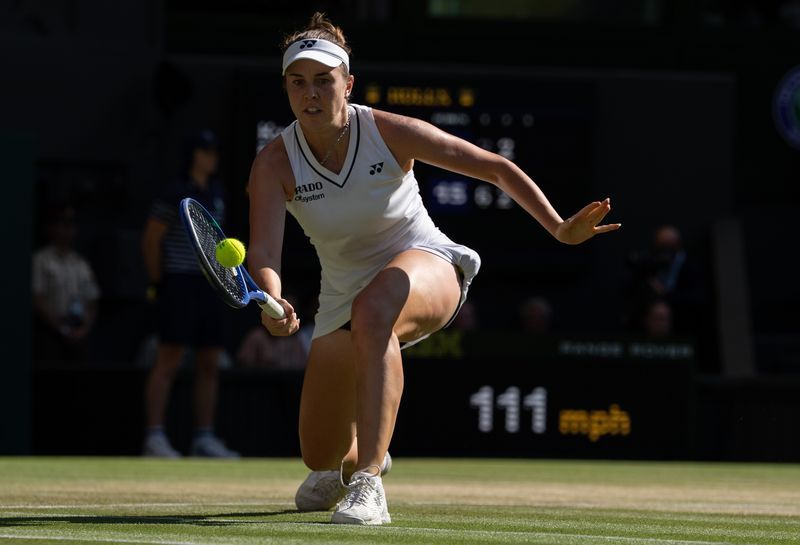
Linda Noskova's Wimbledon triumph represents one of sport's most remarkable comebacks, as the 21-year-old Czech ninth seed recovered from a position of near-total dominance to defeat fellow Czech Karolina Muchova 6-2 5-7 6-3 in Saturday's final at the All England Club. The victory marks a watershed moment in her career and places her among an elite group of Central European champions who have graced the grass courts of London.
The path to victory proved far from straightforward. Leading 5-2 in the second set, Noskova appeared destined for triumph, with five match points materialising before her opponent's steady comeback erased them one by one. The mental toll of surrendering such a commanding position would have devastated most young players in their opening Grand Slam final, yet Noskova demonstrated reserves of psychological resilience that belied her youth and relative inexperience at this level. As Muchova reeled off five consecutive games to force a deciding set, the Czech novice appeared visibly shell-shocked, covering her ears to muffle the crowd noise as she returned to her chair.
What proved pivotal in Noskova's recovery was a chance encounter during a comfort break. Walking towards the bathrooms, she spotted the Wimbledon trophies—both the smaller and larger versions traditionally displayed backstage. In that moment, her perspective shifted dramatically. She later explained her psychological reset with characteristic directness: having travelled so far and come so close, accepting anything less than the championship would constitute unacceptable heartbreak. The sight of the Venus Rosewater Dish crystallised her determination, transforming despair into resolve.
Her own recollection captures the intensity of that turning point. After splashing cold water on her face to centre herself, Noskova made an emphatic mental commitment: she would claim the prestigious trophy regardless of the cost. This internal declaration proved transformative. Upon returning to court, she held serve in the opening game of the third set—a moment she later identified as absolutely crucial to the final outcome. Had she surrendered that game, momentum might have shifted decisively towards Muchova. Instead, Noskova found her rhythm once more, her groundstrokes recovering their precision and her footwork regaining its characteristic efficiency.
At 5-3 in the third set, more than an hour after her first match point, Noskova finally converted her opportunity, denying Muchova any possibility of further resurrection. The victory makes her the third Czech woman to capture the singles title within four years and the youngest women's champion since fellow countryman Petra Kvitova claimed the first of her two Wimbledon crowns in 2011. This lineage underscores the remarkable depth of women's tennis talent emerging from Central Europe in recent years.
Beyond the immediate sporting achievement, Noskova's character extends far beyond the tennis court. The 21-year-old wears a nose ring as a statement of individuality and carries a maturity that observers consistently remark upon. Two years before her Wimbledon victory, she lost her mother Ivana to cancer—a tragedy that has profoundly shaped her worldview and approach to life. Rather than allowing grief to diminish her spirit, this loss appears to have deepened her appreciation for opportunities and her commitment to living purposefully.
Noskova's priorities reveal someone with substantial interests beyond tennis. During her off-season last year, she volunteered in Zanzibar, working with a local school through a charitable organisation. This experience, she explained, returned her to competition with renewed gratitude for the privileges she enjoys. Her upbringing in a Czech forest village cultivated a deep environmental consciousness that informs her long-term ambitions. She has articulated a vision of post-tennis life centred on conservation work and environmental volunteering, causes she described as deeply personal.
The young champion's philosophical approach to sport and life became evident again as she processed her victory. Rather than focusing solely on competitive glory, she emphasised the personal growth journey and the relationships forged during her Wimbledon campaign. Her semi-final victory over Ukraine's Marta Kostyuk showcased both her tennis credentials and her broader awareness, with Noskova discussing environmental activism and crisis response with the same thoughtfulness that characterised her on-court decision-making.
For Southeast Asian tennis followers and observers, Noskova's achievement carries particular resonance. Her victory demonstrates that the sport's landscape continues evolving, with emerging challengers from unexpected quarters claiming tennis's most celebrated stages. The region has produced numerous talented players who have similarly demonstrated that mental fortitude and character development matter equally to technical proficiency. Noskova's journey—marked by personal tragedy, volunteerism, and environmental commitment—illustrates how contemporary champions increasingly transcend their sporting identities.
As Noskova contemplates her achievement, she remains focused on allowing the reality to settle. The fortnight at Wimbledon, she reflected, represented an unforgettable experience that has permanently altered her life trajectory. Standing before the trophies with the Venus Rosewater Dish now legitimately hers, the young Czech has validated her implicit promise to herself: she claimed the big one, and in doing so, joined tennis immortality.

