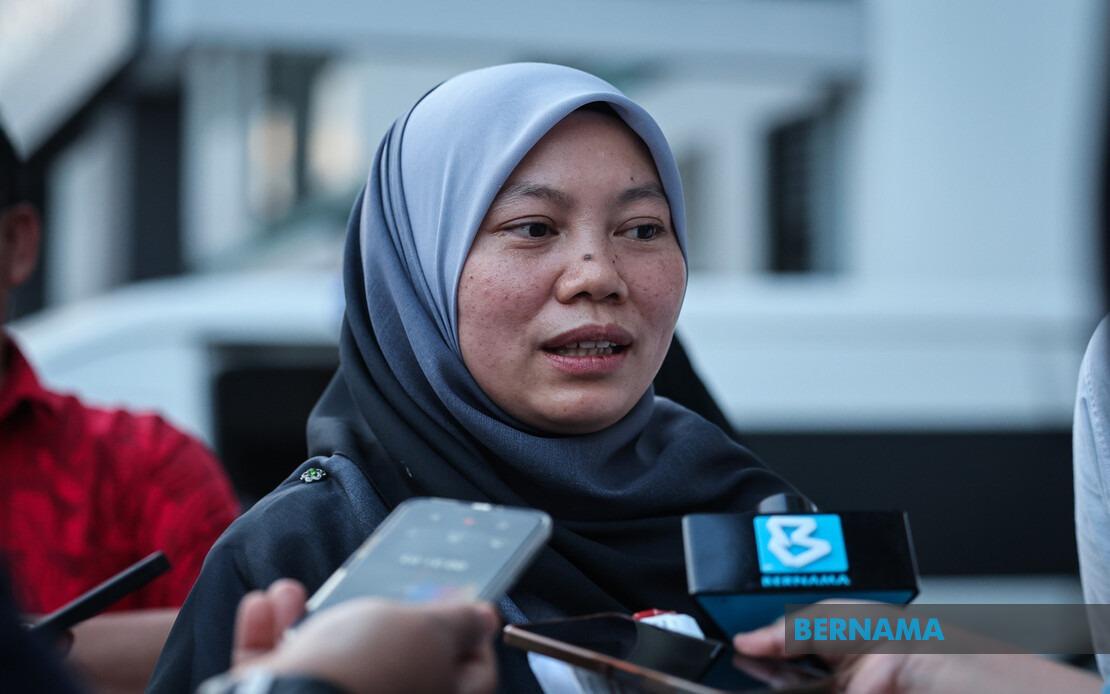
Pakatan Harapan's Nor Zulaila Abd Ghani is heading into the final stretch of campaigning for the Tiram state seat with considerable confidence, buoyed by what she characterises as an exceptionally warm reception from voters across her constituency. Speaking at a meet-and-greet event in Kota Masai on July 5 alongside Entrepreneur Development and Cooperatives Minister Steven Sim Chee Keong, the PH hopeful reflected on weeks of intensive campaigning that have yielded consistently encouraging signals from the electorate. Her optimism stands in sharp contrast to the volatile nature of Malaysian electoral campaigns, where sentiment can shift rapidly and voter sentiment often proves unpredictable. The July 11 election will determine 56 state seats, making this contest one of the most closely watched regional ballots following the 15th General Election's upheaval of traditional political alignments.
The nature of voter feedback Nor Zulaila has encountered during her constituency visits offers revealing insights into the current political mood within Johor. Rather than a uniform endorsement, she has detected what she describes as overwhelmingly positive grassroots sentiment, suggesting that her campaign's message is resonating with residents at the community level. This distinction between online criticism and on-ground support highlights a persistent feature of modern Malaysian politics: the sharp disconnect between social media discourse and the lived experiences of voters during face-to-face political engagement. While disparaging remarks have surfaced on Facebook and other digital platforms, Nor Zulaila noted the absence of confrontation during her physical presence in the constituency, indicating that organised opposition to PH's candidature remains muted among the general population she has encountered.
The candidate's campaign methodology reveals an increasingly sophisticated approach to political engagement in Malaysia, particularly in building bridges with younger demographics who have grown sceptical of the political establishment. Rather than relying solely on traditional rally-based campaigning or formal dialogue forums, Nor Zulaila has embedded herself within recreational and sporting activities familiar to young constituents. Her participation in sepak takraw tournaments, futsal matches, and snooker competitions serves a dual purpose: it creates authentic community connections while simultaneously positioning PH as accessible and engaged with youth interests beyond formal political messaging. This grassroots activation strategy addresses a genuine challenge facing political parties across Malaysia—engaging voters, especially younger ones, who view conventional politics with considerable cynicism and perceive electoral participation as divorced from their daily concerns.
The significance of targeting youth voters extends beyond immediate electoral calculations. Nor Zulaila's deliberate effort to frame voting as a responsibility with direct consequences for governance quality and policy outcomes tackles a critical democratic deficit in Malaysia. By engaging young people through informal settings where they are comfortable, she attempts to break through the apathy and alienation that surveys consistently identify among voters aged 18-30. Her messaging—that government policies and lifestyle implications flow directly from electoral choices—reframes democratic participation not as an abstract civic duty but as a practical mechanism for personal and community interest protection. This approach recognises that cynicism about politics in Malaysia often stems from perceived disconnection between voting and tangible policy improvements, a perception that requires direct, repeated engagement to overcome.
The vandalism incident targeting Nor Zulaila's campaign billboard illustrates the occasionally fractious nature of electoral competition in Malaysian constituencies, even as the candidate expresses disappointment rather than alarm. Such incidents, while troubling, have become relatively common features of state and federal campaigns, often attributed to overzealous partisan supporters rather than coordinated political strategy. Nor Zulaila's call for mature and harmonious conduct from all contesting parties reflects both her positioning as a candidate committed to dignified campaigning and an implicit recognition that escalating hostility could undermine public confidence in the electoral process itself. For voters considering their options, such appeals to decorum carry weight, particularly among middle-ground voters who resent the increasingly acrimonious tone of Malaysian political discourse.
The Tiram state seat represents a competitive three-cornered contest reflecting broader political fragmentation within Johor. PH's presence here must navigate not only against the traditional Barisan Nasional machinery but also against the growing challenge from Perikatan Nasional, which has substantially increased its organisational footprint in Peninsular Malaysia since the 15th General Election. The state seat lies within Pasir Gudang parliamentary constituency, a region where Johor's urban-rural mix creates diverse voter priorities ranging from industrial worker concerns to residential development issues. Understanding these localised preoccupations has likely informed Nor Zulaila's decision to emphasise grassroots presence and direct engagement rather than relying on broader national messaging.
Early voting on July 7 followed by the main election on July 11 compressed the final campaigning window, intensifying the pace of candidate visibility and voter contact efforts. This schedule requires campaign teams to operate at high intensity during the concluding week, when undecided voters typically crystallise their preferences. Nor Zulaila's optimistic public statements serve the additional function of maintaining volunteer energy and supporter enthusiasm during this critical period. Campaign momentum, often dismissed as intangible, nonetheless influences how party machinery mobilises supporters for voter turnout operations on polling day—an element that frequently determines outcomes in closely contested state seats.
The presence of Minister Steven Sim Chee Keong at Nor Zulaila's campaign event signalled PH's institutional commitment to capturing or retaining the Tiram seat. Federal minister participation in state-level campaigns carries symbolic weight, communicating to voters that party leadership views particular constituencies as strategically important. Such high-profile endorsements can prove double-edged: they energise party supporters and demonstrate organisational capacity but risk triggering counter-mobilisation if perceived as heavy-handed intervention in local politics. The informal nature of a meet-and-greet at a local café venue—Ruang Kopi Kita—rather than a formal rally suggests a deliberately calibrated approach designed to build grassroots credibility rather than project top-down authority.
Beyond the Tiram seat itself, Nor Zulaila's campaign reflects broader PH strategy in Johor following the party's mixed results in the 2022 state election, when it secured 10 of 56 seats. PH's challenge in Johor involves rebuilding trust among voters who have experienced governance shifts between different administrations and remain deeply divided along communal and ideological lines. The emphasis on youth engagement and recreational politics represents an adaptation to these realities: rather than attempting to recapture traditional support bases immediately, PH appears focused on building new coalitions, particularly among younger voters less tethered to historical political alignments. Whether this approach generates electoral breakthroughs or remains marginal will provide crucial indicators of PH's capacity to expand its support base beyond its committed core in Malaysia's second-largest state.

