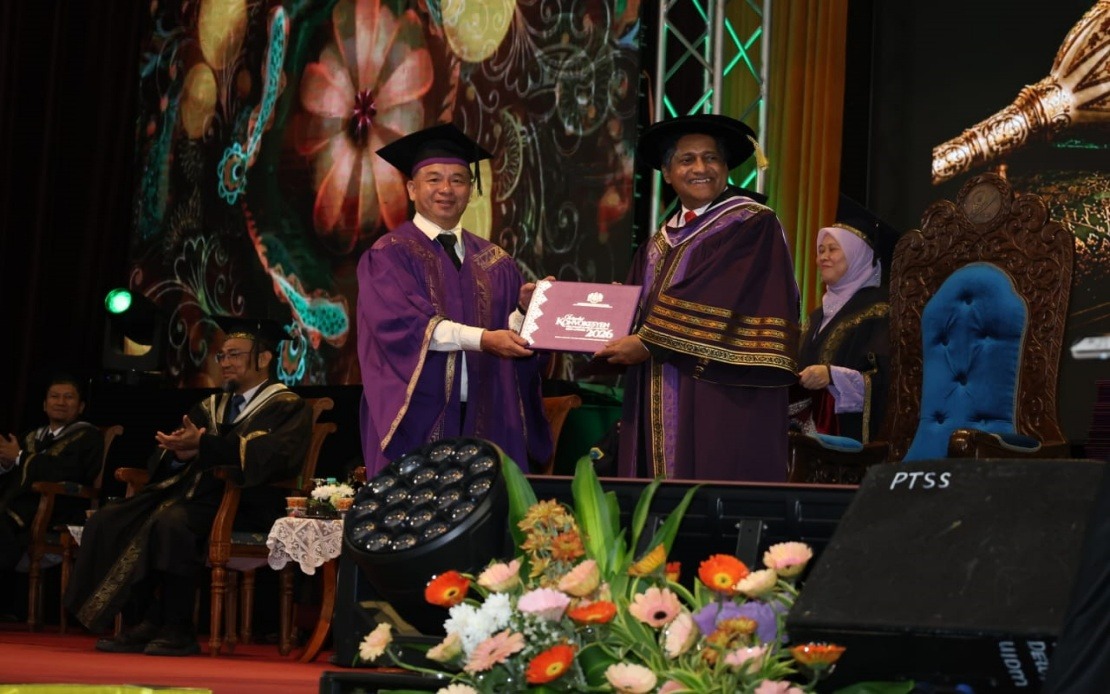
A 57-year-old man from Bukit Mertajam has shattered age-related assumptions about education by becoming the oldest graduate ever to complete studies at Seberang Perai Polytechnic (PSP). Heng Meng Lai received his Diploma in Electrical and Electronic Engineering during the institution's 2026 Convocation Ceremony, fulfilling an academic aspiration that had been deferred for nearly five decades amid the pressures of employment and family responsibilities.
Heng's path to graduation reflects a deeply personal motivation rooted in childhood adversity. As the third of seven siblings, he experienced significant hardship after his father's death when he was just nine years old. His mother subsequently became the family's sole provider, working in a sewing factory to keep the household afloat. These formative experiences, rather than discouraging him, crystallised his determination to pursue education as a means of improving his circumstances and securing a better future. The delay in pursuing formal qualifications did not extinguish this ambition but rather allowed it to deepen over decades of reflection and professional experience.
When the opportunity finally arose to enrol at PSP, Heng's choice of specialisation was informed by practical experience gained through his career trajectory. Having worked as a storekeeper and later progressed to a supervisory role on production lines at an electronics manufacturing facility, he had developed genuine technical interest in electrical and electronic systems. This grounding in real-world application transformed what might otherwise have been an abstract educational pursuit into a structured continuation of his professional development, allowing him to formalise knowledge acquired through years of hands-on experience.
Navigating tertiary education as a mature-age student presented distinct challenges that could have deterred many from persisting. Heng found himself considerably older than his classmates, a demographic distinction that could reasonably have created social friction or feelings of isolation within a predominantly younger cohort. However, his experience at PSP demonstrated that institutional culture significantly influences student experiences. The polytechnic's lecturers and support systems proved welcoming and attentive, providing patient guidance that helped Heng adapt to formal learning structures while validating his place within the academic community. This supportive approach proved instrumental in his successful completion of the programme.
The psychological dimension of Heng's journey carries particular significance for discussions about lifelong learning in Malaysia. In his own words, he consistently articulated the conviction that education recognises no chronological boundaries, a principle that runs counter to societal assumptions that tertiary qualification pursuits belong exclusively to younger demographics. His willingness to enrol and persist despite being markedly different from his peers reflects not merely personal determination but also a philosophical stance that challenges limiting age-based narratives that often prevent mature adults from pursuing educational advancement.
Looking forward, Heng's ambitions extend beyond his recently completed diploma. He intends to re-enter the workforce to apply the technical knowledge and professional capabilities acquired during his studies before pursuing further advancement toward a bachelor's degree qualification. This phased approach demonstrates strategic thinking about how to balance practical skill application with ongoing academic progression, suggesting that his educational journey represents not a culmination but a foundation for continued development throughout his remaining career years.
The significance of Heng's achievement extends well beyond his individual accomplishment. PSP director Mohd Ruzi Hamzah publicly acknowledged the historic nature of this milestone while contextualising it within broader institutional and national priorities. According to Hamzah, Heng's progression from entry-level warehouse work through supervisory responsibility to diploma-level qualification exemplifies the transformative potential of accessible vocational and technical education. His trajectory demonstrates concrete evidence that educational mobility remains achievable regardless of economic starting point or age at programme entry.
Institutional recognition of Heng's achievement also reflects Malaysia's stated commitment to positioning lifelong learning as a cornerstone of human capital development. The polytechnic sector, which has historically served younger post-secondary cohorts, increasingly recognises its potential role in facilitating mature-age participation. PSP's explicit commitment to remaining open to candidates across all age groups and socioeconomic backgrounds aligns with national aspirations around producing a skilled, adaptable workforce capable of responding to evolving economic demands. Mature students like Heng bring workplace experience and motivation that can enrich classroom dynamics and strengthen institutional relevance to industry needs.
The broader implications for Southeast Asian educational policy warrant consideration. As regional economies mature and technological change accelerates, workforce reskilling becomes increasingly critical. Many workers who entered employment during periods of different technological or sectoral configurations may require formal retraining to remain economically viable. The example of Malaysian polytechnics successfully accommodating mature-age learners suggests that structured pathways for adult education, particularly in technical fields, could be expanded regionally to address emerging skills gaps without requiring individuals to sacrifice existing employment or family commitments.
Heng's narrative also challenges deficit-based perspectives that sometimes characterise lifelong learning discussions. Rather than framing mature-age education primarily as remediation for earlier missed opportunities, his story illustrates how deferred education can represent deliberate strategic choice. His decades of accumulated workplace experience enhanced rather than hindered his learning capacity, as practical knowledge provided context for theoretical instruction. This model of education as a spiral deepening with each life stage, rather than a linear race to early completion, offers alternative frameworks for understanding when and how learning can most effectively occur.
The personal dimension of achievement warrants equal attention alongside policy implications. For Heng individually, holding a diploma represents not merely credential acquisition but validation of persistent self-belief across decades. The emotional and psychological rewards of finally formalising capabilities honed through long experience likely extend far beyond employment prospects or salary advancement. In interviews, he articulated genuine gratitude for the opportunity and pride in his accomplishment, sentiments that underscore how education fulfils purposes beyond instrumental economic outcomes.
For Malaysian educational institutions and policymakers, Heng's success provides both inspiration and practical instruction. His journey demonstrates that welcoming mature-age students requires not merely administrative flexibility around enrolment procedures but genuine pedagogical and social support. The lecturers who guided him patiently through the programme, avoiding making him feel marginalised despite age differences from peers, demonstrated how institutional culture directly influences whether policies designed to increase access translate into actual success. Scaling such approaches across Malaysia's polytechnic and higher education sectors would require explicit training and resourcing for educators working with diverse cohorts.
Ultimately, Heng Meng Lai's achievement at 57 represents more than an individual triumph over circumstance and delay. It embodies a statement about human potential, institutional responsibility, and societal assumptions regarding age and capability. As Malaysia continues developing its knowledge economy and grapples with skills shortages in technical fields, stories like his remind policymakers and educational leaders that untapped reservoirs of talent exist among citizens whose circumstances previously prevented formal qualification. Creating pathways for mature-age participation in quality technical education programmes offers benefits extending far beyond individual life improvement to encompass broader national competitiveness and inclusive economic participation.

