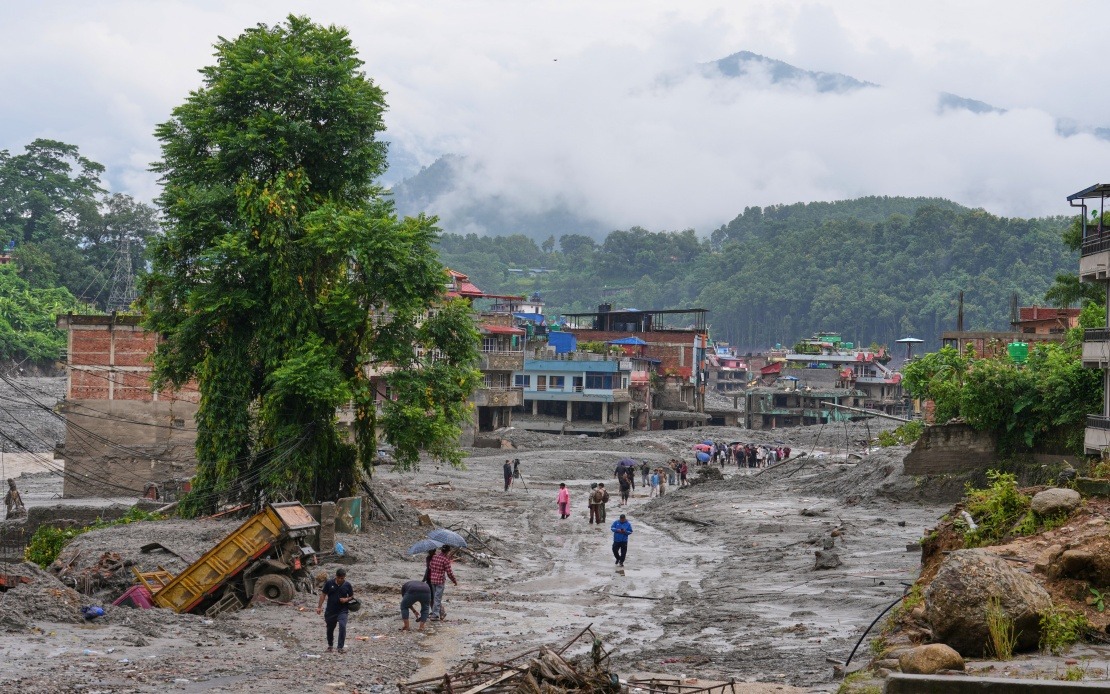
The toll from catastrophic mudslides sweeping through Nepal's mountainous terrain has climbed to 675 confirmed fatalities, with rescue operations racing against time to locate nearly 2,500 missing persons. The National Disaster Risk Reduction and Management Authority reported the grim figures as of Saturday evening, signalling one of the nation's deadliest natural disasters in recent memory. The scale of the calamity has overwhelmed local authorities and stretched emergency response capabilities across multiple districts struck by the geological fury.
Tourist areas have been particularly hard hit, underscoring the vulnerability of Nepal's vital tourism sector to environmental catastrophes. Government figures show 753 visitors lost contact with authorities by Saturday afternoon, of whom 589 were international tourists. This concentration of foreign nationals among the missing highlights how these disasters cut across borders and threaten the livelihoods of communities economically dependent on international visitor spending. The tourism ministry's tracking of missing visitors suggests systematic efforts to account for this vulnerable population, though communication breakdowns in affected areas have complicated casualty assessments.
The geographic extent of devastation spans several districts in Nepal's rugged terrain. Rasuwa, Nuwakot, and Dhading districts—all regions prone to seasonal weather extremes and geological instability—bore the brunt of the mudslides. The Kathmandu District Administrative Office mobilised a relief operation on Saturday, issuing emergency appeals to businesses, non-governmental organisations, and private citizens throughout the capital for urgent donations of supplies. This coordinated call for assistance reflects the scale of humanitarian need and the reality that government resources alone cannot meet the immediate demands of rescue and recovery operations.
For Malaysia and other Southeast Asian nations with mountainous terrain and seasonal rainfall patterns, Nepal's disaster carries sobering lessons. The region shares similar geological and climatic vulnerabilities—steep gradients, monsoon systems, and deforestation pressures that destabilise hillsides. Malaysian states with highland communities, particularly in Peninsular Malaysia and East Malaysia, face comparable risks during heavy downpours. The Nepali tragedy underscores the importance of investing in early warning systems, community preparedness training, and land management practices that can mitigate mudslide risks before they claim lives.
The sudden nature of mudslide disasters makes them particularly lethal and challenging to predict with precision. Unlike cyclones or floods that develop over days, mudslides can sweep down mountainsides within minutes, giving residents minimal time to evacuate. This element of surprise has historically contributed to high casualty rates in the Himalayan region and similar mountain zones across Asia. Emergency management agencies across Southeast Asia have noted that traditional disaster preparedness messaging, often focused on typhoons and storm surge, frequently underestimates mudslide hazards in their public education campaigns.
Nepal's response mechanism has activated community-level mobilisation, signalling a whole-of-society approach to crisis management. The administrative directive seeking relief goods from diverse segments of Kathmandu's population demonstrates how national disasters can transcend normal bureaucratic silos, compelling engagement from both formal institutions and informal networks. This model of rapid resource mobilisation during emergencies has been observed in other regional responses but requires pre-established frameworks and trust between government bodies and civil society organisations to function effectively during crises.
The missing persons count of 2,498 suggests that search operations are far from complete, particularly in remote and inaccessible areas where landslides have rendered roads impassable. Weather conditions, secondary hazards such as afterslips, and the challenging topography of affected zones all complicate recovery efforts. In similar disasters across the region, final casualty figures have sometimes increased significantly during recovery phases as previously inaccessible areas are reached and remains are discovered beneath debris fields. International disaster response agencies monitoring the Nepali situation will likely mobilise resources in coming days if local capacity proves insufficient.
The economic implications of this disaster extend beyond immediate humanitarian concerns. Tourism, a cornerstone of Nepal's economy, will likely face disruption as international travellers reassess travel plans and the tourism infrastructure sustains damage. Insurance sectors and development programmes will face substantial claims. For regional investors and businesses with operations in Nepal, the disaster signals the need for more robust business continuity planning and disaster risk insurance mechanisms.
Climate change's role in intensifying extreme weather events has featured prominently in recent analyses of Himalayan hazards. Shifting precipitation patterns and glacier dynamics in the region create additional unpredictability for communities relying on traditional seasonal knowledge. Scientists studying the region have documented increasing variability in rainfall intensity and timing, factors that may be amplifying mudslide frequency. This longer-term environmental backdrop contextualises individual disasters within a pattern of escalating risk that requires adaptive governance responses.

