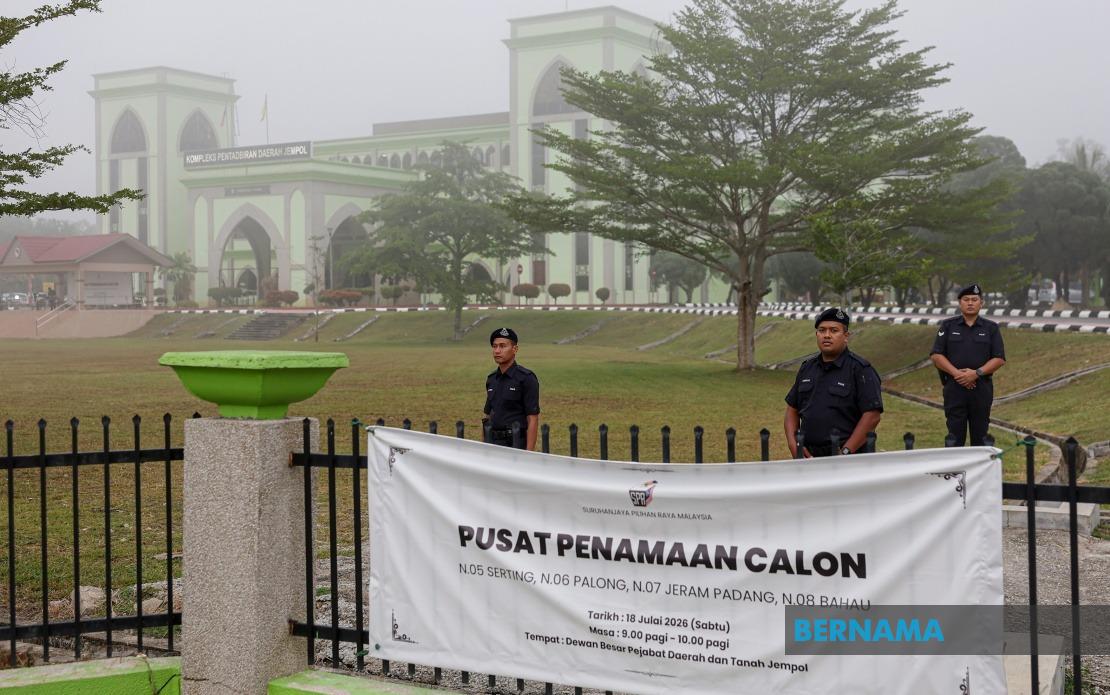
The machinery of Negeri Sembilan's electoral process moved into gear on July 18 when all eight nomination centres commenced operations simultaneously at 9 am, marking the formal beginning of the 16th state election cycle. The morning witnessed a coordinated effort across the state as prospective candidates submitted their nomination papers within a tightly controlled one-hour window, concluding at 10 am. Returning officers then prepared to release the official roster of eligible contenders following verification of documentation and compliance with electoral requirements.
The condensed nomination period reflects standard Malaysian electoral practice, where the compressed timeframe ensures rapid progression from candidate confirmation to campaign commencement. Immediately following the announcement of eligible candidates, the state will enter a 14-day campaigning phase, with political parties and independent hopefuls having until 11.59 pm on July 31 to conduct their messaging and mobilization efforts. This structured timeline creates a clearly defined electoral calendar that allows both candidates and voters to prepare adequately for the polling exercise.
Security considerations featured prominently in the nomination day arrangements, with Negeri Sembilan police chief Datuk Alzafny Ahmad deploying 2,393 police personnel across all eight nomination centres. The substantial police presence underscores the Election Commission's commitment to maintaining orderly conduct throughout the nomination process and preventing disruptions that could compromise the democratic exercise. Such comprehensive security measures are standard practice in major Malaysian elections, ensuring that the submission of candidacy papers proceeds without incident or intimidation.
Weather conditions proved favourable across all seven districts of Negeri Sembilan on nomination day, eliminating potential logistical complications that adverse weather might have created. Clear skies and suitable temperatures facilitated smooth operations at each centre and supported the smooth movement of candidates, election officials, and security personnel throughout the day. This meteorological advantage meant that organisational challenges stemmed purely from administrative coordination rather than environmental obstacles.
The Negeri Sembilan state election itself became necessary following the official dissolution of the State Legislative Assembly on June 5, an action taken with the consent of Tuanku Muhriz Tuanku Munawir, the Yang Dipertuan Besar of Negeri Sembilan. This constitutional procedure represents standard practice in Malaysian state politics, where the dissolution paves the way for fresh electoral contests. The assembly's dissolution had been anticipated for some months, allowing political parties time to prepare their campaign machinery and select their candidates for the forthcoming battle.
The 2023 state election established the baseline from which current political fortunes must be measured. Pakatan Harapan secured 17 of the 36 available state seats, establishing itself as the dominant political force in the state legislature. Barisan Nasional followed with 14 seats, while Perikatan Nasional captured five seats. These results provide crucial context for understanding the political dynamics at play in the August 2026 election, with all three coalitions and independent candidates seeking to improve or consolidate their positions. The distribution of seats from the previous contest suggests a competitive three-way struggle likely to unfold during the coming campaign period.
The Election Commission has structured the election timeline to allow for comprehensive participation across all eligible voter categories. Early voting is scheduled for July 28, accommodating military personnel, police officers, and their spouses who require alternative voting arrangements due to operational commitments. This provision ensures that uniformed personnel can participate fully in the democratic process despite their service obligations. The main polling day is set for August 1, providing a clear demarcation between early and ordinary voting phases.
Negeri Sembilan's electoral roll reflects the state's demographic composition and voter maturity. As of June 4, 2026, a total of 889,490 registered voters were eligible to participate in the state election. The breakdown reveals 867,151 ordinary voters forming the bulk of the electorate, while 16,884 military personnel and their spouses, along with 5,455 police personnel, comprised the early voting contingent. These figures underscore the substantial population stake in the election outcome, with nearly nine hundred thousand individuals potentially influencing the composition of the next state legislature.
For Malaysian observers and particularly those in Negeri Sembilan, this election holds significance beyond state-level politics. State elections often serve as barometers for broader national political sentiment, with results potentially foreshadowing shifts in voter preferences that may influence future national polling. The performance of Pakatan Harapan, Barisan Nasional, and Perikatan Nasional in this contest will provide valuable data on coalition strength in a significant peninsular state, offering insights into political realignment trends affecting the entire nation.
The nomination period's successful completion represents merely the opening chapter in an election cycle that will unfold across the coming weeks. As candidates hit the campaign trail and parties mobilize their supporters, the state will experience the customary intensity of electoral contest. Policy debates, rallies, and grassroots engagement will characterise the fortnight leading to July 31, before voters make their choice on August 1. The foundation laid through orderly nomination procedures on July 18 should ensure that the campaign and voting phases proceed with equal professionalism and adherence to democratic principles.

