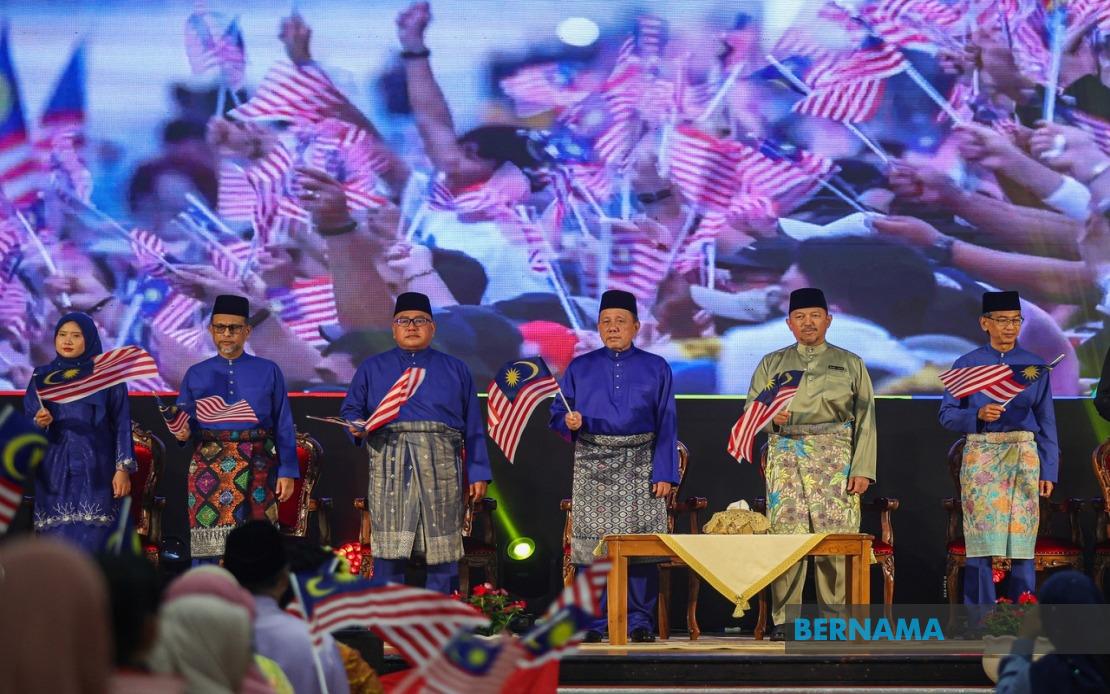
Negeri Sembilan's Menteri Besar Datuk Ismail Lasim has articulated an ambitious three-pronged agenda for the state administration, anchoring his leadership vision on institutional stability, measurable progress and shared prosperity across all communities. Speaking at the State-Level Public Servants Assembly in Seremban, he positioned these pillars as interconnected principles that would animate governance decisions, streamline bureaucratic processes and tangibly improve living standards for the state's 1.2 million residents.
The emphasis on institutional stability reflects a deliberate choice to prioritise constitutional frameworks and administrative coherence over short-term political convenience. Ismail stressed that effective governance requires more than securing legislative votes; it demands confidence in the Constitutional Monarchy, respect for established customs and policies that reassure both ordinary citizens and the investor community. This framing suggests a recognition that sustainable development rests on institutional confidence—a particularly relevant consideration for a state navigating complex inter-governmental relationships and competing regional interests.
Progress, as defined by the administration, transcends conventional economic metrics. While Negeri Sembilan recorded gross domestic product of RM55.8 billion last year—a 2.6 per cent increase from RM54.3 billion previously, driven substantially by services and manufacturing—the Menteri Besar articulated a more nuanced understanding of development. True progress encompasses job creation, investment quality, and crucially, geographically balanced growth that prevents prosperity from concentrating in urban centres at the expense of rural communities.
This commitment to inclusive development carries particular weight in Negeri Sembilan, where Felda settlements and agricultural regions represent economically significant constituencies. The administration's pledge to prevent development disparities between major towns and rural areas responds to longstanding grievances about unequal resource distribution and underinvestment in peripheral zones. Such messaging resonates across Southeast Asia, where rural-urban divides have become flashpoints for political discontent and regional inequality.
Financial projections underscore the administration's confidence in its economic roadmap. The state has accumulated RM522.4 million in revenue to date, with leadership expressing conviction that the RM1 billion target by 2030 is achievable. This represents an ambitious trajectory requiring sustained economic expansion, improved tax collection and efficient resource allocation—benchmarks against which the administration will ultimately be judged by voters and investors alike.
The newly constituted State Executive Council brings together diverse professional backgrounds and accumulated expertise intended to strengthen collaborative governance. Ismail positioned the Exco's composition as a strategic asset, emphasising that cooperation between political leadership and the professional public service could enhance Negeri Sembilan's competitive positioning for foreign and domestic investment. This approach acknowledges that state-level governments in Malaysia operate within constrained fiscal frameworks, making investment attraction and private-sector engagement critical to generating employment and economic dynamism.
Youth opportunity features prominently in the administration's stated priorities, reflecting demographic realities and political imperatives across Malaysia. By emphasising youth job creation alongside agricultural and rural sector strengthening, Ismail addressed multiple constituencies simultaneously—young people seeking urban employment, rural communities concerned about economic viability, and farmers confronting climate pressures and market volatility. This multi-layered approach requires coordinated policy interventions spanning education, skills training, rural infrastructure and agricultural modernisation.
The launch of the Kibar Jalur Gemilang campaign during the public servants assembly doubled as symbolic mobilisation for National Day celebrations. By calling on government departments, local authorities, schools and residents to display the national flag, Ismail sought to cultivate patriotic sentiment and civic participation. For a state administration seeking to consolidate legitimacy and build social cohesion, such cultural gestures complement substantive policy measures, reinforcing messages of collective purpose and national commitment.
Negeri Sembilan's economic performance reflects broader regional trends affecting Malaysia's midsize economies. Manufacturing and services sectors driving growth indicate successful economic diversification away from traditional resource dependence, though sustained competitiveness requires continued innovation, infrastructure investment and workforce development. The state's positioning within the Klang Valley and proximity to Kuala Lumpur creates both opportunities and vulnerabilities—opportunities for integration into metropolitan economic networks, vulnerabilities to spillover effects from national economic fluctuations or policy shifts.
The administration's framework articulates implicit responses to contemporary governance challenges: institutional legitimacy amid political competition, economic inclusivity amid globalisation pressures, and effective service delivery amid fiscal constraints. By anchoring leadership around these three principles, Ismail has established measurable benchmarks against which his administration can be assessed. Revenue targets, investment flows, employment figures and rural development metrics will ultimately validate or undermine the credibility of this governance vision.
For Malaysian readers and Southeast Asian observers, Negeri Sembilan's administrative approach offers a case study in how subnational governments balance competing demands. The emphasis on constitutional institutions and administrative stability, rather than purely electoral considerations, suggests a maturation in governance discourse. Whether the administration can translate these articulated principles into tangible improvements in public service efficiency, investment returns and citizen welfare will determine the durability of its political mandate and economic strategy across the remainder of this electoral cycle.

