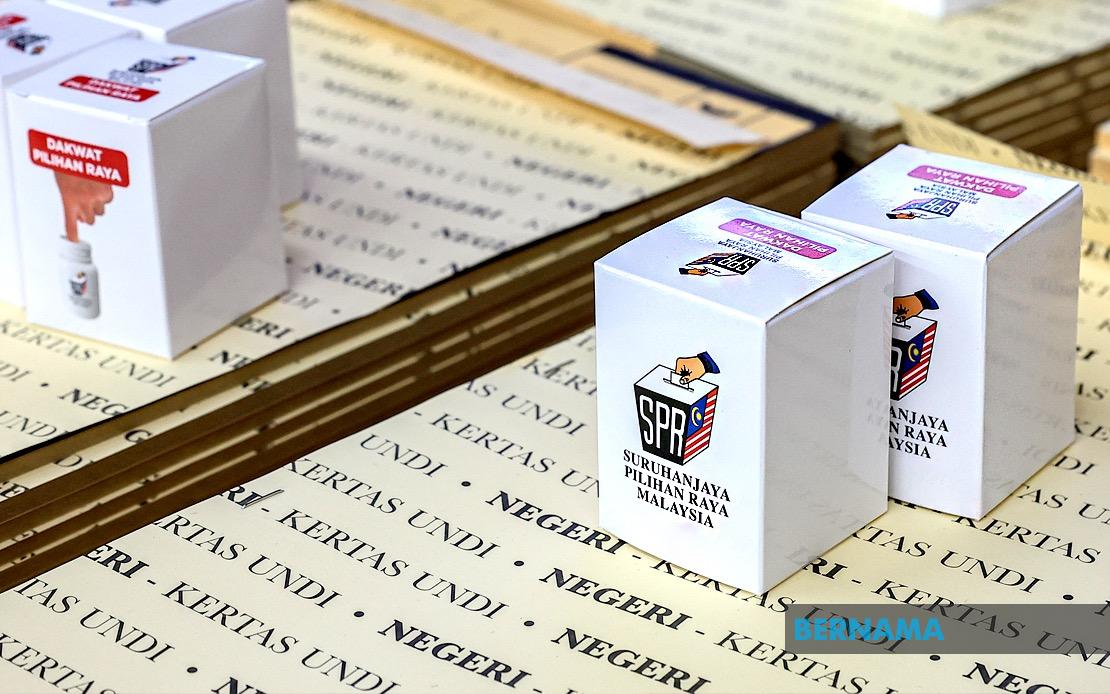
Nearly 25,000 early voters will participate in Malaysia's Johor state election tomorrow, casting their ballots at designated polling centres across the state in a staggered voting process designed to accommodate security and uniformed personnel ahead of the main election on Saturday, July 11. The eligible early voters comprise 12,041 members of the military and their spouses alongside 12,710 police personnel and their families, reflecting standard electoral procedures that allow frontline workers to vote before the general polling date. These numbers underscore the significant logistical undertaking required to facilitate democratic participation among those tasked with maintaining public order and security during the campaign period.
The early voting infrastructure spans 64 dedicated polling centres statewide, with 53 facilities allocated for police personnel and their spouses and 11 centres designated for military voters. This division reflects the respective sizes of each group and ensures adequate facilities to prevent overcrowding while maintaining voting integrity. All centres will commence operations simultaneously at 8 am, creating a coordinated voting window that allows election officials and security personnel to concentrate resources efficiently. The simultaneous opening across the state represents careful electoral planning to ensure fairness and equal access to the voting process.
Within the police cohort, 12,067 voters are scheduled to cast ballots in person at their designated early polling centres tomorrow, while an additional 643 police personnel have opted for postal voting arrangements. This bifurcated approach acknowledges that some officers may be stationed in locations where physical attendance at polling centres is logistically impractical, particularly those deployed to remote or operationally sensitive assignments. The postal voting option represents a pragmatic accommodation within Malaysia's electoral system, allowing security personnel to fulfil their civic responsibilities without compromising operational readiness.
Managing this early voting exercise requires substantial human resources and careful coordination. Police authorities have mobilised 3,565 personnel to oversee the process, encompassing 647 officers, 2,806 rank-and-file constables, and 112 civilian administrative staff. Their responsibilities extend well beyond simple vote-counting; election day security demands involve establishing perimeter control at all voting venues, escorting ballot boxes to centralised counting centres, directing vehicular traffic around polling areas, conducting preventive patrols in surrounding neighbourhoods, maintaining command operations centres to respond to emergencies, and general law enforcement across all affected districts. This deployment illustrates how election administration intersects with broader public safety concerns, particularly in an election involving 172 candidates competing for 56 state assembly seats.
The schedule for centre closures has been structured according to practical necessity rather than uniform timing. Most polling stations will wind down operations between noon and 6 pm, with exact closing times calibrated to local voter registration numbers and geographic considerations. Smaller centres with minimal registered voters—such as Buloh Kasap Police Station in Segamat, Tenang Police Station in Labis, and Bandar Penawar Police Station, each serving between six and 28 early voters—are scheduled to close at noon once all registered voters have participated. This granular approach minimises unnecessary staff deployment at low-traffic locations while ensuring no registered voter is turned away.
Among the larger polling facilities, the Federal Reserve Unit Hall No 2 at Johor Police Headquarters, serving the Stulang state constituency, stands as the highest-capacity early voting centre with 1,338 registered voters. This location's volume reflects its position as a major police administrative hub where numerous personnel maintain regular access. Following closely behind is the KEMAS Preschool facility at the 6th General Operations Force Battalion in Bakri, which will accommodate 927 voters from the Bukit Naning state constituency. These two centres will require substantially greater resource allocation and extended operating hours to process voters efficiently without creating bottlenecks.
Meteorological conditions may influence voter turnout and polling operations in several districts. Malaysia's Meteorological Department has forecast morning rainfall across Batu Pahat, Muar, Pontian, and Tangkak districts, potentially creating accessibility challenges for voters attempting to reach polling centres during the early morning hours. Authorities in these localities may need to anticipate slightly lower morning traffic as some voters delay their arrival until conditions improve. The remainder of Johor is expected to experience fair weather, facilitating smoother operations across most early polling sites. Election officials have likely prepared contingency measures including covered walkways and shelter arrangements at centres in the rain-affected districts.
This early voting exercise represents the preliminary phase of a larger electoral engagement involving substantially more voters. The 16th Johor State Election will see 172 candidates competing across 56 state assembly constituencies on Saturday, July 11, when the general population eligible to vote will cast ballots at their respective polling stations. The early voting process, while numerically modest compared to the anticipated main election turnout, carries symbolic importance in demonstrating the electoral system's commitment to inclusive participation across all demographic groups, including those whose occupational responsibilities might otherwise constrain their voting ability.
The coordination required for Johor's early voting arrangements reflects the institutional maturity of Malaysia's electoral commission in managing complex logistics across a large state territory. The Johor state government and election commission have learned from previous electoral cycles to streamline processes, allocate resources proportionally, and accommodate the legitimate constraints faced by security and military personnel. Tomorrow's early voting exercise will serve as an operational test of arrangements that remain consistent across Malaysia's electoral system, influencing how future elections are administered and providing valuable data on voter behaviour among uniformed service members.
For Malaysian observers and international election monitors tracking democratic practice in Southeast Asia, the Johor early voting process demonstrates routine electoral functionality in a competitive political environment. The exercise unfolds without significant controversy or disruption, reflecting accepted procedures that mainstream opposition parties acknowledge as legitimate. This normalcy of electoral administration, while potentially unremarkable to regular observers, represents the institutional foundation upon which Malaysia's democratic system rests, particularly in a state where electoral competition has historically been robust and closely contested between rival coalitions.

