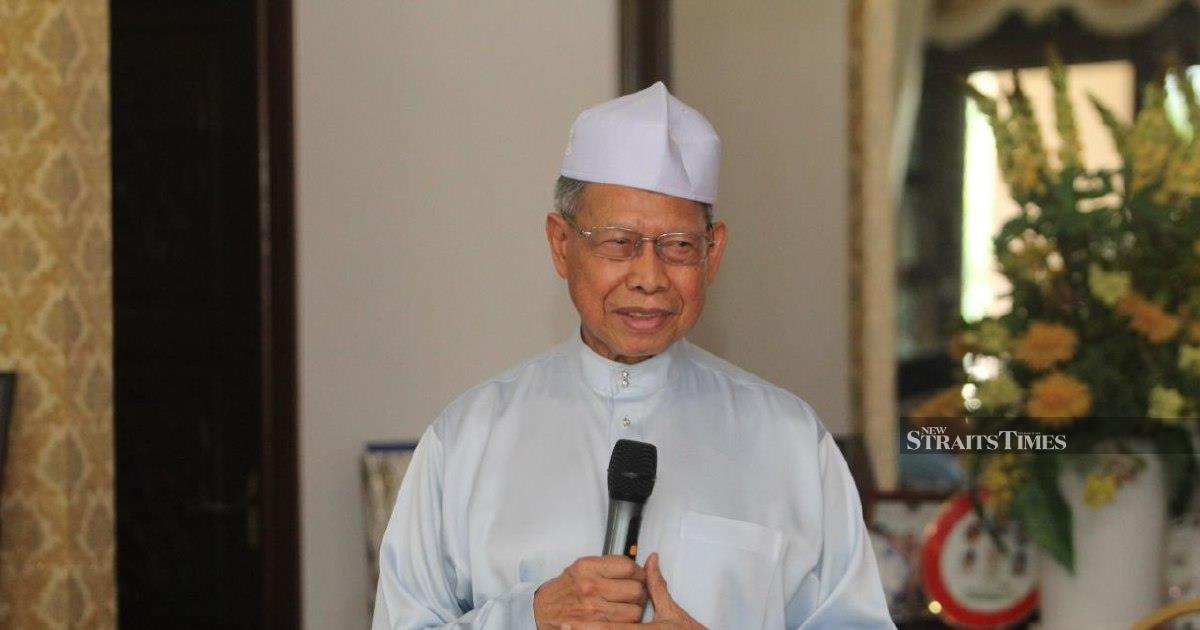
Datuk Seri Mustapa Mohamed, the seasoned politician who recently made a headline-grabbing return to Umno, has definitively closed the door on a parliamentary comeback at the next general election. The former Jeli member of parliament announced his decision while in Pasir Mas, signalling that despite his reinstatement within the party, his electoral ambitions have reached their end of the line. His choice to step away reflects a broader pattern among Malaysia's older political guard, many of whom are reassessing their roles as the nation's democratic landscape continues to shift.
The core reason underpinning his withdrawal is neither ideological nor strategic—it is deeply personal. Mustapa cited significant health constraints that have compromised his physical capacity to undertake the demanding work of a constituency representative. The inability to move about freely stands as a formidable barrier in contemporary politics, where constituency work demands constant mobility, community engagement, and an active presence on the ground. For a legislator, such limitations translate into concrete impediments to serving constituents effectively, a reality that Mustapa appears to have confronted with candour rather than denial.
Mustapa's journey back into Umno's fold represents a significant development in Malaysian politics, particularly in the northeast. His decision to rejoin the party was itself a noteworthy moment, given the evolving political dynamics in Kelantan and the broader reconfiguration of power blocs across Peninsular Malaysia. The Jeli constituency, where he had built a substantial political foundation over his parliamentary career, remains an important piece in the electoral arithmetic of the state. His stepping back from electoral contention leaves a vacuum that others will scramble to fill as the general election cycle draws closer.
The timing of this announcement carries implications for Umno's strategic planning in the critical Kelantan region. The party has been reassessing its approach in the state following the complex political arrangements that have evolved since the last general election. With Mustapa now sidelined as a candidate but presumably still engaged in party affairs, Umno must identify and cultivate fresh talent to contest the Jeli seat. This succession challenge is emblematic of a broader issue confronting the party: the need to balance the institutional knowledge and networks of veteran politicians with the infusion of younger, more energetic candidates capable of meeting the evolving demands of modern electoral campaigns.
Mustapa's candid acknowledgment of his physical limitations stands in contrast to the sometimes murky retirement decisions made by other senior politicians. His transparency about health constraints provides a template of sorts for other aging legislators wrestling with similar dilemmas. The decision also sidesteps potential scenarios where a visibly impaired candidate might struggle during campaigning, thereby protecting both personal dignity and the party's electoral prospects in what promises to be a fiercely competitive contest.
The Jeli constituency itself deserves consideration in this context. A reliably Umno-held seat in the Kelantan interior, it has historically reflected the broader political health of the party in the state. The transition away from Mustapa's stewardship to a new candidate will inevitably reshape local political dynamics and potentially alter the character of representation in the region. Umno's capacity to retain this seat while navigating the succession depends on identifying a candidate who can command both local respect and the grassroots machinery that Mustapa had painstakingly constructed over his tenure.
For the broader Malaysian electorate, Mustapa's withdrawal exemplifies how health, age, and the physical demands of political office increasingly intersect with electoral outcomes. As Malaysia's political class ages, such decisions will likely accumulate, reshaping parliamentary composition and forcing parties to confront generational transitions more urgently than before. The absence of clearly defined succession planning in many constituencies suggests that such transitions may prove more chaotic than orderly in numerous cases.
The economic and social dimensions of Jeli also merit attention in light of this development. The constituency encompasses a predominantly rural population with agricultural interests, particularly in rubber and rice cultivation. Historically, Mustapa's parliamentary efforts were intertwined with advocating for these sectors and managing the social safety nets that rural constituents depend upon. His successor will inherit not merely a parliamentary seat but responsibility for shepherding these communities through an economically uncertain period marked by commodity price fluctuations and structural shifts in agricultural viability.
Mustapa's decision ultimately reflects a maturity in facing personal constraints that many politicians globally continue to struggle with. Rather than clinging to power beyond genuine capability, he has opted for graceful withdrawal, recognizing that effective representation demands more than nominal occupancy of a parliamentary seat. This approach, while admirable, underscores a systemic challenge: Malaysia's political ecosystem requires robust mechanisms for identifying and developing the next generation of legislators before the current generation begins departing en masse. The general election that follows the next, and those thereafter, will increasingly test whether parties have adequately prepared for the succession wave already beginning to crest across the political landscape.

