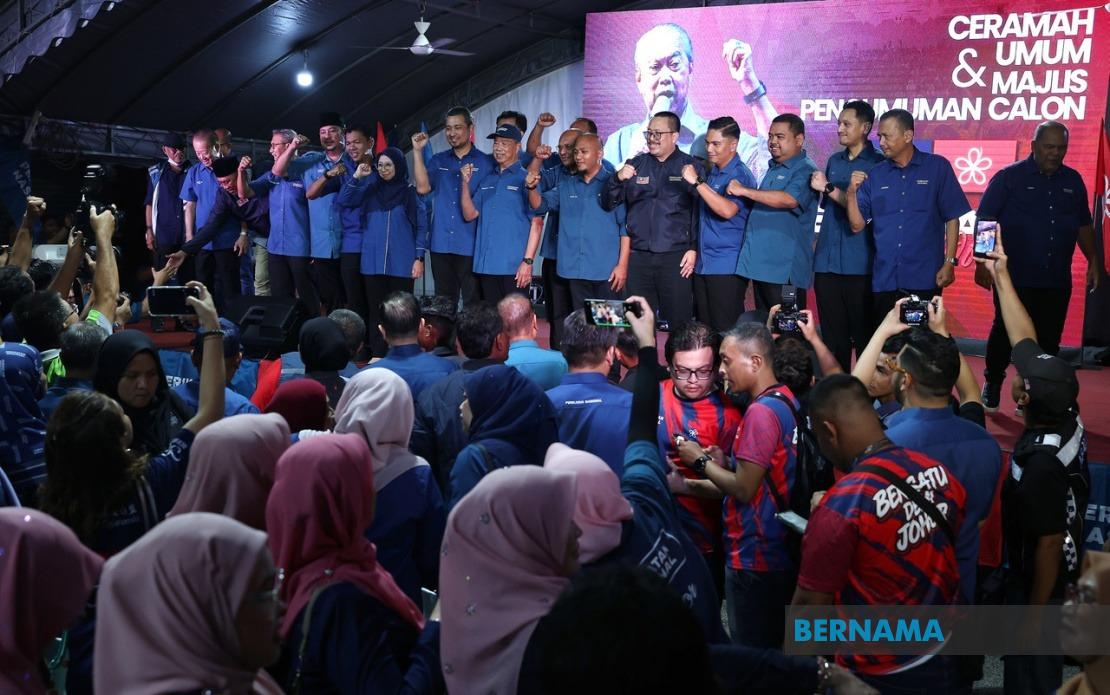
Tan Sri Muhyiddin Yassin, president of Parti Pribumi Bersatu Malaysia, has unveiled the complete slate of 16 party candidates who will compete in the forthcoming Johor State Election. The announcement came at a candidates briefing and public forum held at the Pagoh Parliamentary Service Centre in Taman Pagoh Jaya, Muar, signalling the party's formal entry into the contest following the dissolution of the state assembly in early June.
Bersatu's decision to field a full slate across all 16 seats represents a significant commitment to the Johor electoral contest, a state that historically carries considerable political weight within Malaysia's federal dynamics. The party's presence in Johor has evolved considerably since its formation, and this comprehensive candidacy announcement demonstrates its ambition to establish a meaningful foothold in one of the nation's most populous states. The strategic importance of Johor cannot be overstated, given its size, demographic diversity, and its traditional role as a kingmaker in national politics.
The Election Commission has structured the electoral timetable with precision, designating June 27 as nomination day when all parties must formally register their candidates. This compressed timeline provides political parties with limited opportunity for campaigning between nomination and polling day on July 11. The rapid succession of these dates suggests a high-intensity campaign period ahead, during which Bersatu will need to mobilise its resources and organisational machinery across the 16 constituencies simultaneously.
Mohd Idzharruddin Mohd Nasirruddin has been selected to represent the N8 Bukit Pasir constituency, exemplifying Bersatu's strategy of fielding candidates across diverse electoral divisions. The selection of candidates for each seat reflects internal party calculations regarding constituency dynamics, local support networks, and perceived electoral viability. Bersatu's candidate selection process typically balances considerations of grassroots popularity with party loyalty and demographic representation.
The state assembly's dissolution on June 1 set the formal machinery in motion for this election, ending the previous assembly's tenure and creating the constitutional necessity for voters to return to the polls. This mid-term election emerged from internal political developments within Johor's government, reflecting the fluid nature of state-level coalition politics in contemporary Malaysia. The timing of the dissolution and the subsequent electoral schedule have compressed the period available for campaigning, potentially advantaging parties with stronger organisational infrastructure.
For Bersatu, the Johor contest represents an opportunity to strengthen its political standing in a state where its presence has been secondary to larger coalition partners. The party's decision to contest all 16 seats, rather than adopting a more selective approach, indicates confidence in its electoral prospects and a determination to build a substantial legislative presence. Success in Johor would provide Bersatu with increased leverage in future federal coalition negotiations and enhance its claim to represent a significant political force beyond its traditional strongholds.
The public ceramah component of the announcement event reflects Bersatu's intention to engage voters directly during this campaign phase. Such events serve multiple purposes: they introduce candidates to the electorate, articulate the party's policy positions, and generate momentum ahead of the nomination period. The choice of Pagoh as the venue carries symbolic significance, as the constituency has been a notable battleground in recent Malaysian elections and holds considerable strategic value within Johor's political landscape.
For Malaysian voters, particularly those in Johor, this election provides an opportunity to reassess state-level governance and policy directions. The concentration of campaign activity in a compressed timeframe means that issues of immediate concern to Johor residents—economic development, education, healthcare, and state infrastructure—are likely to feature prominently in party messaging. Bersatu's campaign will need to articulate a compelling vision for state development while addressing specific local grievances.
The electoral contest also carries implications for broader Malaysian politics. The outcome in Johor will provide insights into voter sentiment and coalition preferences at the state level, potentially influencing perceptions of party strength ahead of future federal elections. For Bersatu, particularly, strong performance could validate its strategic positioning within the broader political landscape and demonstrate that it retains meaningful electoral support independent of larger coalition partners.
As the campaign period begins in earnest following nomination day, political observers will monitor how effectively Bersatu deploys its candidates and resources across the 16 constituencies. The party's success will depend not only on candidate quality and local appeal but also on its ability to articulate a coherent platform that resonates with Johor's diverse electorate. The compressed campaign timeline adds urgency to these efforts, requiring rapid coordination and message dissemination across multiple constituencies simultaneously.

