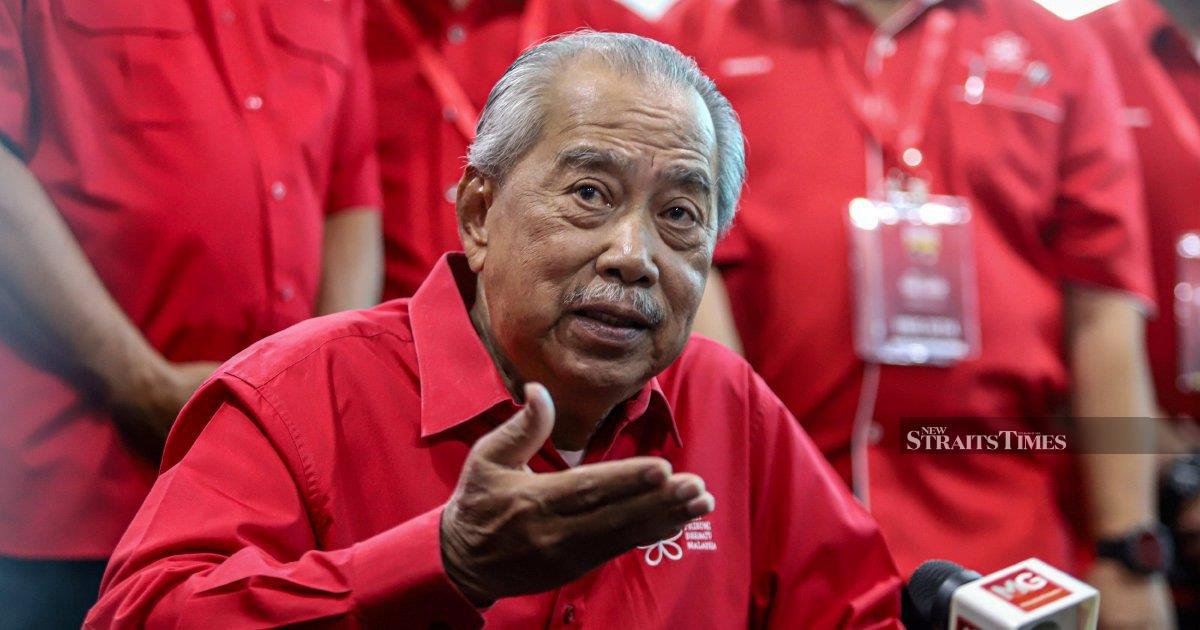
Tan Sri Muhyiddin Yassin has strongly challenged Tan Sri Annuar Musa's assertion that Bersatu voluntarily chose to leave Perikatan Nasional over the contentious Negri Sembilan election, signalling deepening tensions within Malaysia's opposition coalition as both parties offer competing narratives about the alliance's unravelling.
The dispute centres on the circumstances surrounding Bersatu's departure from the PN bloc, with Muhyiddin rejecting characterisations that frame the move as a deliberate and amicable parting of ways. The disagreement reflects ongoing friction within an alliance that has faced repeated strain since its formation, highlighting the fragility of opposition unity in Malaysian politics during a period of significant realignment.
Negri Sembilan's state election has emerged as a flashpoint in the broader rupture, with disagreements over candidate selection and electoral strategy creating the visible fault line through which the alliance ultimately fractured. The handling of this particular race appears emblematic of deeper structural problems within the PN coalition, where decision-making processes and consensus-building mechanisms have repeatedly failed to prevent escalating disputes.
Muhyiddin's pushback against Annuar's framing suggests he views the characterisation as deliberately misrepresenting the dynamics of the split. By rejecting the notion that Bersatu voluntarily withdrew, Muhyiddin appears to be asserting that external circumstances or pressure, rather than internal choice, precipitated the separation. This distinction matters significantly for how each party's supporters understand the causes of the breakdown.
For Malaysian political observers, the public disagreement underscores how swiftly alliances can deteriorate when internal conflicts intersect with electoral pressures. Both Bersatu and other PN components face mounting challenges in maintaining coalition discipline while simultaneously competing for relevance and voter support in individual state contests. The tension reflects a broader reality affecting all Malaysian political alliances: the difficulty of balancing collective interests against individual party survival instincts.
The Negri Sembilan flashpoint reveals the practical governance challenges facing opposition coalitions when elections approach. Questions over which coalition partner contests which seat, how campaign resources should be allocated, and whose strategic interests take precedence inevitably generate friction. Without robust internal mechanisms for resolving such disputes before they metastasise into public confrontations, even ostensibly stable alliances can rapidly unravel.
Annuar's position as a senior PN figure means his public statements carry particular weight, making Muhyiddin's rebuttal a significant political development rather than merely a rhetorical exchange. The fact that this disagreement has moved into the public domain suggests both parties have concluded that controlling the narrative about the split's origins takes priority over maintaining diplomatic silence. This represents a qualitative shift in the coalition's internal dynamics.
The implications extend beyond the immediate principals involved. Other PN component parties now face pressure to align themselves with either Muhyiddin's or Annuar's interpretation of events, potentially forcing further realignments within an already fractious coalition. Parties seeking to maintain neutral positions may find this increasingly untenable as the dispute hardens.
From a Southeast Asian perspective, Malaysia's opposition alliance difficulties highlight broader challenges facing multi-party coalitions across the region. In environments where electoral thresholds and winner-take-all systems dominate, the incentives for coalition partners to prioritise their own electoral fortunes often overwhelm incentives for maintaining alliance unity. This structural reality creates perpetual instability within opposition blocs attempting to challenge incumbent governments.
The dispute also reflects deeper questions about leadership and legitimacy within Perikatan Nasional. Muhyiddin's willingness to publicly contradict Annuar suggests he retains significant authority within at least Bersatu and potentially within PN's broader base, despite the alliance's recent difficulties. Conversely, Annuar's public statements indicate PN retains figures capable of articulating coalition positions independently.
Moving forward, this public disagreement may further complicate any potential reconciliation efforts between Bersatu and other PN components. The more thoroughly each party establishes its preferred narrative about the split's responsibility, the harder any eventual reunion becomes, as admitting the competing version gains credence would require acknowledging fault. Public disputes of this magnitude often represent irreversible threshold moments in alliance relationships.
For Malaysian voters and civil society observers, the Bersatu-PN breakdown demonstrates the costs of coalition fragmentation during critical political periods. Regardless of which party's interpretation of events proves more persuasive, the alliance's internal dysfunction diverts energy from policy development and strategic planning. Opposition coalitions struggling with internal battles sacrifice opportunities to effectively challenge government initiatives and present unified alternatives to voters seeking change.

