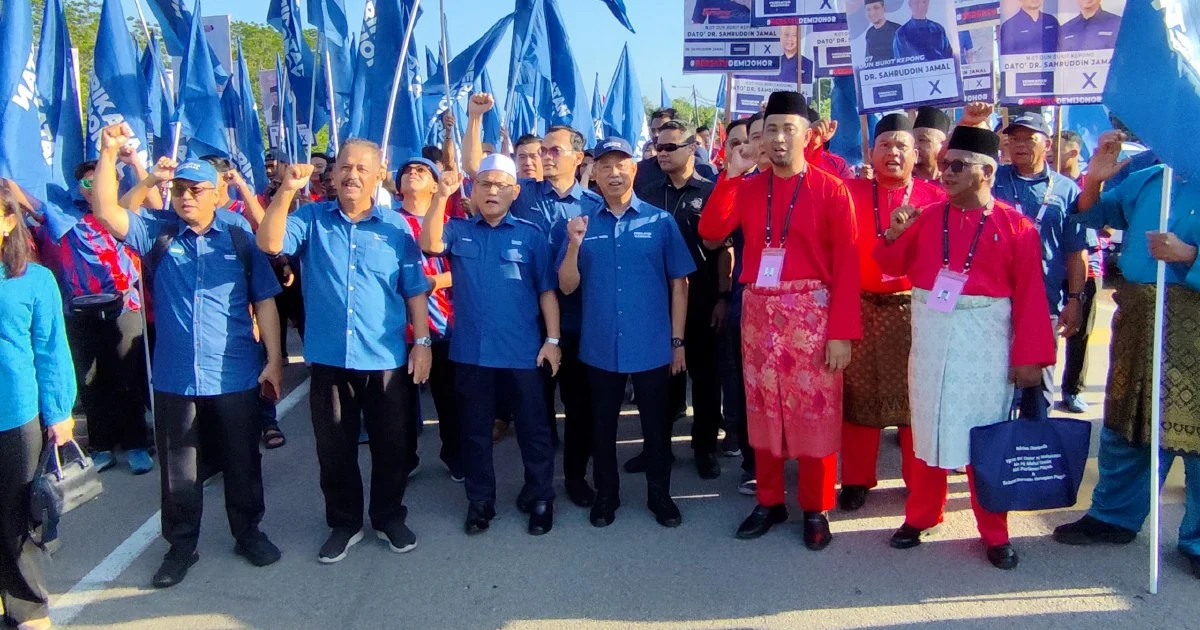
Bersatu's top leadership demonstrated its backing for a key electoral candidate in Johor when party president Tan Sri Muhyiddin Yassin appeared at the Bukit Kepong nomination centre at the Pagoh Sports Complex Hall, arriving in the early morning to signal organisational support.
The presence of Muhyiddin at the 8.45 am arrival represented a calculated show of unity within the party, reflecting the strategic importance Bersatu places on this particular electoral contest. In Malaysian politics, the physical attendance of senior party figures at nomination proceedings carries symbolic weight, communicating to party members, rival candidates, and the broader electorate the candidate's standing within the organisation and the party leadership's confidence in their prospects.
Bukit Kepong has historically been a competitive parliamentary seat in Johor, making the nomination process and subsequent campaign phase particularly significant for both Bersatu and opposing parties. The Pagoh Sports Complex, situated in the heart of the constituency, served as the official nomination venue for candidates seeking to contest this seat. The timing of Muhyiddin's attendance, arriving early to accompany Sahruddin through the nomination formalities, underscores the leadership's intention to maximise media coverage and reinforce messaging about party cohesion.
Muhyiddin's involvement in the nomination proceedings carried particular relevance given Bersatu's positioning within Malaysia's broader political landscape. As party president, his visible endorsement of candidates during election cycles functions as a leadership signal about party priorities and strategic direction. The decision to personally attend this nomination, rather than delegating the responsibility to other party officials, suggested that either Sahruddin's candidacy held special significance or that Bersatu sought to demonstrate active engagement in the Johor electoral contest.
The Johor state election context makes this nomination especially noteworthy. As one of Malaysia's largest and most politically consequential states, Johor elections frequently influence national political calculations and coalition dynamics. Bersatu's performance in such contests affects its bargaining position within broader political alliances and shapes its viability as a national force. Consequently, the party's commitment to candidates in significant seats like Bukit Kepong reflects calculations about electoral viability and regional influence.
Sahruddin's candidacy, backed visibly by Muhyiddin's presence at the nomination centre, potentially signals confidence in the candidate's capacity to secure victory or at minimum perform credibly in what may be a closely contested seat. In Malaysian electoral politics, nomination day represents the initial formal competition point, where parties reveal their candidates and begin the official campaign countdown. The appearance of senior leadership at such proceedings often correlates with competitive seats where parties believe they can improve their parliamentary representation.
The early morning timing of Muhyiddin's arrival also merits consideration. Appearing at 8.45 am ensured maximum visibility during media coverage of nomination proceedings, when journalists and photographers typically congregate at nomination centres. This tactical element of timing reflects the sophisticated nature of modern Malaysian political campaigning, where even procedural election moments are choreographed for media impact.
For Bersatu, maintaining cohesion and demonstrating organisational strength remain essential, particularly given the party's evolution within Malaysian politics and its efforts to consolidate its position across multiple states. The party's performance in Johor holds implications for its broader regional strategy and its capacity to influence state-level politics and policy direction. Muhyiddin's hands-on involvement in candidate nomination activities reinforces the impression of a centrally managed party structure responsive to presidential priorities.
Regional political observers will scrutinise Bersatu's electoral showing in Bukit Kepong and other Johor seats as indicators of the party's momentum heading into subsequent elections. Sahruddin's campaign, backed by presidential visibility and party machinery, enters the formal campaign period with demonstrated leadership endorsement. Whether this translates into electoral success depends on multiple factors including local constituency dynamics, voter sentiment toward Bersatu's track record, and the competitive strength of opposing candidates.
The nomination at Pagoh Sports Complex Hall also reflects the continued importance Bersatu assigns to Johor politics. The state remains strategically vital for any coalition seeking to govern Malaysia at the federal level, making regional electoral performance a matter of genuine national consequence. Muhyiddin's attendance underscores that party leadership takes such contests seriously rather than treating them as routine electoral exercises.
Looking forward, the campaign period following nomination will determine whether the leadership support and party resources directed toward Sahruddin's candidacy translates into tangible electoral gains. Bersatu's Johor election strategy, as evidenced by this high-profile nomination support, appears focused on consolidating representation and maximising its influence within the state's political structure. The nomination process that commenced with Muhyiddin's arrival marks the beginning of what is likely to be an intensely contested electoral period, with Bukit Kepong representing one point in Bersatu's broader campaign across the state.

