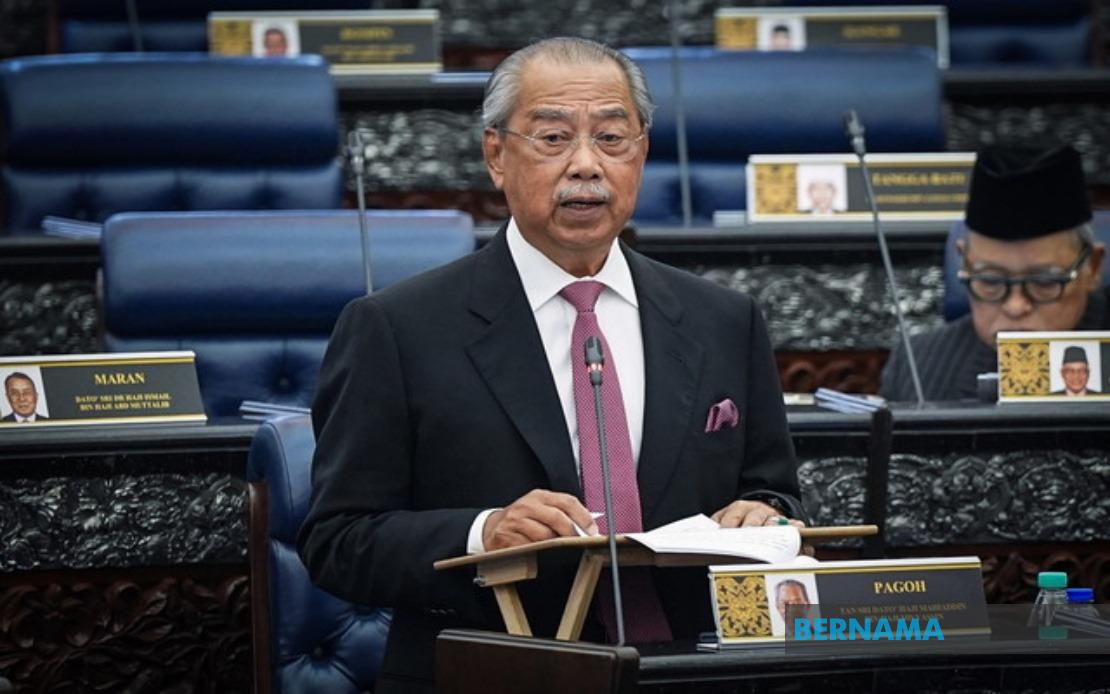
The governance crisis at Tabung Haji has become increasingly difficult to ignore following the release of the Royal Commission of Inquiry report, which exposed systemic weaknesses spanning nearly a decade. During parliamentary debate on the findings, Tan Sri Muhyiddin Yassin, the former prime minister and Bersatu president, issued a forceful call for action, demanding that an independent forensic audit be initiated immediately and completed within twelve months. His intervention reflects growing cross-party concern that revelations of mismanagement require more than symbolic gestures—they demand concrete investigative measures capable of establishing accountability and recovering public funds.
The scale of potential losses identified in the RCI report has shocked stakeholders across the political spectrum. Between 2014 and 2020, Tabung Haji accumulated estimated cumulative losses ranging from RM10 billion to RM12.6 billion, a figure that transcends simple accounting discrepancies and points instead towards profound structural failures in fund stewardship. For a pilgrimage savings institution entrusted with the religious aspirations and financial security of millions of Malaysian Muslims, such losses represent not merely a breach of fiduciary duty but a betrayal of public trust. Muhyiddin's insistence that these findings must be treated with gravity and pursued without compromise underscores the political imperative to demonstrate that no individual, regardless of seniority or connections, remains above accountability.
The former premier articulated a specific rationale for launching a forensic audit rather than relying on conventional institutional reviews. An independent investigation of this nature would enable authorities to trace the movement of funds through complex financial networks, identify potential fraudulent transactions, and distinguish between deliberate misconduct and negligent oversight. This granular level of analysis matters enormously because it determines both the legal charges prosecutors can bring and the remedial measures Parliament can implement. By creating an audit trail that documents how capital was deployed, which entities received funds, and what returns materialised, investigators can establish causation between specific decisions and measurable losses. Such documentation would also strengthen civil recovery efforts, allowing the government to pursue restitution from individuals or entities responsible for wealth destruction.
Syed Saddiq Syed Abdul Rahman, the MUDA representative for Muar, extended the argument further by proposing a Multi-Agency Task Force dedicated to investigating fourteen problematic Tabung Haji investments specifically identified within the RCI report. His proposal reflects a sophisticated understanding of enforcement architecture in Malaysia, recognising that siloed investigations by individual agencies often fail to capture the full picture of institutional malfeasance. By coordinating the Malaysian Anti-Corruption Commission, the Royal Malaysia Police, and the Inland Revenue Board, a task force could cross-reference financial records, track unexplained wealth acquisitions, and pursue tax evasion charges where applicable. Syed Saddiq further recommended extending this investigative scope to encompass related institutions including Felda, FGV, and Eagle High, suggesting that the pathologies revealed in Tabung Haji may represent symptoms of broader governance inadequacies across government-linked investment vehicles.
The fourteen investments flagged as problematic warrant particular scrutiny because they represent the most concrete manifestations of TH management failure. These were not peripheral transactions or minor allocation errors but material deployments of capital that either failed to deliver expected returns or, worse, appeared structured in ways that benefited intermediaries more than the ultimate beneficiaries—Malaysian pilgrims and their families. A comprehensive forensic examination of these investments could reveal patterns in decision-making, identify common characteristics among transactions that subsequently deteriorated, and determine whether governance lapses were systemic or concentrated among specific individuals or committees. Understanding these patterns matters for institutional reform, as the RCI's twenty-five recommendations can only be implemented intelligently if policymakers understand the root causes they are designed to address.
Datuk Seri Hasni Mohammad, representing Simpang Renggam, introduced a complementary dimension to the accountability framework by proposing that law enforcement agencies provide regular, time-bound updates on investigation progress to Parliament. This suggestion addresses a chronic problem in Malaysian governance whereby institutional inquiries conclude, reports are tabled, and then implementation vanishes into administrative obscurity. By requiring enforcement agencies to report to the Dewan Rakyat within specified intervals, Hasni's proposal creates a mechanism for parliamentary scrutiny that persists beyond the initial parliamentary debate. The stipulation that such oversight be bipartisan and institution-based rather than partisan also signals that accountability measures should transcend temporary political advantage and embed themselves within parliamentary processes.
The RCI report itself, released publicly on July 29 after government decision to ensure transparency, contains detailed findings across the 2014-2020 period when Tabung Haji's governance environment proved most vulnerable. The decision to make the report publicly available departed from previous conventions whereby such sensitive documents might have been quietly compartmentalised, and this shift reflects evolving expectations around public accountability and institutional transparency. The twenty-five recommendations contained therein address governance structures, investment oversight, internal controls, and reporting mechanisms. As of July 30, Tabung Haji had implemented seventy-five percent of these recommendations, a respectable initial response but one that necessarily depends on whether those implementing reforms possess genuine commitment to cultural change or merely seek to satisfy symbolic compliance requirements.
For Malaysian and Southeast Asian readers, the Tabung Haji situation carries significance beyond immediate institutional concerns. The institution manages assets belonging to millions of Malaysian Muslims and represents a complex intersection of religious obligation, state welfare, and financial services. When governance failures emerge at this scale within such a prominent institution, they raise fundamental questions about whether publicly administered funds can be adequately protected from abuse, whether accountability mechanisms function effectively, and whether political will exists to pursue consequences regardless of perpetrators' connections. The response from Muhyiddin, Syed Saddiq, and Hasni suggests that sufficient political pressure exists to prevent the issue from being quietly shelved, a positive signal for institutional health but one that requires sustained follow-through.
The proposals for forensic auditing and multi-agency task forces also reflect international best practices in institutional accountability. Many jurisdictions confronting comparable governance crises have found that conventional audits, while necessary, prove insufficient without forensic investigations specifically designed to identify fraud, trace fund flows, and establish individual culpability. The involvement of multiple agencies, properly coordinated, prevents perpetrators from exploiting gaps between institutional jurisdictions and ensures that related violations—corruption, tax evasion, abuse of position—are pursued comprehensively rather than selectively. Malaysia's implementation of these approaches will signal whether it can adopt international standards in accountability procedures despite the political complications such investigations inevitably generate.
The Parliamentary special sitting dedicated to debating the TH RCI report represents a rare institutional moment when substantive scrutiny of governance failure receives extended attention. However, history suggests that parliamentary debates often catalyse initial momentum that subsequently dissipates as urgent crises displace attention. The concrete proposals—forensic audit within one year, multi-agency task force, regular parliamentary reporting—all depend on sustained political commitment and adequate resource allocation to enforcement agencies. Whether these mechanisms materialize and function as intended will substantially determine whether the Tabung Haji crisis ultimately produces genuine institutional reform or merely generates the appearance of action while preserving underlying vulnerabilities.
The implicit message from opposition and government parliamentarians alike is that accountability cannot be indefinitely postponed without further damaging public confidence in state institutions. Tabung Haji serves approximately nine million members and holds assets accumulated through decades of disciplined savings. The losses documented in the RCI report represent wealth that should have accumulated for families planning pilgrimage journeys but instead vanished through mismanagement. For these beneficiaries and for broader Malaysian society expecting competent stewardship of public assets, the investigations proposed during this special sitting must progress from parliamentary rhetoric to concrete investigative outcomes that identify responsible parties and facilitate recovery of recoverable losses.

