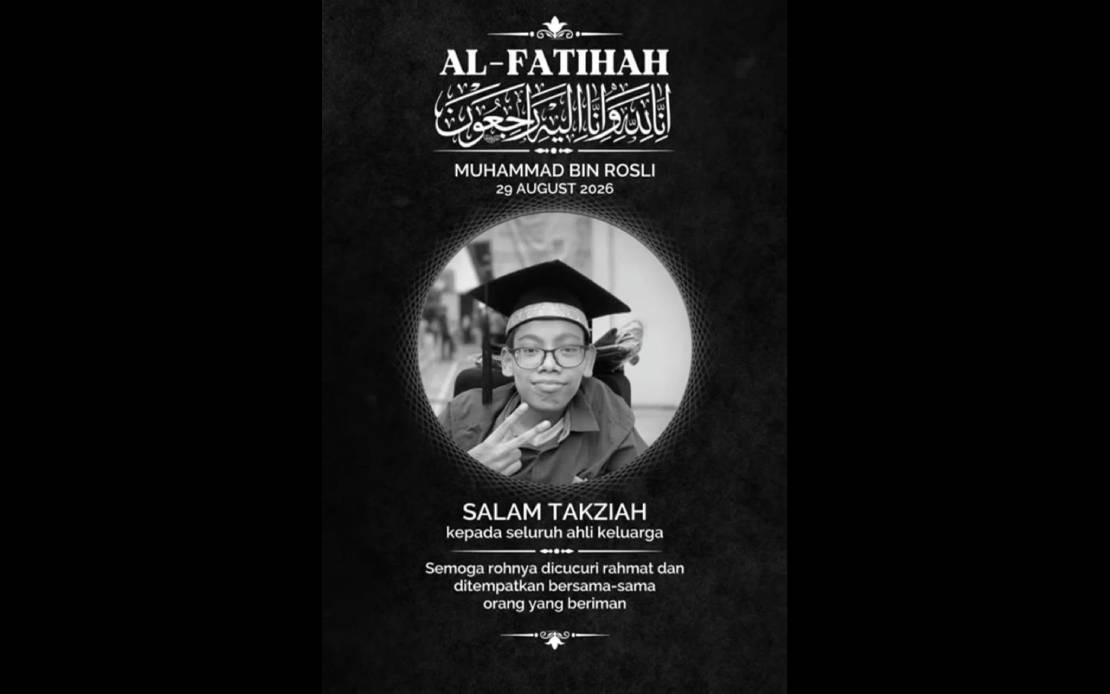
Muhammad Rosli, the Malaysian man who gained prominence two decades ago as one half of conjoined twins successfully divided through groundbreaking surgical intervention, has died at the Chancellor Tuanku Muhriz Hospital in Cheras, Kuala Lumpur, at 10:45 am today. His passing marks the end of a remarkable chapter in Malaysian medical history that captivated public attention and showcased the nation's medical capabilities at the turn of the millennium.
The announcement came through a Facebook post from Ahmad, Muhammad's twin brother, who expressed gratitude for the prayers and support extended to his sibling throughout his ordeal. In his statement, Ahmad reflected on their shared journey, acknowledging the significance of their survival and recovery following the extraordinary surgical procedures they underwent as younger men. The emotional tribute underscored the deep familial bond that had sustained both brothers through decades of medical challenges and personal milestones.
Muhammad's journey toward this final chapter began several months ago when he was diagnosed with bladder cancer. Seeking advanced treatment, he travelled to the King Fahd National Guard Hospital in Riyadh, Saudi Arabia, where he commenced a rigorous therapeutic regime beginning in July 2025. Over the course of his hospitalisation, he endured multiple surgical interventions and chemotherapy sessions designed to combat his condition. Medical professionals initially reported encouraging progress, with Muhammad eventually receiving clearance to continue with scheduled follow-up care.
However, his health status took a sharp downturn in recent days. Ahmad revealed that his brother's condition had deteriorated significantly, with medical teams identifying critically elevated blood acid levels that forced Muhammad into a semi-conscious state. This sudden decline, occurring just days before his death, suggested complications that proved beyond medical remedy despite ongoing interventions at the sophisticated Saudi facility.
The pair's prominence in Malaysian consciousness stemmed from their extraordinary medical history dating back to the turn of the century. In 2001, Muhammad and Ahmad underwent initial surgical procedures at the University Malaya Medical Centre in Kuala Lumpur, where medical specialists began the intricate process of preparing their conjoined bodies for separation. This preliminary phase laid the groundwork for what would become one of the region's most ambitious surgical undertakings.
The defining moment arrived in September 2002 when both brothers underwent the definitive separation procedure at the King Fahd National Guard Hospital in Riyadh. The operation, lasting an extraordinary 22 hours and 45 minutes, represented a triumph of surgical precision and coordination. The complexity of disentangling shared organs, particularly their liver, demanded expertise at the highest level and meticulous planning. The successful conclusion of this marathon surgery provided hope and inspiration throughout Malaysia, demonstrating the potential for advanced medical science to overcome seemingly insurmountable physical challenges.
The significance of their separation extended far beyond the individual brothers themselves. For Malaysian medical professionals and the broader public, the case exemplified the nation's capacity to participate in cutting-edge healthcare innovation and international medical cooperation. The involvement of leading institutions both domestically and internationally established Malaysia as a destination for complex surgical cases and attracted considerable media attention across the region.
Muhammad's death closes a poignant chapter in a life defined by extraordinary medical circumstances. From birth as part of conjoined twins, through the traumatic separation procedure and decades of adaptation to independent life, he navigated challenges that few individuals have experienced. His passage into adulthood following the successful 2002 separation represented a victory against profound physical adversity, even as his eventual mortality reminded observers of the fragility inherent in all human existence.
The funeral arrangements proceeded with customary Islamic observance, with Muhammad's remains committed to earth at the USJ 22 Muslim Cemetery in Subang Jaya the same evening, approximately six hours following his death. This final resting place serves as a quiet memorial to a life marked by extraordinary medical intervention and the human spirit's capacity to persevere through seemingly impossible circumstances.
For Malaysian society, Muhammad's passing provides occasion for reflection on medical progress, family resilience, and the enduring impact of landmark surgical achievements. The case remains a defining moment in the nation's medical heritage, and his death, while sorrowful, does not diminish the historical significance of the groundbreaking procedures that allowed him and his brother to live separate, independent lives for more than two decades following their birth as conjoined individuals.

