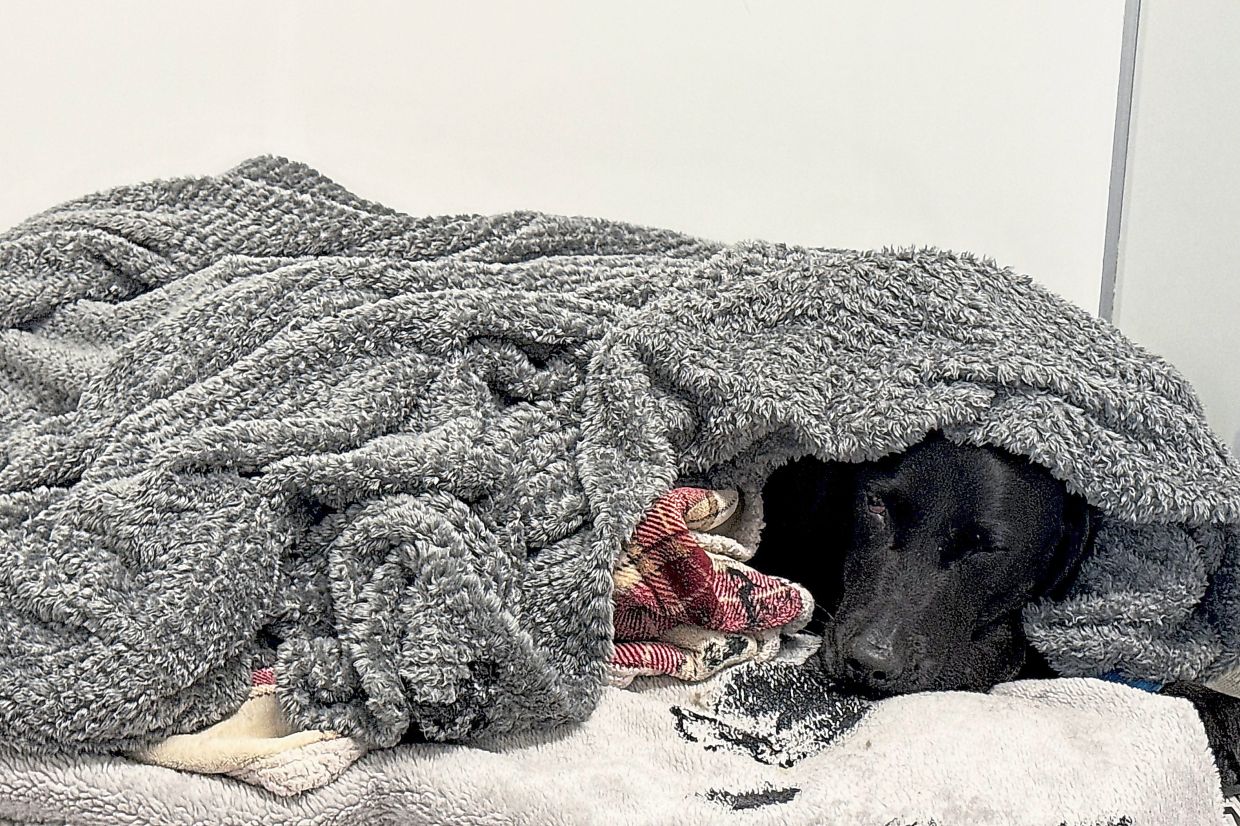
Christina Bluhme faced every pet owner's nightmare when her black Labrador retriever, Tokyo, became severely incapacitated midway through a climb on Ben Nevis, Britain's tallest mountain at 1,345 metres. The five-year-old dog had apparently consumed cannabis somewhere along the trail during the July 5 expedition and subsequently lost the ability to walk, swaying uncontrollably as though intoxicated. What began as a routine family outing in the Scottish Highlands quickly transformed into a frantic emergency requiring professional mountain rescue intervention, leaving Bluhme shaken by the unexpected ordeal.
Despite Bluhme's extensive background as a professional canine trainer with 25 years of experience, she initially could not identify what had afflicted her dog. The symptoms emerged gradually as the hiking party pushed deeper into the mountain terrain, with Tokyo's condition deteriorating as they approached the summit. When the dog became unable to continue, Bluhme made the difficult decision to abandon their climb and seek immediate assistance. She directed her son Magnus to contact emergency services, though the initial response from police proved discouraging, with operators expressing uncertainty about whether they could dispatch a rescue team to their location.
The situation was further complicated by deteriorating weather conditions. What had started as clear skies at the base of Ben Nevis transformed into heavy rainfall and cold temperatures that dropped to 5 degrees Celsius, creating hazardous conditions for any rescue operation. The family found themselves stranded more than three hours into their ascent, with a 25-kilogram dog in critical condition and no clear path to safety on steep, rocky, and slick terrain. The timing of their crisis appeared almost catastrophic, given the remote location and adverse conditions converging simultaneously.
Fortunately, circumstances aligned in their favour when a volunteer crew from the Lochaber Mountain Rescue Team happened to be descending from the summit after assisting with a helicopter evacuation of an injured hiker. The team immediately responded to Bluhme's emergency, placing Tokyo into their stretcher and navigating the treacherous descent with remarkable speed. Bluhme recalled that the rescue volunteers moved with such urgency and agility that they appeared almost to be running while carefully managing the stretcher down the mountainside. The team successfully reached the trailhead in approximately one hour, a feat made even more impressive considering the challenging terrain and the precious cargo they carried.
Parallel to the on-mountain rescue efforts, police coordinated with Crown Vets in nearby Fort William to ensure veterinary support would be immediately available upon arrival. A veterinarian was positioned and ready when Bluhme brought Tokyo to the clinic. Initial diagnostic assessment suggested a possible spinal issue, but a senior veterinary surgeon recognised patterns consistent with neurotoxin exposure after observing Tokyo drifting in and out of consciousness. When the medical team consulted with poison control specialists, all of Tokyo's symptoms aligned precisely with cannabis intoxication, finally providing clarity on what had befallen the dog.
The diagnosis, while alarming, ultimately guided appropriate treatment. Veterinarians administered activated charcoal to counteract the toxin's effects and monitored Tokyo throughout the night. The dog responded remarkably well to intervention, achieving complete recovery by the following morning with no residual symptoms or complications. What had appeared to be a life-threatening crisis on the mountainside resolved without lasting damage, though the experience left lasting emotional impact on Bluhme. She acknowledged that while the £1,000 veterinary bill represented a substantial expense, the cost was entirely justified given the alternative outcome she had feared during those critical hours on Ben Nevis.
The incident illuminates a growing public health concern affecting pet owners across both sides of the Atlantic. Cannabis toxicity in animals has emerged as an increasingly documented phenomenon, reflecting broader changes in cannabis availability and accessibility. In the United States, the problem has reached sufficient prominence that cannabis entered the American Society for the Prevention of Cruelty to Animals' top 10 list of pet toxins for the first time in 2023, signalling veterinary professionals' recognition of this hazard. While the situation in Britain currently represents a smaller but rising problem, the trajectory suggests growing challenges ahead for pet owners and veterinary services alike.
The mechanisms behind such incidents remain varied, though careless disposal of cannabis products and accidental exposure during outdoor activities represent common pathways. Dogs lack the biological mechanisms to safely metabolise cannabinoids, making them particularly vulnerable even to residual traces left on trails. Pet owners undertaking outdoor activities in areas where recreational cannabis use may occur should exercise heightened vigilance, though the unpredictable nature of trail-based exposure creates inherent challenges. For Malaysian readers, while cannabis possession and use remain strictly prohibited under domestic law, the case serves as a reminder of how globalised pet health concerns have become, with issues documented in Western contexts eventually finding relevance in Southeast Asian veterinary practice.
Bluhme's experience has transformed her understanding of mountain safety and pet welfare simultaneously. She reflected that the recovery appeared almost miraculous, with Tokyo displaying no lingering effects or behavioural changes following the incident. However, Bluhme herself continued processing the psychological toll of the experience several days after the event, finding that her emotional recovery proceeded more slowly than her dog's physical recuperation. The incident reinforces that outdoor recreation with pets requires constant environmental awareness and rapid response capability when circumstances deteriorate unexpectedly. For mountain rescue volunteers like those from Lochaber Mountain Rescue Team, the case demonstrates that their expertise extends beyond human emergencies to encompass the complex logistics of animal rescue in demanding terrain, requiring both physical capability and decision-making acumen under pressure.

