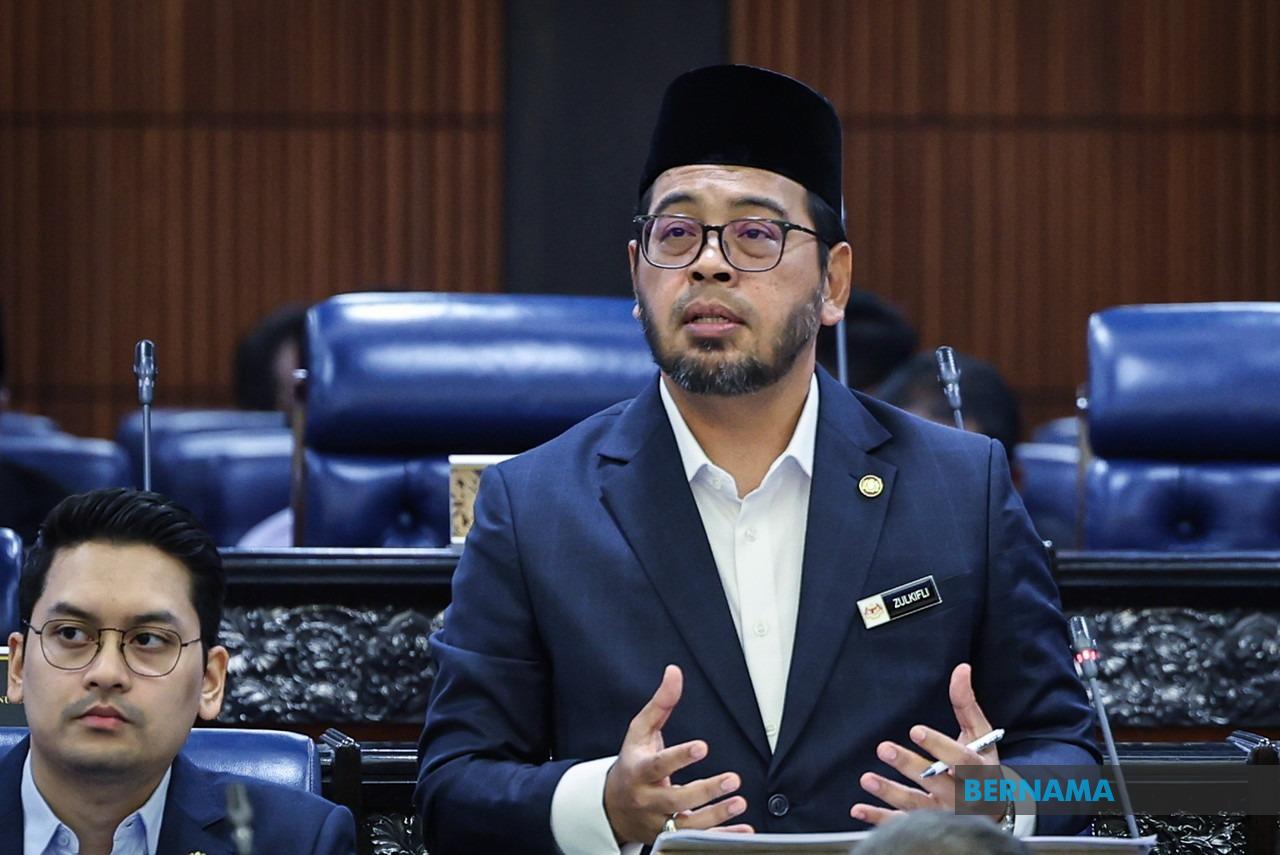
Religious Affairs Minister Dr Zulkifli Hasan has drawn a striking parallel between a struggling single mother and Tabung Haji's financial manipulation, accusing the pilgrimage fund of masking systemic insolvency through creative accounting that ultimately forced a RM10 billion government rescue. Speaking during parliamentary debate following a ministerial briefing on the Royal Commission of Inquiry report into Tabung Haji, Zulkifli employed the figure of Mak Cik Senah—a single mother receiving more money than her initial investment—to illustrate how the fund projected apparent profitability while concealing a deteriorating financial position that violated corporate governance principles and put depositor savings at existential risk.
The minister's analogy cuts to the heart of a fundamental misconception that allowed Tabung Haji to continue distributing profits to depositors for years despite operating under mounting liabilities. Under the Tabung Haji Act, dividend distributions are legally permissible only when the fund's total assets exceed its debts and obligations. Yet the RCI investigation uncovered that managers systematically inflated asset valuations on paper to create the illusion of profitability, enabling the fund to declare distributions that bore no relation to its true financial performance. This sleight of hand meant depositors received what amounted to dividends paid from non-existent profits—a mechanism Zulkifli characterised as indistinguishable from the mechanics of a Ponzi scheme or the infamous Skim Pak Man Telo that defrauded countless Malaysians.
At the operational level, Tabung Haji deployed a technique called Realisable Asset Value (RAV) valuation conducted outside its audited financial statements, allowing management to artificially inflate asset figures relative to documented liabilities. This accounting manoeuver violated Malaysian Financial Reporting Standards and breached established impairment policies designed to present truthful financial pictures. The scale of manipulation was considerable: while Tabung Haji valued total assets at RM4.6 billion, PricewaterhouseCoopers discovered in 2018 that only RM556 million of these assets had undergone professional valuation—leaving more than RM4 billion resting on assertions rather than independent appraisal. This methodological flaw was not accidental but rather calculated to sustain the appearance of solvency.
The distinction Zulkifli drew between the roles of external auditors proved crucial in understanding how such deception persisted. Ernst & Young was not Tabung Haji's primary auditor and held no responsibility for asset valuations; the firm merely reviewed pro forma statements that management had prepared using their inflated figures. PricewaterhouseCoopers, the actual auditor, identified the disparity between claimed and professionally verified asset values, documenting that TH announced high profit distributions despite operating with a widening deficit between assets and liabilities. This audit trail established unambiguously that the fund's management knew—or ought to have known—that their dividend declarations violated the Tabung Haji Act and endangered the institution's financial sustainability for future generations of pilgrims seeking to fulfil their religious obligations.
The consequences of this systematic deception extended far beyond accounting irregularities. Tabung Haji, which holds profound religious and cultural significance for Malaysian Muslims seeking to perform the hajj pilgrimage, was brought to the brink of insolvency through what Zulkifli termed misconduct by fund managers. The government faced an impossible choice: allow a culturally essential institution to collapse and leave millions of depositors' life savings at risk, or intervene with a rescue package. The authorities chose intervention, injecting over RM10 billion to restore Tabung Haji's financial viability. This figure crystallises the true cost of the manipulation—not merely in ringgit terms but in opportunity foregone, as Zulkifli pointedly observed.
The minister's observation about alternative uses for RM10 billion carries particular weight in Malaysia's development context. With that sum, the government could have constructed dozens or hundreds of hospitals, schools, mosques, and public facilities addressing genuine gaps in infrastructure serving ordinary Malaysians and the wider Muslim community. Instead, the bailout represented remedial expenditure necessitated by corporate governance failures and potential criminal conduct within a government-linked entity. This framing transforms Tabung Haji from an abstract financial story into a question of national resource allocation and priorities during a period of fiscal constraint.
The RCI's findings also implicated Tabung Haji's management in a deliberate scheme to circumvent fiduciary obligations owed to depositors. By maintaining profit distributions while the fund's actual financial condition deteriorated, senior officials prioritised short-term satisfaction of depositors over long-term institutional stability and legal compliance. The pre-2018 financial statements emerged as deliberately falsified documents designed to sustain confidence in the fund and justify dividend announcements that lacked legitimate foundation. This pattern suggests not isolated accounting errors but rather coordinated policy to perpetuate a fiction of profitability.
For Malaysian depositors, many of whom had contributed savings over decades specifically to support their hajj journey, the implications were grave. Their funds faced existential jeopardy not because of market downturns, currency fluctuations, or legitimate investment losses, but because institutional leadership chose to obscure deteriorating conditions through accounting manipulation. The phrase Zulkifli invoked—paying dividends with 'invisible money'—encapsulates the fraudulent nature of distributions backed by fictitious valuations rather than genuine earnings or sustainable asset bases. Depositors believed their savings remained secure and generating returns; in reality, they were being systematically eroded through a combination of poor investments and accounting concealment.
The regulatory and institutional safeguards that ought to have prevented such manipulation warrant examination. Tabung Haji operates under specific statutory oversight intended to protect its public trust mission, yet these mechanisms failed to detect or halt years of financial statement falsification. The involvement of major international audit firms raises questions about the adequacy of audit procedures applied to government-linked entities and whether external auditors faced institutional pressures that constrained their independence. These governance questions extend beyond Tabung Haji itself, touching broader concerns about accountability mechanisms governing Malaysia's state enterprises and sovereign wealth vehicles.
Looking forward, the Zulkifli's parliamentary exposition serves multiple purposes beyond immediate legislative accountability. It establishes a clear public record of the misconduct underlying the bailout, creating documentary evidence should criminal proceedings or civil litigation follow. The minister's careful delineation of legal violations—breaches of the Tabung Haji Act, MFRS contraventions, impairment policy violations—provides juridical framework for potential prosecutions. Moreover, the Mak Cik Senah analogy translates complex financial manipulation into language accessible to ordinary Malaysians, democratising understanding of how institutional fraud operates and why safeguards matter.
The Tabung Haji episode illuminates vulnerabilities within Malaysia's corporate governance architecture for large public institutions entrusted with citizen savings. While the immediate financial crisis required government intervention, systemic reforms are essential to prevent recurrence. These must include strengthened audit independence, enhanced regulatory oversight, clearer delineation of management accountability, and transparent governance structures that prevent executives from manipulating valuations or concealing financial deterioration. The RM10 billion rescue cost represents the price of previous negligence; disciplined governance today could prevent multiplied costs tomorrow.
Ultimately, Zulkifli's parliamentary intervention reframes Tabung Haji not as an isolated scandal but as a cautionary narrative about institutional integrity and fiduciary responsibility. When managers prioritise appearance over reality, deploy creative accounting to mask underlying conditions, and distribute funds unsustainably, they betray the trust placed in them and jeopardise the very institutions they steward. For Malaysian policymakers, regulators, and corporate leaders across the public and private sectors, the Tabung Haji case provides an instructive lesson in why governance fundamentals—transparency, accountability, and honest financial reporting—must never be compromised, regardless of short-term expedience or political pressures.

